
A large wall mirror is the single easiest way to make a living room feel bigger, brighter and more finished. One oversized piece above the sofa does what a dozen small frames cannot: it bounces daylight deep into the room, doubles the sense of space, and gives the wall a clear focal point.
But going big also magnifies every mistake. The wrong size looks awkward, a flimsy frame sags within months, and a cheap mirror can distort your reflection or grow ugly black spots at the edges. People search for big, large and oversized wall mirrors interchangeably, and they all want the same thing: a statement mirror that looks expensive and lasts.
This guide covers what size to go for in a living room, how to spot a quality mirror from a cheap one, how to choose and safely hang a heavy piece, and our favourite handcrafted rattan, cane and bamboo-framed mirrors.
Why go big with a wall mirror
Designers reach for one large mirror instead of a cluster of small ones for three reasons. It reflects light, so a mirror placed opposite or beside a window pushes natural light across the whole room. It adds depth, tricking the eye into reading the room as larger than it is. And it anchors the wall, giving sofas, consoles and gallery shelves something to sit under. In a typical Indian living room, a single statement mirror often replaces an expensive piece of art at a fraction of the cost.
Large wall mirror size by room and wall
As a rule, a wall mirror should be roughly two-thirds the width of the furniture below it, and hung with its centre near eye level. Here is a quick reference for the most common spots.
| Location | Recommended size | Rule of thumb |
|---|---|---|
| Above a 3-seater sofa | 90-120 cm wide | About two-thirds the sofa width |
| Above a console table | 70-100 cm wide | 50-75% of the console width |
| Entryway / foyer | 80-110 cm | Tall enough to check your full outfit |
| Dining room wall | 90-120 cm round | Centred on the wall or above a sideboard |
| Feature / empty wall | 120 cm and up | Go oversized; let it be the hero |
Mirror quality: why cheap big mirrors fail
This is where most budget mirrors let you down, and it matters far more at large sizes. A cheap mirror has three common problems. The glass is thin and slightly uneven, so your reflection looks subtly stretched or wavy, most noticeable in a tall full-wall piece. The silver backing is poorly sealed, so within a year or two you see black spots and cloudy patches creeping in from the edges, a process called desilvering. And the frame is lightweight and hollow, so a big mirror flexes, rattles and eventually warps.
A quality mirror uses thicker, float-grade glass with a properly sealed silver coating, set in a solid, handcrafted frame that holds its shape. At Akway, our mirrors pair good-quality glass with handwoven rattan, cane and bamboo frames built by artisan families, so a large mirror stays true and beautiful for years instead of months.
How do you choose a large wall mirror?
- Match the wall, not just the room. Measure the furniture or wall width and aim for two-thirds of it.
- Pick a shape for the space. Round softens a boxy room, rectangle and arch add height, and an oversized round becomes an instant focal point.
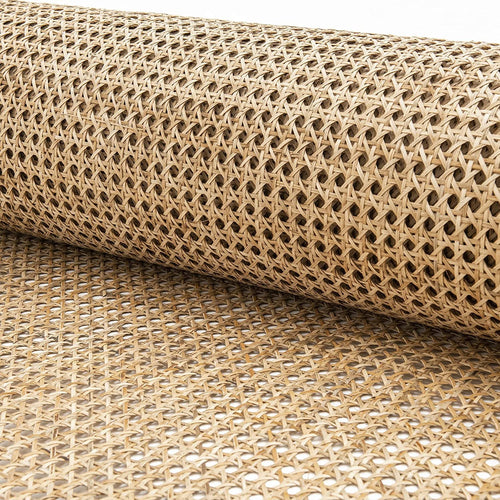
- Choose the frame material. Natural rattan, cane and bamboo frames add warmth and texture and suit boho, Japandi and modern Indian interiors.
- Check the glass and weight. Thicker glass and a solid frame mean no distortion and no sag, but also more weight, so plan the fixing.
- Plan the fixing before you buy. A large mirror needs wall anchors rated for its weight, ideally into a stud or with heavy-duty plugs.
Our large handcrafted wall mirrors
Each of these is handwoven by Indian artisan families, with quality glass set in a natural rattan, cane or bamboo frame.

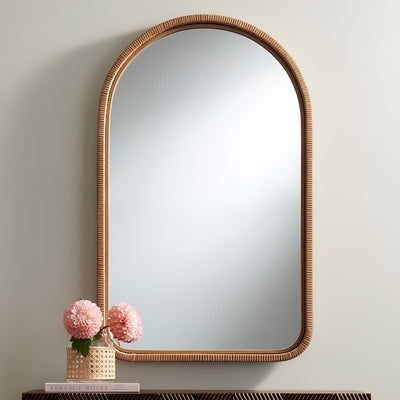
A large, decorative cane-framed statement mirror, ideal for an entryway or feature wall.
From Rs 10,899
Shop Now
An oversized bamboo-framed mirror that anchors a living-room wall and reflects light beautifully.
From Rs 9,899
Shop Now
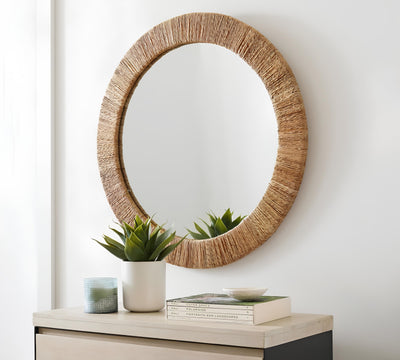
A large round rattan mirror that softens a boxy living room and works over a sofa or console.
From Rs 4,899
Shop Now
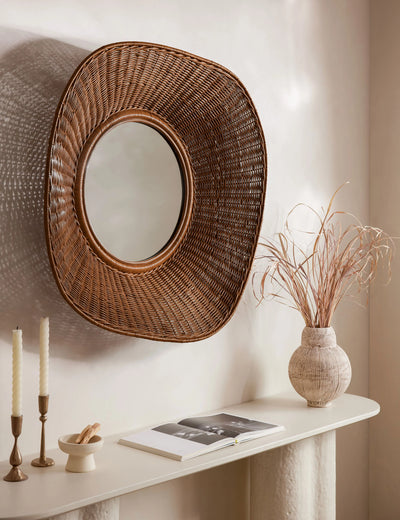
A warm bamboo and rattan mirror, large enough for a bedroom or dressing wall.
From Rs 4,399
Shop Now
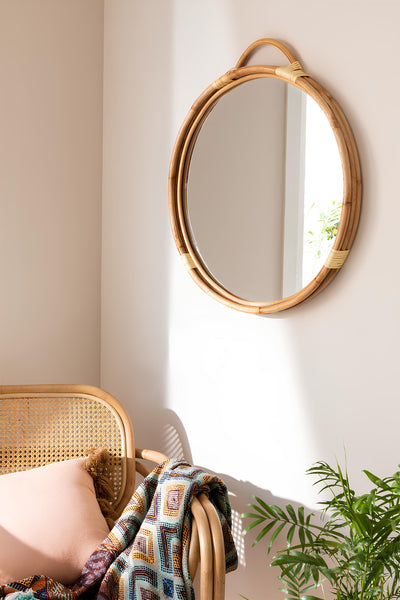
A round cane-framed mirror that brings warmth and light to a dining wall.
From Rs 1,989
Shop NowStatement mirror styling ideas
Over the sofa
Centre one large mirror above the sofa, leaving 15-25 cm between the sofa back and the frame. A round rattan mirror here softens the straight lines of the seating.
Lean an oversized mirror
A floor-leaning mirror over 150 cm tall against a living-room wall is a relaxed, high-impact look. Always strap it to the wall so it cannot tip.
Mirror plus wall lamps
Flank a large mirror with two cane or bamboo wall lamps. The mirror doubles the glow and the trio reads like a designed vignette.
Reflect a window or a light
Hang the mirror where it reflects a window or a pendant light. This is the trick that makes a small or dim living room feel twice as open.
Round vs rectangle vs arch in big formats
- Round: softens boxy rooms, perfect over sofas and consoles, very forgiving to place.
- Rectangle: classic and space-efficient, hang it tall to add height to a low room.
- Arch: on-trend and elegant, adds a sense of height like a rectangle but feels softer.
Hanging and safety for heavy mirrors
- Use wall anchors rated above the mirror weight, ideally fixed into a stud or with heavy-duty masonry plugs.
- For very large pieces, use two fixing points to spread the load and keep it level.
- For leaning mirrors, add a safety strap or bracket so they cannot be pulled over, essential with children or pets.
- Hang the centre of the mirror around 150 cm from the floor so it works at standing eye level.
Care
- Dust the frame with a dry, soft cloth, and wipe the glass with a barely damp microfibre cloth.
- Avoid spraying cleaner directly onto the glass near the frame, as moisture seeping behind the silver is what causes black spots.
- Keep natural rattan and cane frames out of constant direct sun to protect the colour.