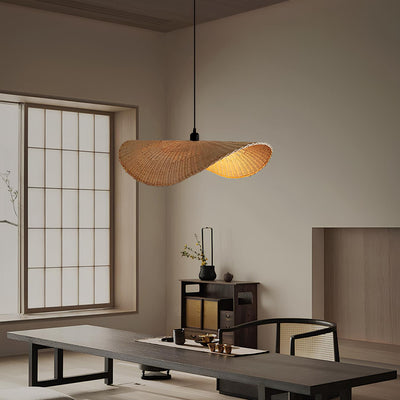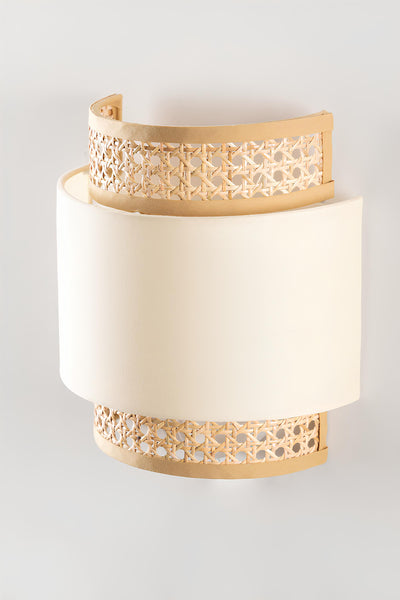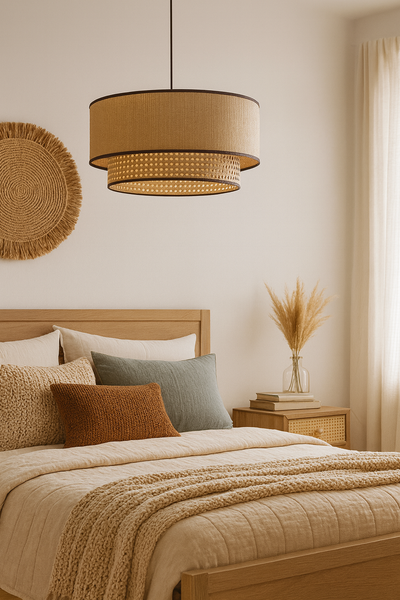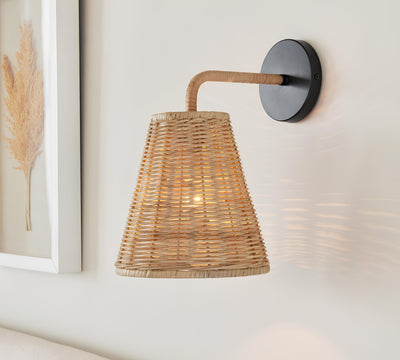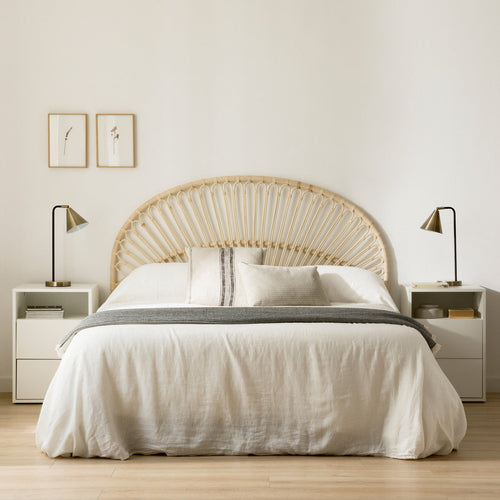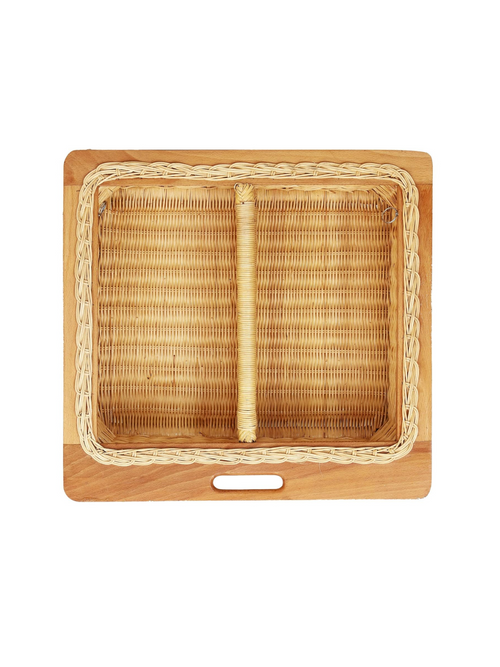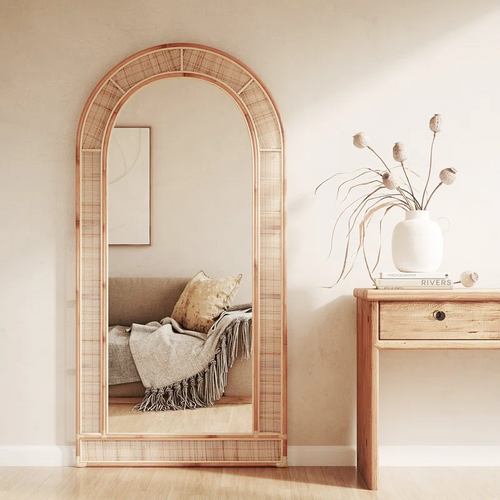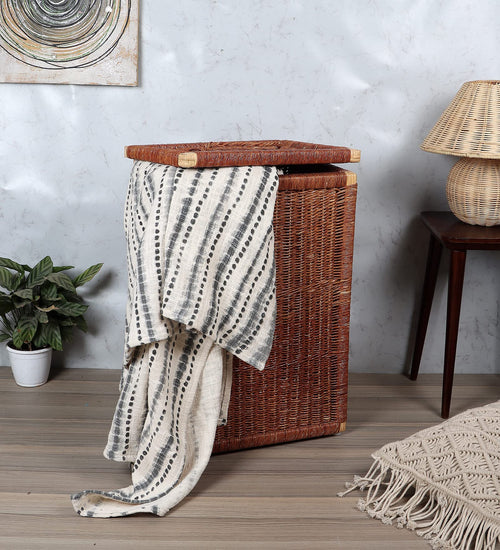

In a world of mass-produced home decor, there is something deeply special about a lamp that carries the fingerprints of the artisan who made it. At Akway, every single rattan lamp, bamboo basket, and cane chair begins its journey in a small workshop in Northeast India — where 50+ artisan families transform raw natural materials into stunning pieces of functional art.
This is the story of how our artisans handcraft each rattan lamp — from raw vine to the warm, glowing centrepiece hanging in your living room.
Step 1: Sourcing Natural Rattan From the Forest
Rattan is a climbing palm vine that grows abundantly in the tropical forests of Northeast India — particularly in Assam, Tripura, Meghalaya, and Nagaland. Unlike hardwood trees that take decades to mature, rattan grows naturally and regenerates rapidly. Harvesting rattan does not kill the plant — the vine simply grows back, making it one of the most sustainable natural materials on Earth. Because it is a palm rather than a grass, cane also sits differently in India's forest law and material supply chain than bamboo does.
Our artisans work with local forest communities to source rattan responsibly. The raw vines are harvested by hand, cleaned of thorns and outer bark, and sorted by thickness and flexibility. Thicker vines become chair frames and planter structures. Thinner, more flexible strands are prepared for weaving lamp shades, baskets, and trays.
Step 2: Preparing the Rattan for Weaving
Raw rattan is not immediately ready to weave. The vines must be soaked in water to make them pliable — too dry and they crack, too wet and they lose shape. Our artisans have perfected this balance over generations. The soaked rattan is then split into thin strips using hand tools, a process that requires incredible precision and years of experience.
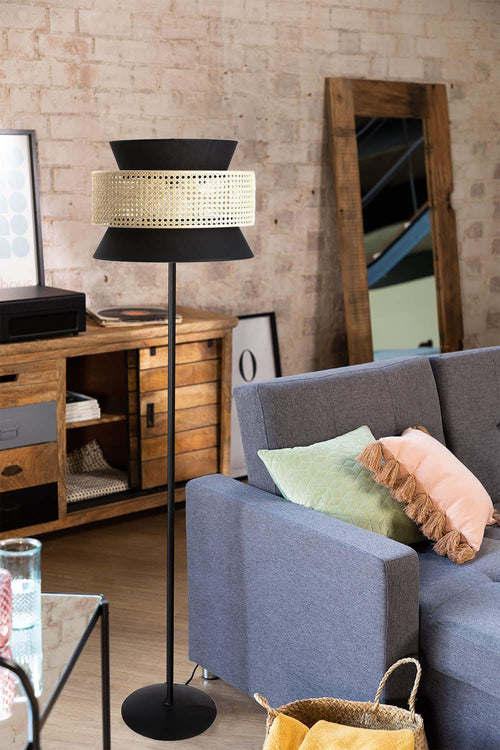
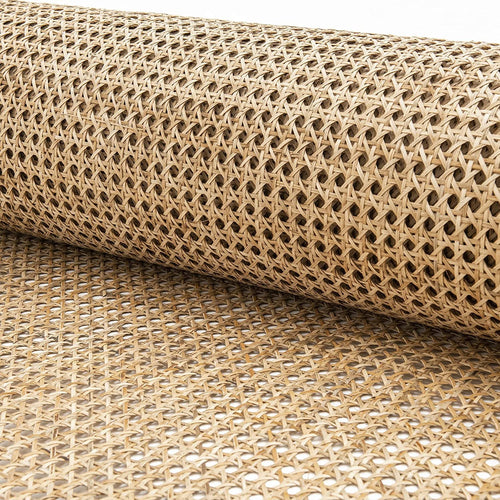
For cane webbing products (like our floor lamp shades and storage baskets), the strips are woven into pre-made sheets with consistent patterns — square weave, eye weave, or hexagonal patterns. Each sheet is entirely handwoven on a simple wooden frame.
Step 3: The Weaving — Where Art Meets Skill
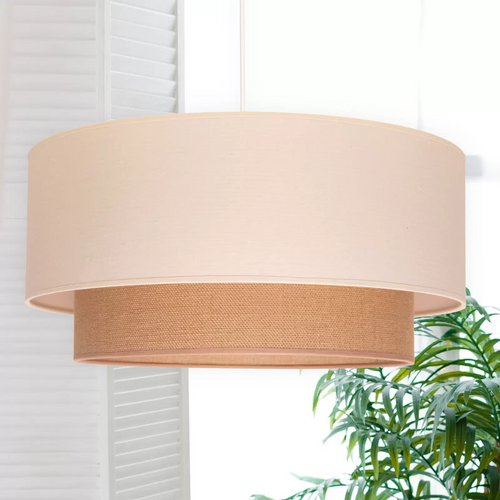
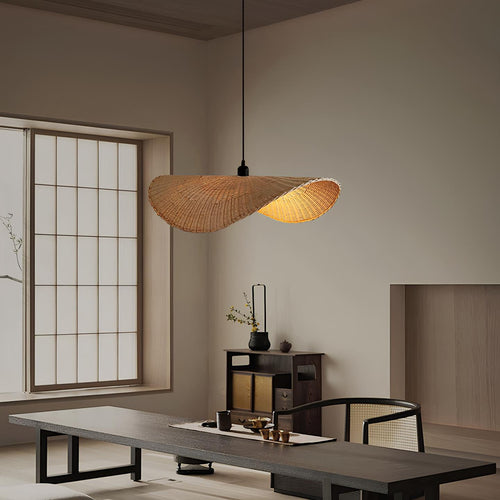
This is where the magic happens. Each rattan lamp shade is woven by hand on a wooden mould. The artisan wraps, crosses, and locks each strand into place using techniques passed down through three or four generations. A single pendant lamp shade can take 4-8 hours of continuous weaving — depending on the complexity of the pattern.

Rattan Cane Pendant Lamp - Aisha
Handwoven rattan pendant light — each one takes 4-8 hours to weave. Available in 2 sizes.
What makes handweaving special is the subtle imperfections. No two rattan lamps are exactly identical — slight variations in strand thickness, weave tension, and natural colour create a unique character that machine-made products simply cannot replicate. In Japanese design philosophy, this is called wabi-sabi — the beauty of imperfection.
Step 4: Shaping and Finishing
Once woven, the lamp shade is carefully removed from the mould and shaped by hand. The edges are trimmed, loose strands are tucked in, and the overall form is inspected for symmetry and structural integrity. For coloured variants (like our white, olive green, and sky blue lamps), natural, eco-friendly dyes are applied by hand.
The finished shade is then fitted with a bulb holder mounting (E27 for pendant and floor lamps, E14 for wall sconces) and undergoes a final quality check before packaging.
Step 5: From Workshop to Your Home
Each lamp is carefully wrapped in recycled paper and corrugated packaging to protect it during transit. We ship directly from our workshop to your doorstep — no middlemen, no warehouses full of mass-produced stock. This is what makes Akway different from competitors who simply resell products made by others.

Rattan Cane Floor Lamp - Aericka
Handwoven cane webbing shade on white tripod. The webbing pattern is unique to each lamp.
Beyond Lamps: Baskets, Chairs, Mirrors & More
The same artisan families who weave our lamps also create our entire product range — storage baskets, wall mirrors, cane lounge chairs, planters, and pendant lights. Each product category requires different weaving techniques, moulds, and finishing processes — but the core skill of working with natural rattan and bamboo remains the same.

Rattan Storage Basket Set of 3 - Avery
Handwoven with brass accents. Three graduated sizes for a coordinated look across your home.
Why Does Handcrafted Rattan Beat Mass-Produced Every Time?
Here are 5 reasons why handcrafted rattan products are worth choosing over factory-made alternatives:
- Unique character: No two pieces are identical — each carries the artisan's personal touch
- Superior durability: Hand-tightened weaves hold up better than machine-produced ones
- Eco-friendly: Bamboo grows 30x faster than hardwood. Zero chemical processing. 100% biodegradable.
- Supports livelihoods: Every purchase directly supports 50+ artisan families in rural Northeast India
- Timeless design: Rattan has been used in Indian homes for centuries — it never goes out of style
The Sustainability Story
At Akway, sustainability is not a marketing buzzword — it is the foundation of our business. Here are the facts:
- Bamboo grows 30 times faster than hardwood trees — some species grow up to 3 feet in a single day
- Rattan is a climbing vine — harvesting does not kill the plant, it simply regrows
- Zero chemical processing — our products are shaped by water, heat, and human hands, not factory chemicals
- 100% biodegradable — at the end of its long life, every Akway product returns to the earth naturally
- 50+ rural artisan families earn sustainable livelihoods through Akway, preserving traditional crafts that might otherwise disappear
Frequently Asked Questions
How long does it take to make one rattan lamp?
A pendant lamp shade takes 4-8 hours of continuous hand-weaving, depending on size and pattern complexity. Floor lamp shades with cane webbing take 6-10 hours including the tripod assembly.
Are all Akway products handmade?
Yes, every single product is handcrafted by our artisan families. We are manufacturers, not resellers. This is what makes Akway different — we control quality from raw material to your doorstep.
Where is Akway's workshop?
Our artisan workshop is in Northeast India, where rattan and bamboo craftsmanship has been a way of life for centuries. The region's abundant natural rattan forests and deep weaving traditions make it the ideal home for our craft.
Is rattan sustainable?
Rattan is one of the most sustainable materials on Earth. It is a climbing palm that regenerates after harvesting, grows without pesticides, requires minimal water, and is 100% biodegradable. Bamboo is equally sustainable — growing 30x faster than hardwood trees.
Can I see the artisans at work?
We are working on behind-the-scenes videos of our artisan workshop. Follow us on social media for updates, or contact us at vaishali@akway.in to learn more about our artisan families and their craft.
Where can I buy Akway products?
Akway products are available on our website akway.in, as well as Amazon, Flipkart, Myntra, and Pepperfry. We offer free shipping across India on all orders.