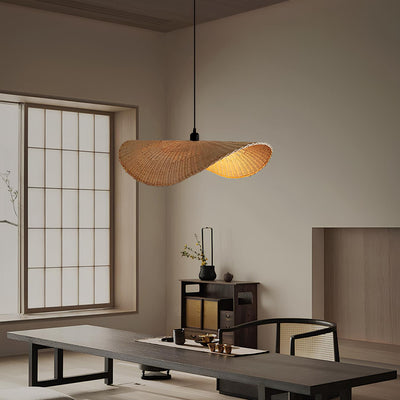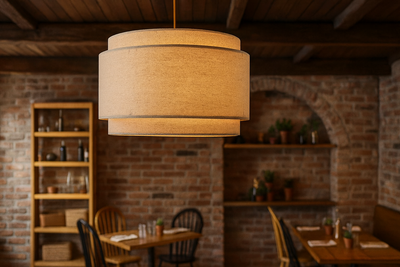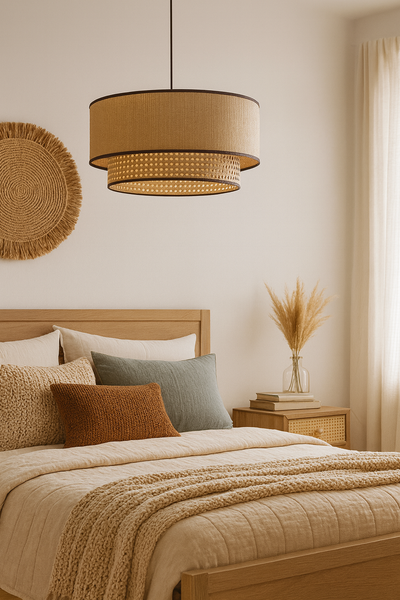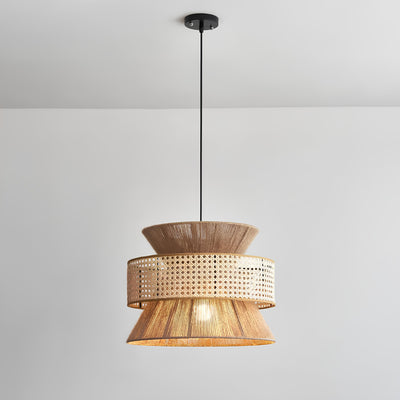

Good living room lighting is three layers, not one fixture. Ambient fill from a ceiling pendant or flush mount, task light for reading, and accent light for mood. Aim for at least one piece in each layer, and a rattan or bamboo shade will warm all three at once.
Most Indian living rooms are lit by one bright tube light or a single ceiling fixture in the centre of the room, switched on full or off, with nothing in between. It floods the space with flat, even light that flattens every texture and leaves no warmth. A handwoven jute sofa, a rattan side table, a gallery wall, all of it looks better, and your eyes feel calmer, when the light comes from several softer sources instead of one harsh one overhead.
Good living room lighting is built in layers. Interior designers split it into three: ambient light to fill the room, task light for reading and close work, and accent light to add mood and highlight what you love. Get all three working together and even a small flat feels considered and restful at night.
This guide walks through how to layer rattan pendants, lamps and wall sconces in an Indian living room, the warm-light ideas that work in real homes, the products to start with, and the bulb and dimmer choices that pull it all together. Natural materials like rattan, bamboo, cane and jute are perfect for this, because their open weave throws a soft, golden, patterned glow that a bare bulb never can.
What are the 3 layers of living-room lighting?
Before you buy anything, it helps to know which job each light is doing. A balanced living room usually has at least one fixture in each of these three layers. Here is how they map to natural-fibre pieces you can actually buy.
| Layer | Fixture type | Akway piece |
|---|---|---|
| Ambient (general fill) | Ceiling pendant or flush mount | Rattan or bamboo hanging light over the seating area |
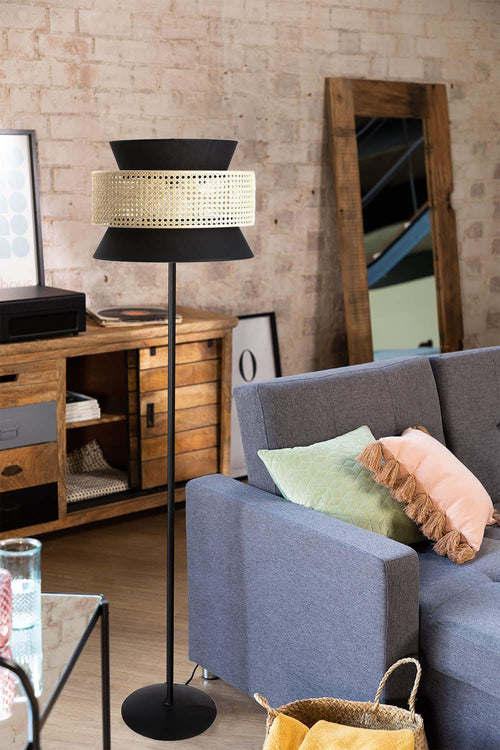
| Task (reading, work) | Floor lamp or table lamp | Cane floor lamp by the armchair, rattan table lamp on a side table |
| Accent (mood, highlight) | Wall sconce or small lamp | Cane wall sconce, jute table lamp on the console |
The trick is not to make any single layer do everything. A pendant alone is too high and too central for reading. A floor lamp alone leaves the corners dark. Layer all three and you can dial the room from bright and social to soft and quiet just by choosing which lights are on.
Living room lighting ideas
Here are the layering ideas that work best in Indian living rooms, from the hero fixture down to the small accent glows that finish the room.
1. Start with one statement rattan pendant as the hero
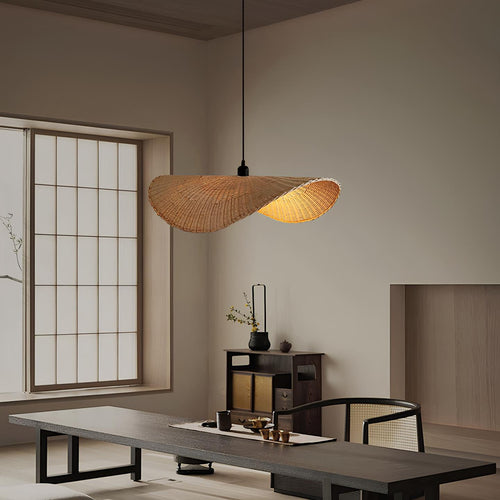
Every layered room needs a focal point, and a single statement rattan or bamboo pendant is the easiest way to get one. Hang it over the coffee table or the centre of the seating area so it anchors the room. The woven shade does double duty: it gives you ambient fill, and the gaps in the weave cast a warm, dappled pattern on the ceiling that a plain fixture can not match. Pick a size that suits the room, a 12 to 14 inch shade for a standard living room, larger if you have a double-height ceiling or a big open-plan space.
2. Add a floor lamp for the reading corner
A floor lamp is the workhorse of task lighting. Set one beside your favourite armchair or at the end of the sofa and you instantly have a reading nook. A cane or bamboo floor lamp throws light downward and outward at sitting height, exactly where you need it for a book or your phone, without lighting the whole room. It also fills a dark corner, which is the single fastest way to make a living room feel bigger and more finished at night.
3. Pair table lamps on a console or side tables
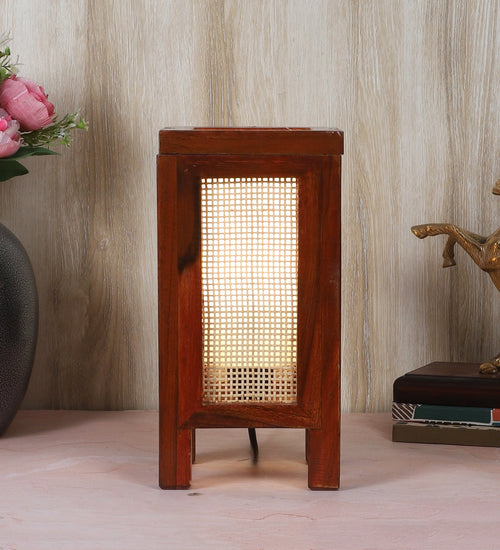
A matched pair of table lamps, one at each end of a console behind the sofa or on side tables flanking the seating, brings symmetry and a soft mid-height glow. This is the layer that makes a room feel warm and lived-in rather than just lit. Rattan and jute table lamps are ideal here because the shade diffuses the bulb into a gentle wash instead of a hot spot. Keep both lamps at a similar height so the eye reads them as a pair.
4. Use wall sconces for warmth at eye level
Wall sconces are the most underused layer in Indian homes. Mounted on either side of a TV unit, a mirror or a piece of art, a pair of cane wall sconces adds warm light at eye level and frees up your floor and tables. Because the light sits on the wall, it bounces off the surface and softens shadows across the whole room. Sconces are also perfect where you have no room for a lamp, like a narrow living room or a hallway that opens into the lounge.
5. Put everything on dimmers and warm bulbs
Layering only works if you can control each layer. Putting your lamps and pendant on dimmers, or simply on separate switches, lets you mix and match: pendant plus floor lamp for reading, just the table lamps and sconces for a film. Pair that with warm 2700K bulbs across every fixture and the whole room glows the same honey colour instead of clashing between cool and warm. This single change, warm bulbs everywhere plus the ability to dim, transforms a flat room more than any new piece of furniture.
6. Layer differently for small vs large rooms
In a small living room or 1BHK, you do not need many fixtures, you need the right three: one modest pendant, one floor lamp, and a single table lamp or sconce. Too many fixtures in a small room feel cluttered. In a large or open-plan living room, think in zones instead: a pendant over the seating, a floor lamp by the reading chair, table lamps on the console, and sconces near the dining edge, so each part of the room has its own pool of light. The principle stays the same at any size, just scale the number of sources to the space.
Shop the look
Start your ambient layer with one of these handwoven pendants, each woven by Indian artisans from natural rattan, bamboo or raffia. Pick the hero light first, then build your task and accent layers around it.

Rattan Hanging Light - Shanaya
A warm, woven rattan pendant that works as the hero ambient light over your seating area. The open weave casts a soft, dappled glow.
From Rs 1,899
Shop Now
A clean, minimalist pendant for a Japandi or modern living room. Soft diffused light that pairs beautifully with warm lamps below.
From Rs 1,399
Shop Now
Bamboo Cane Hanging Light - Ahalya
A handwoven bamboo and cane pendant with a generous shade, ideal as the ambient layer over a sofa or coffee table.
From Rs 2,099
Shop Now
A larger statement rattan pendant for open-plan rooms or over a dining edge. Makes a strong hero light in a layered scheme.
From Rs 2,899
Shop Now
A low-profile rattan flush mount for rooms with lower ceilings, where a hanging pendant would sit too low. Soft, even ambient fill.
From Rs 2,899
Shop NowBulbs, colour temperature and dimmers
The fixtures set the style, but the bulbs decide how the room feels. A few simple rules pull the whole scheme together.
- Stick to 2700K warm white everywhere: this is the warm, golden tone that feels relaxing in a living room. Mixing warm and cool bulbs across fixtures is the most common reason a room looks off.
- Avoid 4000K and above in the living room: cool white and daylight bulbs belong in kitchens and study desks, not where you unwind. They make natural fibres look grey instead of warm.
- Use dimmable LED bulbs with a dimmer switch: dimming lets one room do bright and social or soft and quiet. Check the bulb says dimmable, as not all LEDs are.
- Keep wattage modest per fixture: for a layered room you want several gentle sources, not one blinding one. A 6 to 9 watt warm LED suits most pendants and lamps.
- Match colour temperature across all layers: pendant, floor lamp, table lamps and sconces should all be the same 2700K so the room reads as one warm glow.
Common lighting mistakes
Avoid these and your layered scheme will look intentional rather than accidental.
- Relying on one central ceiling light: the single biggest mistake. One overhead source gives flat, shadowless light and dark corners.
- Mixing warm and cool bulbs: a warm pendant beside a cool-white lamp makes the room feel disjointed. Pick one temperature, ideally 2700K.
- Hanging the pendant too high or too low: over open seating, the bottom of the shade usually sits around 7 to 7.5 feet from the floor so it lights the space without blocking sightlines.
- Forgetting task light: a pretty pendant is no good for reading. Always add a floor or table lamp at sitting height.
- No way to dim: if every light is full-on or off, you lose the mood layer entirely. Add dimmers or split your lights across switches.
- Too few sources in a big room: a single lamp can not light a large living room. Spread several small warm sources around the space.