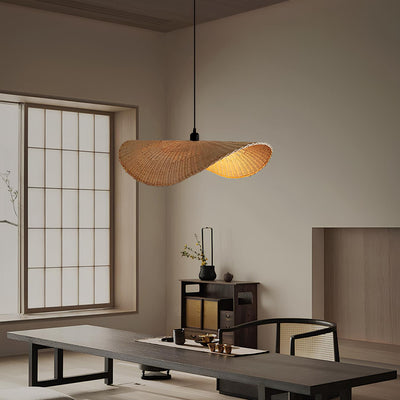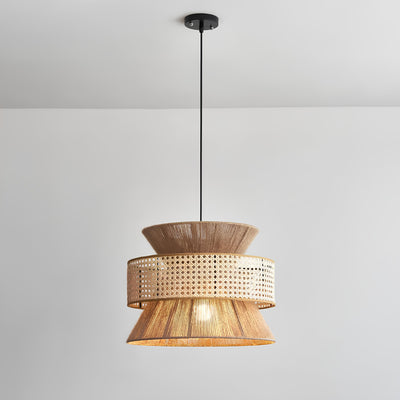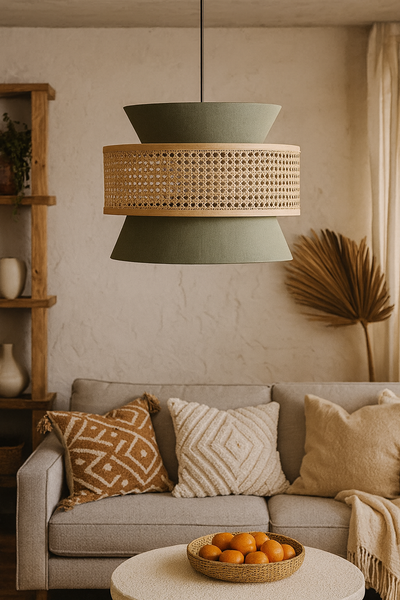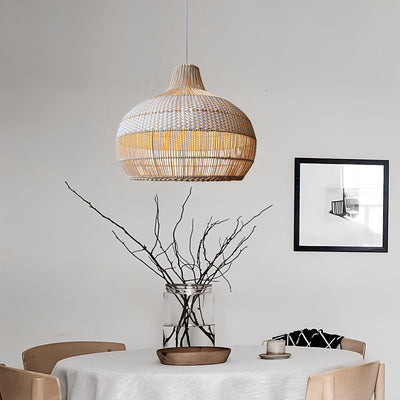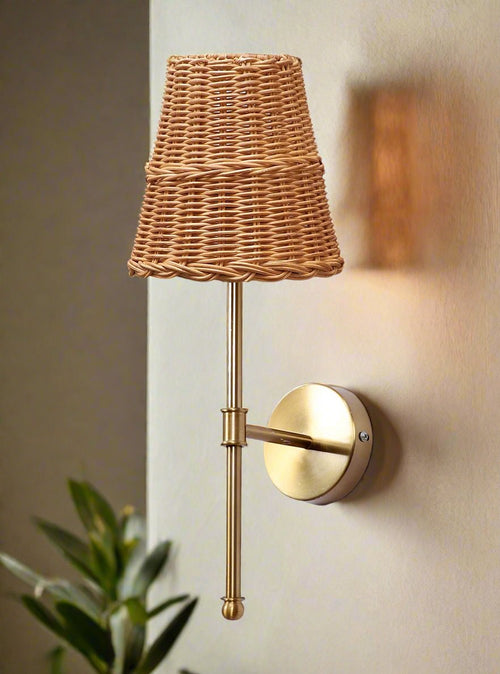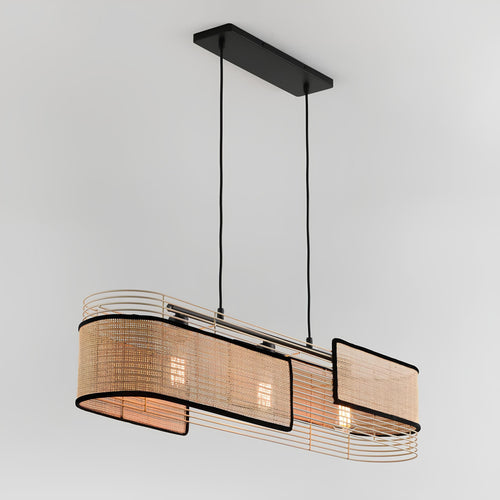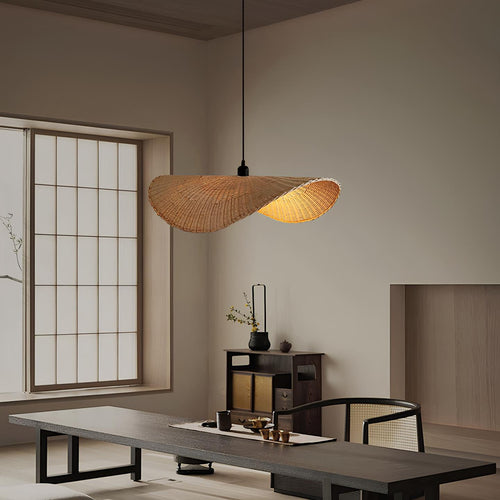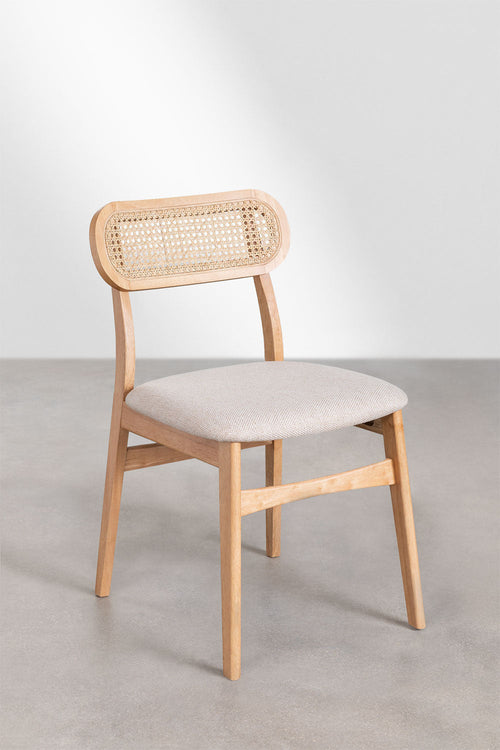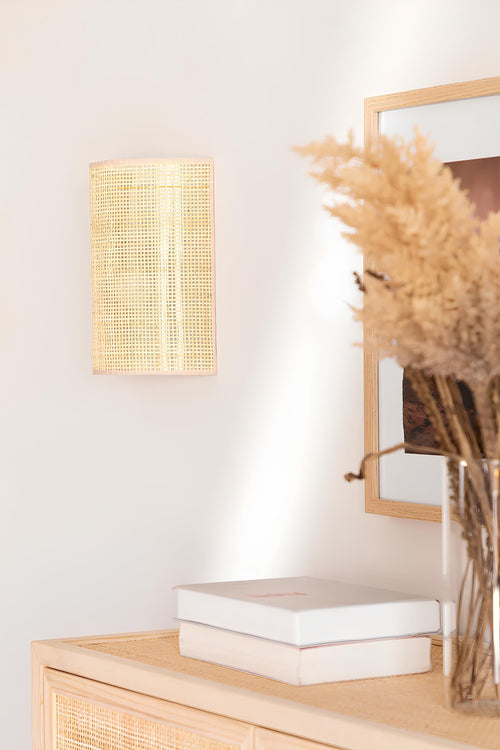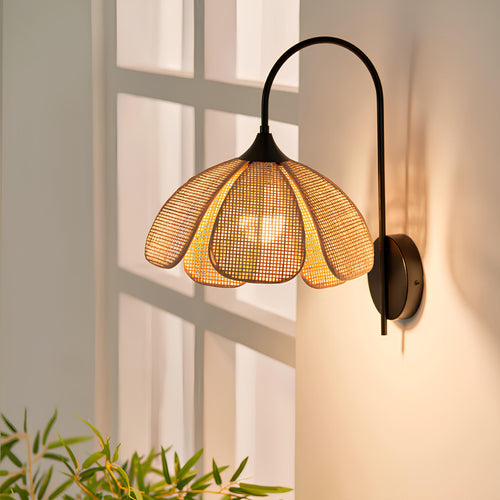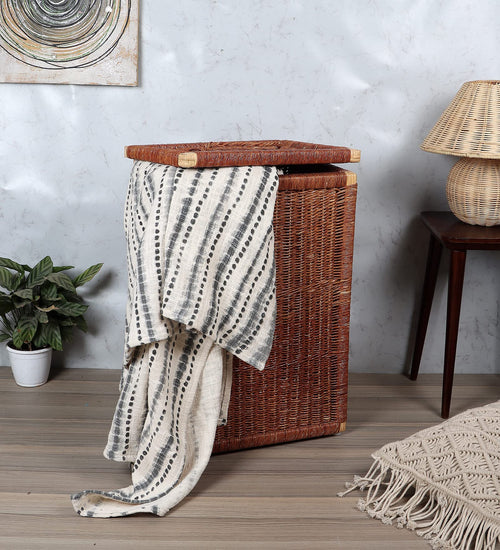

Rattan lamps are finely woven and organic, throwing a soft, dappled glow through the weave. Bamboo lamps are more structured and graphic, with bold ribbed stalks that cast striped shadows and cleaner beams. Choose rattan for softness and texture, bamboo for a bolder, more architectural kind of light.
Stand in any lighting shop in India, or scroll a single page of listings online, and you will meet the same warm, woven glow described two different ways: rattan lamps over here, bamboo lamps over there, and half the time the two labels sit on what looks like the same lamp. Both throw that soft, natural light everyone wants over a dining table or beside a bed. Both suit boho, Japandi and modern Indian rooms. So when it comes to a rattan lamp versus a bamboo lamp, which one should you actually buy?
The honest answer is that there is no loser here. A rattan lamp and a bamboo lamp are both beautiful, both natural, and both will warm up a room far more than a plain metal or glass fixture. The real differences are in the weave, the kind of light each one casts, the weight, and the overall look, soft and patterned versus structured and graphic. Once you understand those, the choice gets easy, and it usually comes down to the mood you want in the room rather than one material beating the other.
This guide compares rattan lamps and bamboo lamps fairly, point by point. We will look at what each material really is, how the light differs, weight, durability and price, and which one suits which room. We will also clear up why people use the two words so loosely, so you know exactly what you are buying.
Quick comparison: rattan lamps vs bamboo lamps
Here is the short version before we dig into the detail. This table sums up how rattan and bamboo lamps compare on the six things people ask about most when choosing a natural pendant, table lamp or floor lamp.
| Factor | Rattan lamp | Bamboo lamp |
|---|---|---|
| Look | Soft, organic, finely woven texture | Structured, graphic, bold ribbed lines |
| Light | Patterned, dappled glow through the weave | Striped shadows and clean beams through the stalks |
| Weight | Lighter, easy to hang anywhere | Sturdier and a little heavier |
| Durability | Strong and flexible, holds shape for years | Very rigid and tough, resists knocks |
| Price | Often slightly higher for fine weaves | Usually similar, sometimes a touch lower |
| Best room | Bedroom, cosy corners, soft layered light | Living and dining, statement overhead pieces |
You can already see the pattern. Rattan leans soft, warm and intricate. Bamboo leans bold, structured and graphic. Neither is better in the abstract; they simply set a different mood. The rest of this guide explains why, and helps you match each one to the room you have in mind.
One thing worth saying upfront: this is genuinely not a contest where one wins. Plenty of the most beautiful lamps mix both, a bamboo frame with a rattan or cane weave over it, so do not get too hung up on the label. Focus on the light and the look, and you will choose well either way.
What a rattan lamp actually is
Rattan: a woven vine
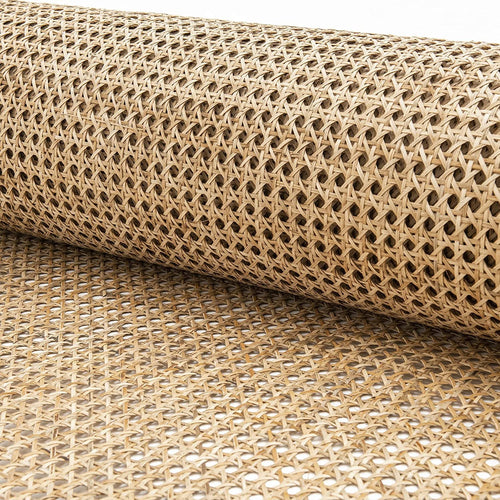
Rattan is a climbing palm vine that grows long, solid and flexible. Because it bends without breaking, artisans can weave it into fine, curved, intricate shades, the kind of lamp with a tight, patterned surface that looks almost like lace when the light is on. That is rattan's signature. A rattan lamp tends to read as soft and organic, with a finely textured weave that scatters light into a warm, dappled glow rather than throwing it in hard lines.
Because rattan is woven from a flexible vine, the shades are usually lighter in the hand, which makes rattan pendants and table lamps easy to hang or move around. The vine is solid all the way through, so despite the delicate look these lamps are strong and hold their shape for years. You will also see rattan described as cane or wicker on some listings, which brings us to the confusion most shoppers run into.
Why people mix up rattan, cane, wicker and bamboo
Here is the part that trips everyone up. Wicker is not a material at all, it is the weaving technique, so a lamp can be wicker and rattan at the same time. Cane is the smooth outer skin of the same rattan vine, peeled off for finer weaving. And bamboo is a different plant entirely. Sellers use all four words loosely, often on the same lamp, so a piece labelled a bamboo lamp may actually carry a rattan or cane weave over a bamboo frame. That is why you should look at the lamp itself, the weave and the light it casts, more than the word on the label.
What a bamboo lamp actually is
Bamboo is a fast-growing woody grass with a hollow, jointed stalk. It is rigid and very strong, so instead of being woven into fine curves like rattan, bamboo is often used in straighter strips or as visible stalks and rings. That gives a bamboo lamp its structured, graphic look, think bold lines, clean geometry and a confident silhouette. When lit, bamboo throws more defined striped shadows and crisper beams through the gaps, which makes it feel architectural and a little more dramatic.
Bamboo's rigidity also makes these lamps sturdier and a touch heavier, and very resistant to knocks. It has a natural golden tone and a distinct ribbed texture. If rattan is the soft, romantic option, bamboo is the structured, statement option, and both are equally at home in a modern Indian living room.
How the light differs
This is the difference you will actually live with every evening, so it deserves its own section. The material decides the shadow pattern on your walls.
Rattan light is soft and dappled. Because the weave is fine and tight, light leaks through hundreds of small gaps and lands as a gentle, scattered glow with a delicate patterned edge. It is flattering, cosy and easy on the eyes, the sort of light you want for winding down. A rattan pendant over a bedside or a reading nook bathes the area in warm texture without ever feeling harsh.
Bamboo light is graphic and striped. The wider stalks and straighter strips create bigger gaps, so light comes through in cleaner beams and bolder striped shadows. It is more dramatic and more architectural, the kind of light that makes a feature of itself across a dining table or in an entryway. If you want a lamp that draws the eye and paints strong lines on the ceiling, bamboo delivers that better than a fine rattan weave.
Neither is right or wrong. A bedroom usually wants the soft rattan glow; a living or dining room can carry the bolder bamboo pattern. Many homes use both, soft light where they relax and graphic light where they gather.
Which lamp for which room?
The simplest way to choose is to start with the room and the mood you want, then pick the material that matches. Use this as your shortcut.
- Bedroom: rattan. The soft, dappled glow of a fine rattan pendant or table lamp is perfect for winding down, and the lighter weave feels calm rather than bold.
- Living room: either, but bamboo for a statement. A structured bamboo pendant becomes a centrepiece, while a rattan one keeps things soft and layered. Pick by how much you want the lamp to stand out.
- Dining room: bamboo. A bold bamboo pendant over the table casts graphic shadows and anchors the space, exactly the drama a dining zone can carry.
- Hallway and entryway: bamboo. Its sturdier build and graphic light make a confident first impression in a passage or near the door.
- Reading nook and cosy corners: rattan. Warm, gentle and textured, it wraps a small corner in soft light without overpowering it.
- Wall accent in any room: either, as a sconce. A rattan sconce softens a wall; a bamboo sconce adds structure and line.
Rattan and bamboo lamps worth buying
These are some of our most popular handwoven lamps, each made from natural rattan, cane and bamboo by Indian artisans, and each casting that warm, natural glow. There is a mix of pendants, ceiling lights and wall lamps here, soft rattan weaves and bold bamboo shapes, so you can match one to your room.

Rattan Hanging Light - Shanaya
A finely woven rattan and bamboo pendant that throws a soft, dappled glow. The cosy pick for a living room or bedroom.
From Rs 1,899
Shop Now
A 14 inch rattan and bamboo pendant sized to anchor a dining table with warm, patterned light.
From Rs 2,899
Shop Now
A structured bamboo flush-mount lamp with bold lines, ideal for low ceilings and a graphic living-room look.
From Rs 2,899
Shop Now
A handwoven bamboo and wicker wall sconce that adds texture and soft accent light to any wall.
From Rs 1,699
Shop Now
A cane-webbing wall lamp that blends rattan softness with bamboo structure for a warm, layered glow.
From Rs 2,499
Shop NowDurability, price and care
Both materials last for years, and the price gap between them is usually small, so neither should make or break your budget. Here is how they compare on the practical points, and how to keep either one looking new.
Durability. Rattan is strong and flexible, so it absorbs a knock by flexing and springs back, and a good rattan weave holds its shape for years. Bamboo is more rigid and very tough, so it resists dents and keeps its crisp lines, though a hard enough blow can crack a stalk rather than bend it. For everyday use in an Indian home, both are more than durable enough.
Price. Prices overlap heavily. Fine, intricate rattan weaves can cost a little more because of the hand-work involved, while simpler bamboo shapes are sometimes a touch lower. The difference is rarely large enough to decide your choice, so let the look and the room lead instead.
Caring for a rattan or bamboo lamp is simple and almost identical for both:
- Dust regularly with a dry cloth or a soft brush so the weave stays clean and the light comes through brightly.
- Wipe any marks with a barely damp cloth, then let the lamp air-dry fully before switching it back on.
- Keep natural-fibre lamps away from constant damp and direct all-day sun, which can fade the colour over time.
- Use a low-heat LED bulb, never a hot halogen or high-wattage incandescent, to protect the woven shade.
- A thin coat of clear wax once a year keeps the weave looking new and protects the fibres.