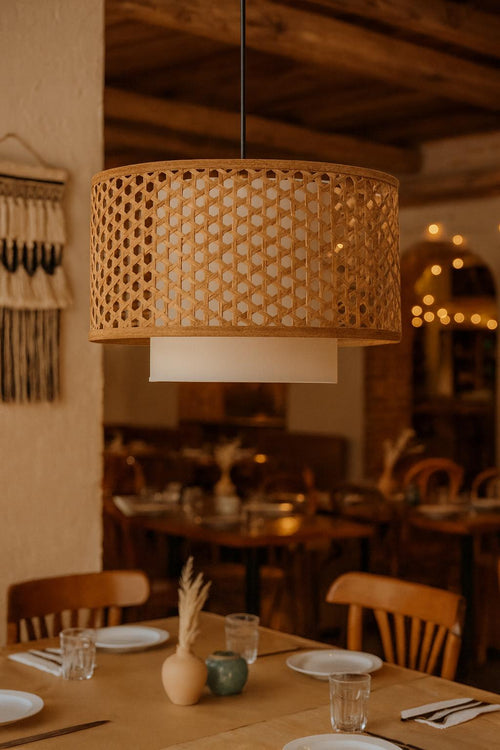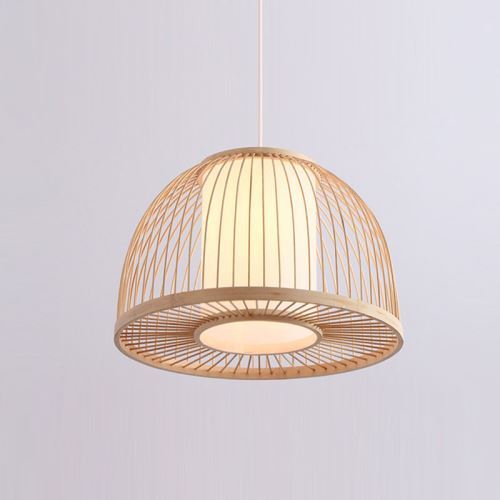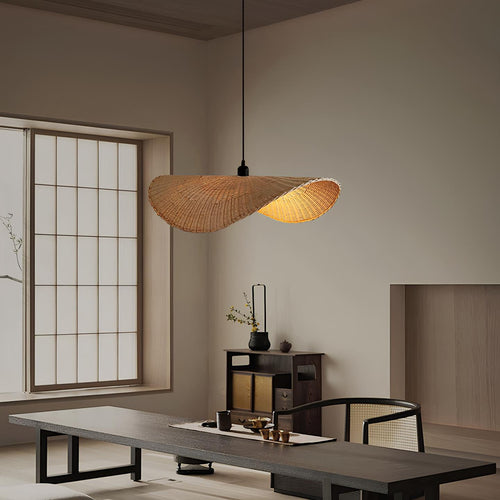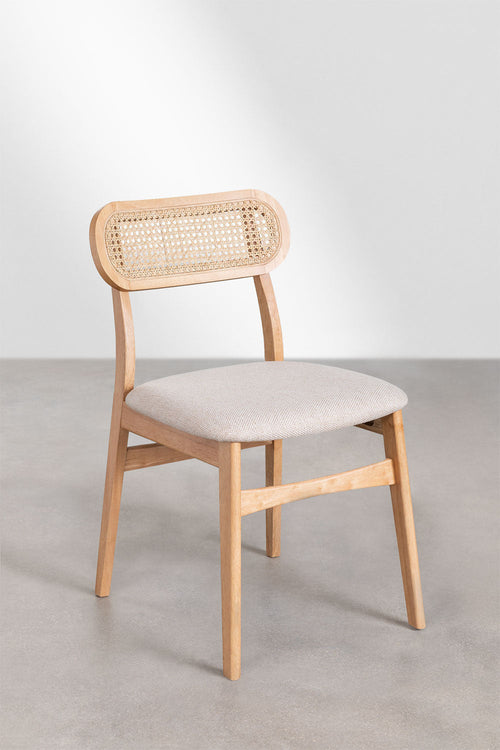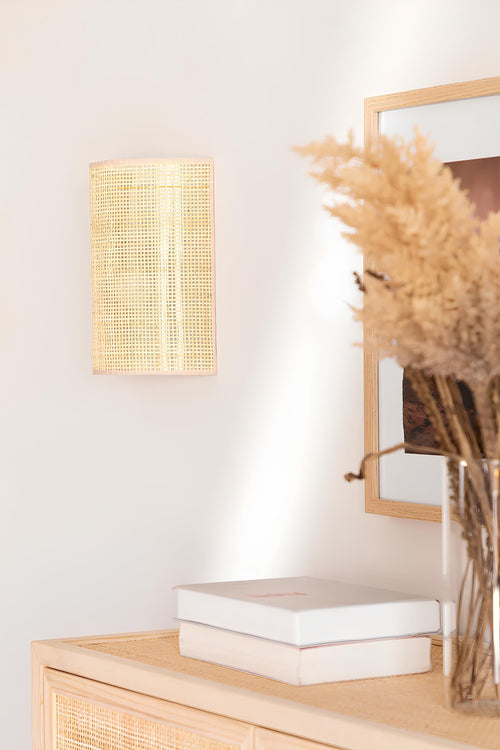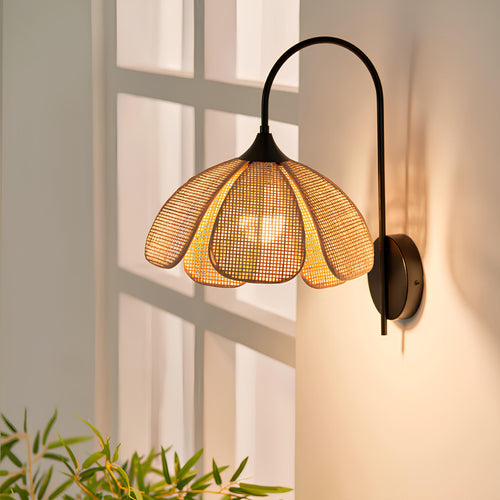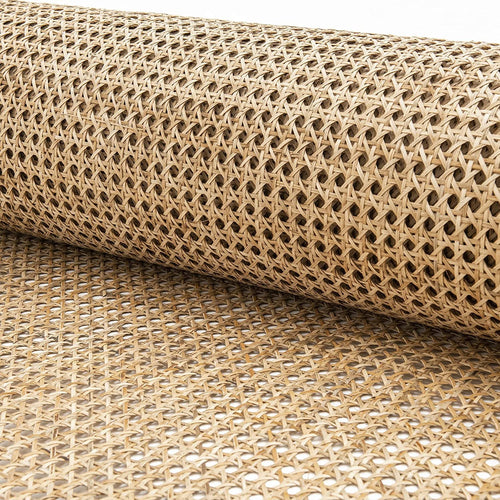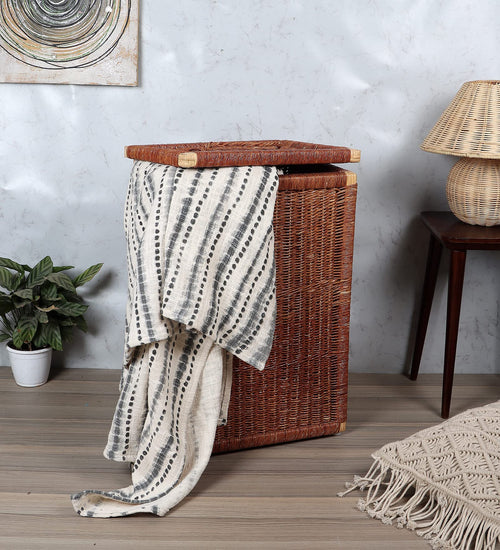

Jute weaves densely, so a jute pendant casts a deep, cosy glow over a sofa or a dining table. Raffia is looser, throwing a softer and more scattered light that suits a bedroom or a balcony. Warmth is what makes either one worth choosing.
Some lights switch a room on. Jute and raffia lamps do something quieter. They take a bare bulb and wrap it in handwoven natural fibre, so what reaches the room is no longer a glare but a soft, golden wash that feels closer to candlelight than to a ceiling fixture. That is the whole appeal of natural fibre lighting: the warmest light in the room, made from the most honest materials.
This guide walks through how jute and raffia lamps actually behave as light, how they differ from rattan, bamboo, cane and wicker, and how to choose the right type for a living room, bedroom, dining space or hallway. Every lamp pictured here is handwoven by Indian artisan families at Akway, so the texture you see is the texture that shapes the glow.
Quick answer: which natural fibre lamp for which room
If you only have a minute, this table maps the common jute and raffia lamp types to the rooms where they work hardest. Lamps are listed warmest-first, because warmth is the reason most people reach for natural fibre in the first place.
| Lamp type | Best room | Why it works |
|---|---|---|
| Jute pendant light | Living room, dining | Dense weave casts a deep, cosy glow over a sofa or table |
| Raffia pendant light | Bedroom, balcony | Looser weave throws soft, dappled shadows on walls and ceiling |
| Jute wall lamp | Hallway, reading nook | Compact wall sconce that adds warmth without floor space |
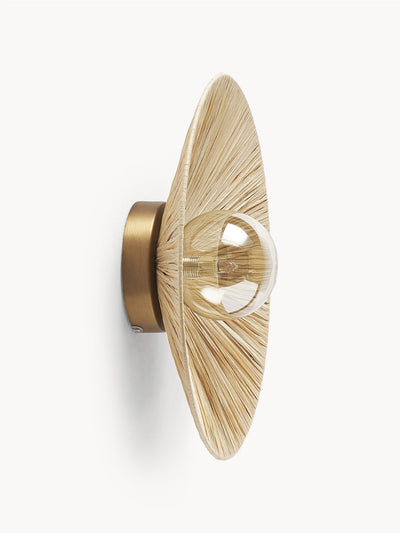
| Raffia wall lamp | Living room, bedside | Pairs in twos beside a bed or mirror for a balanced look |
| Jute table lamp | Bedside, side table | Portable warm light for layering beside the main fixture |
What makes jute and raffia lamps feel so warm
Warmth in lighting comes from two things working together: the colour temperature of the bulb, and what the shade does to the light before it reaches your eyes. Natural fibre shades win on the second count. Jute and raffia are not smooth, uniform materials. They are woven from coarse plant fibres with thousands of tiny gaps, and each gap softens and scatters the light instead of letting it blast straight out.
The result is diffused light with almost no hard edges. A bare bulb throws sharp shadows that make a room feel clinical. A jute or raffia shade turns that same bulb into an even, ambient glow, the kind that flatters skin tones, hides clutter and makes an evening feel slower. The golden-brown colour of the fibre adds its own warmth too, tinting the light a fraction warmer than the bulb alone.
How do you choose a jute or raffia lamp?
Picking natural fibre lighting is less about brand and more about matching the lamp to the job. Work through these steps in order and you will land on the right piece.
- Start with the room and the job. Do you need a centrepiece over a sofa or dining table, a pair of soft wall lights beside a bed, or a portable glow on a side table? The job decides whether you want a pendant, a wall lamp or a table lamp.
- Choose jute or raffia by the mood. Jute is denser and more rustic, giving a deep, grounded glow. Raffia is looser and more coastal, throwing playful dappled shadows. Pick jute for cosy and earthy, raffia for breezy and boho.
- Match the size to the space. A pendant over a dining table should be roughly a third the width of the table. For a living room, a 14 to 16 inch shade reads as a proper centrepiece, while 12 inch suits a bedroom or hallway.
- Check the drop and ceiling height. For pendants, leave about 30 to 36 inches between the shade and a table top, and more clearance in a walkway. Most Akway pendants ship with an adjustable cord so you can fine-tune the drop.
- Confirm the bulb and fitting. Natural fibre lamps use a standard E27 holder. Buy a warm white LED separately, since bulbs are not included, and keep within the recommended wattage so the fibre stays cool.
The main types of natural fibre lighting
Jute and raffia show up in a handful of lamp formats, each with its own role in a room. Here is how they differ and where each one earns its place.
Jute pendant lights
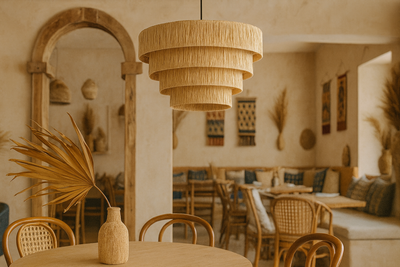
The workhorse of natural fibre lighting. A jute pendant hangs from the ceiling and is dense enough to throw a strong, warm pool of light directly below it, which makes it ideal over a dining table or a living room seating area. Jute's tight weave means more of the glow points down and less escapes sideways, so you get focused cosy light rather than a scattered wash.
Raffia pendant lights
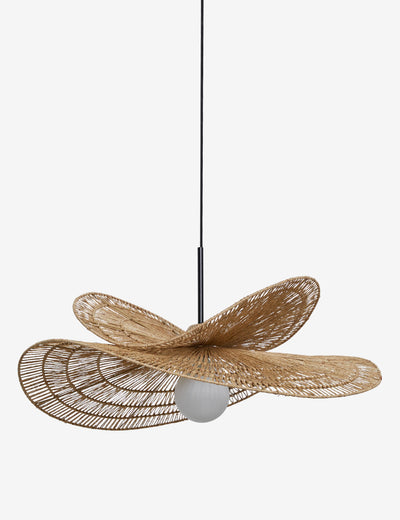
Raffia is the looser, more open cousin of jute. The gaps in a raffia weave are wider, so a raffia pendant lets light leak through the shade itself, painting soft dappled patterns across the ceiling and nearby walls. That makes raffia pendants beautiful in a bedroom or on a covered balcony, where the shadow play matters as much as the light below.
Jute and raffia wall lamps
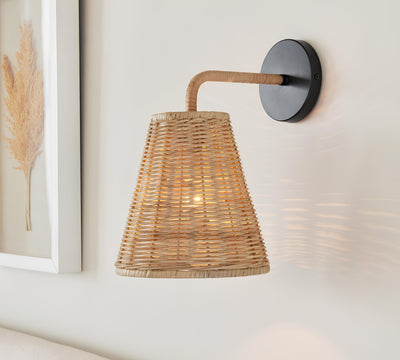
Wall lamps, or sconces, mount flat against the wall and add warmth without taking up any floor or table space. They are perfect for hallways, entryways and reading corners, and they look especially good in pairs, one on each side of a bed, a mirror or a sideboard. A jute wall lamp gives a grounded, rustic glow, while a raffia version feels a touch more relaxed.
Jute table lamps
Table lamps are the easiest way to add natural fibre light without any installation. Set one on a bedside table or a console and you get a portable pool of warm light for layering, so the room is not relying on a single bright ceiling fixture. They are the natural fibre answer to harsh overhead lighting in a bedroom.
Our natural fibre lamps, handwoven in India
These are the jute and raffia lamps our customers reach for most, each one woven by hand by Indian artisan families. Lamps are listed warmest and most versatile first.

A dense handwoven jute pendant in four sizes, from 12 to 20 inch. The deep weave casts a warm, grounded glow over a sofa or dining table.
From Rs 1,299
Shop Now
An open-weave raffia pendant that throws soft, dappled shadows across the ceiling. Made for bedrooms and covered balconies with a coastal feel.
From Rs 2,999
Shop Now
A larger raffia pendant built to anchor a living room. The natural weave creates beautiful dappled light patterns above a seating area.
From Rs 3,699
Shop Now
A handwoven jute wall sconce that filters light into a warm golden glow. Hang one in a reading corner, or a pair beside the bed.
From Rs 1,299
Shop Now
Bamboo and Jute Wall Sconce - Kashvi
A jute shade on a sturdy bamboo and cane frame, made to welcome guests in an entryway or hallway with soft ambient light.
From Rs 1,899
Shop NowJute and raffia vs rattan, bamboo and cane
Natural fibre lighting is a family, and jute and raffia sit at the soft, textured end of it. Knowing how they compare to rattan, bamboo, cane and wicker helps you pick the right look.
- Jute and raffia: woven from soft plant fibres, so the weave is dense and textured. The glow is the warmest and most diffused of the group, and the look leans rustic and boho.
- Rattan and cane: smoother, more polished strands that give a cleaner, more structured weave. Rattan lighting suits japandi and minimalist rooms where you want order over rough texture.
- Bamboo: rigid and geometric, used more for the frame than the shade. Bamboo brings structure and a modern, architectural edge, often paired with a jute or raffia shade as on our Kashvi sconce.
- Wicker: not a material but a weaving technique, often using cane or rattan. Wicker lamps share the handwoven warmth but with a tighter, basket-like finish.
If your home leans earthy, layered and relaxed, jute and raffia are the natural choice. If it leans clean and minimal, rattan and bamboo may suit better. Many rooms happily mix both.
Bulbs: getting the warm light right
A natural fibre lamp is only as warm as the bulb inside it. A few simple rules get the glow right and keep the lamp safe.
- Use warm white, 2700K. This is the sunset tone that makes jute and raffia sing. Avoid 4000K or higher, which looks cold against the fibre.
- Choose LED, not incandescent. LEDs run cool, which protects the natural fibre from heat. Stay within the recommended wattage, usually a 5 to 9W LED or up to a 60W equivalent.
- Pick frosted over clear bulbs. A frosted LED softens the light further and hides the bulb shape through an open raffia weave.
- Add a dimmer where you can. Dimmable warm LEDs let you drop the glow even lower in the evening, which is where natural fibre lighting feels its best.
Caring for jute and raffia lamps
Natural fibre lasts for years with very little effort. The one thing it does not like is moisture, so most care is about keeping it dry and dust-free.
- Dust weekly with a soft dry cloth, a feather duster or a vacuum brush attachment.
- Keep the lamp away from direct water and humid rooms like bathrooms, since jute and raffia absorb moisture.
- Avoid prolonged direct sunlight, which can fade the natural golden colour over time.
- Spot clean any marks with a barely damp cloth, then let the fibre air-dry fully right away.
- Use only LED bulbs within the stated wattage so the fibre never gets hot.
Jute naturally darkens a shade with age. That deeper patina is part of the material's character, not a defect, and many people prefer the older, warmer tone.