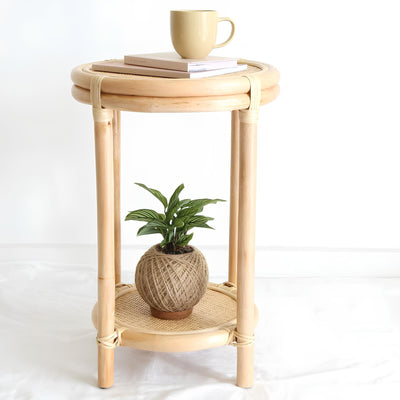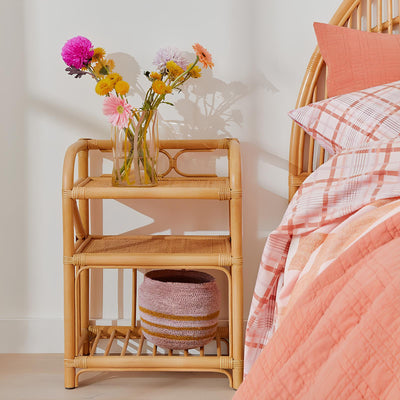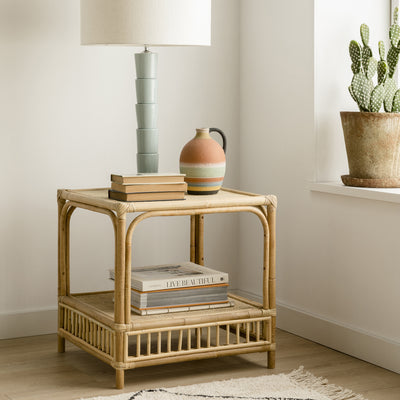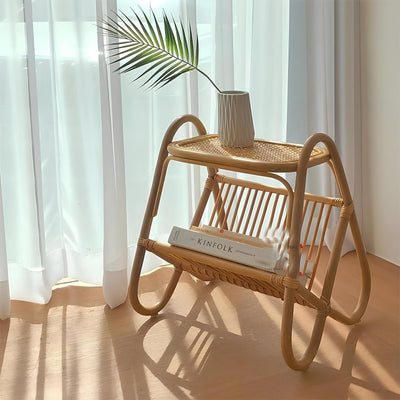

Height is where most people go wrong. A side table should land within an inch or two of the sofa arm it sits beside, which for most sofas means 55 to 65 cm tall with a 35 to 45 cm round top. Get that right and the rest is just styling.
There is a moment when a living room finally feels finished, and more often than not it is a small table that does it. The sofa was always there, the rug too, but the corner stayed awkward until a little rattan side table slipped in beside the armchair and gave the room a place to rest a cup, a book, a small lamp. A good accent table is quiet work. It does not announce itself the way a sofa does, yet take it away and the whole arrangement loosens.
This guide is about that humble, hardworking piece: the rattan, cane and bamboo side table for the living room. We will cover the sizes and heights that actually work next to Indian sofas and chairs, how to choose the right one for your space, and how to style it so it looks considered rather than cluttered. Along the way we will share the handwoven side tables we make at Akway, each one woven by Indian artisan families from natural cane and rattan.
Whether you call it a side table, an accent table, an end table or a sofa table, the job is the same: a small surface, at the right height, in a material that warms the room. Natural wicker does that better than glass or metal ever will.
Rattan side table sizes and heights by use
The single most common mistake is height. A side table that sits well below the sofa arm looks marooned, and one that towers over it feels clumsy. As a rule, the tabletop should land within an inch or two of the arm of whatever it sits beside. Use the table below to match a size to where it will live.
| Where it sits | Ideal height | Top size / shape | Best for |
|---|---|---|---|
| Beside a sofa (as an end table) | 55 to 65 cm | 35 to 45 cm round | Coffee mug, remote, a small lamp |
| Next to an armchair or accent chair | 50 to 60 cm | 30 to 40 cm round | Book, reading glasses, tea |
| As a bedside or cane nightstand | 55 to 65 cm | 35 to 45 cm, with storage | Phone, water glass, night lamp |
| Corner accent table | 60 to 70 cm | 40 to 50 cm, taller form | A plant, a vase, a sculptural object |
| Nesting / extra surface | 40 to 55 cm | Small round, stackable | Overflow seating, drinks for guests |
If your sofa arm is low, go to the shorter end of each range. Indian sofas vary a lot, so the safest move is to measure the arm height before you buy, then pick a table whose top finishes near that line.
How do you choose the right rattan accent table?
Once height is sorted, the rest is about fit, function and finish. Work through these in order and you will land on the right table quickly.
- Measure the gap. Note the height of the sofa or chair arm, then the floor space you can spare. A side table needs breathing room around it so people can walk past without knocking it.
- Decide round or square. Round cane tables are friendlier in tight spaces and beside busy walkways, with no sharp corners. Square or drum shapes give more usable top area for lamps and stacks of books.
- Choose your surface job. A lamp and a drink need a flat, stable top. A reading corner benefits from a table with a shelf or drawer for storage.
- Match the weave to your style. Open, airy cane suits boho and coastal rooms; a tighter rattan weave with a darker frame reads more modern Indian or Japandi.
- Think about weight and moves. Bamboo and rattan accent tables are light, so you can pull one out for guests and tuck it away after. That portability is part of their charm.
How do you style a rattan side table?
A side table earns its keep by being useful, but it earns its looks by being styled with restraint. The trick is to treat the top like a tiny stage: one tall thing, one short thing, one soft thing, and stop there.
The reading corner
Beside an armchair, pair a cane side table with a small lamp for warm evening light, a single stacked book or two, and a low candle or a tiny pot. Leave space for a cup. This is the most useful accent table in any living room, and the one people reach for daily.
The sofa-side end table
Next to the sofa, keep it clear enough to actually use. A coaster, the TV remote in a small tray, and one decorative object is plenty. If you run two matching rattan end tables, one at each end of the sofa, the room instantly looks more intentional and symmetrical.
The green corner
A taller bamboo accent table in an empty corner is the easiest way to lift a dead space. Set a trailing plant on top, or a single sculptural vase. The natural weave and the greenery speak the same language, so the corner feels alive rather than filled.
The bedside crossover
Many of our customers buy a cane side table for the living room and a matching one as a bedside nightstand. Choosing a design with a small drawer or shelf gives you a home for a phone, a charger and a book, while the open weave keeps a small bedroom feeling light.
Rattan and cane side tables we make
These are some of our most-loved handwoven side and accent tables, each one woven by Indian artisans from natural cane and rattan. They work just as well beside a sofa as they do next to a bed.

Rattan Cane Side Table - Kimaya
A compact round cane table for the armchair or sofa side. Light enough to move, sturdy enough for a lamp and a cup.
From Rs 3,899
Shop Now
Handwoven Rattan Side Table - Anala
A versatile accent table that crosses over from living room to bedside. The tight rattan weave suits modern Indian and Japandi rooms.
From Rs 4,499
Shop Now
A taller, sculptural form built for the corner or beside an accent chair. Holds a plant, a vase or a stack of books with ease.
From Rs 4,999
Shop Now
A roomy top and a generous frame make this a confident sofa-side end table, or a bamboo nightstand with real surface space.
From Rs 5,999
Shop Now
A balanced round wicker table for the living room. Pair two at either end of the sofa for a calm, symmetrical look.
From Rs 4,999
Shop NowCaring for a cane or rattan side table
Natural wicker rewards a little routine care and will last for years in an Indian living room.
- Dust the weave weekly with a dry cloth or a soft brush, working into the gaps where dust settles.
- Wipe spills off the top quickly with a barely damp cloth, then let it air-dry fully.
- Keep the table out of long hours of harsh direct sun, which can dry and fade the cane over time.
- Avoid soaking or heavy moisture; rattan and bamboo do not like staying wet.
- Once a year, a thin coat of clear furniture wax keeps the weave supple and looking new.