
A Japandi bedroom comes down to five choices: a low cane bed or rattan headboard, warm layered light at 2700K instead of one overhead tube, a small woven nightstand on each side, natural textiles in muted tones, and clutter hidden in wicker baskets rather than put on display.
A Japandi bedroom is what happens when Japanese calm meets Scandinavian warmth. It is a minimal bedroom, but never a cold one. The look leans on a few honest materials, low and gentle lighting, and a lot of breathing room. In an Indian home, where bedrooms often carry storage, festive clutter and strong overhead tube light, the Japandi approach is a quiet relief. You keep less, you light it softer, and the room finally feels like somewhere you can switch off. The result is a bedroom that works as hard for your sleep as it does for your eye, which matters more in a space you wake up in every single day.
This guide walks through the Japandi bedroom ideas that actually work in Indian flats and homes: a cane bed as the anchor, warm low lighting instead of one harsh ceiling light, a single piece of art, natural textiles in linen and cotton, smart decluttering with baskets, and a neutral palette that ties it all together. If you want the wider style first, read our Japandi home decor guide. Here we stay in the bedroom.
The Japandi bedroom at a glance
Before the room-by-room ideas, here is how the core elements come together. Get these five right and the rest of the styling falls into place on its own.
| Element | Japandi approach | What to choose |
|---|---|---|
| The bed | Low profile, natural material, honest grain | A cane bed or rattan headboard on a solid wood frame |
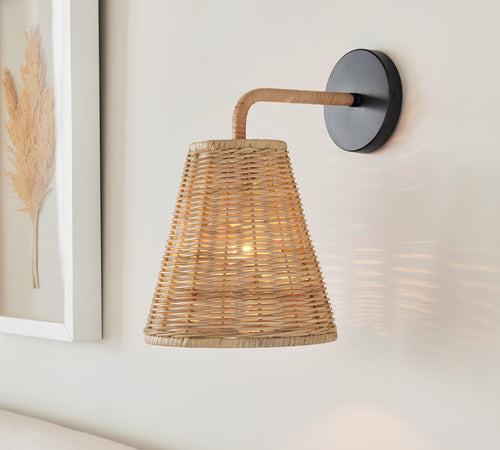
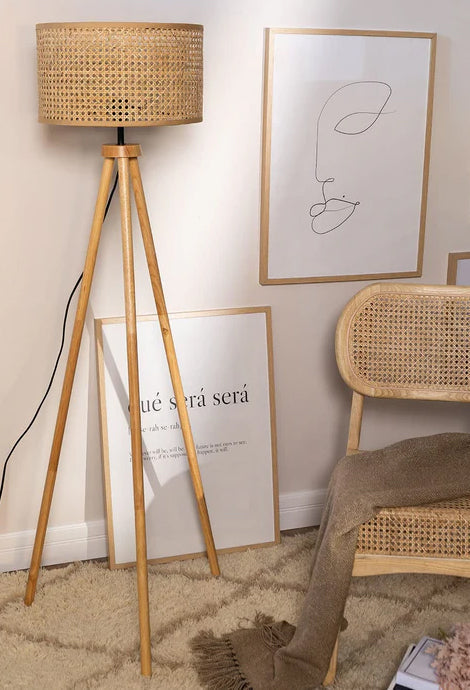
| Lighting | Warm, low and layered, never one harsh tube light | A rattan pendant or bamboo table lamp at 2700K |
| Nightstand | Small, simple, woven or wooden | A cane or mango wood bedside table, one per side |
| Textiles | Natural fibres in soft, muted tones | Linen, cotton and a jute rug underfoot |
| Clutter | Hidden, not displayed | Wicker baskets for everything that does not earn its place |
Six Japandi bedroom ideas that work in Indian homes
You do not need to buy everything at once. Start with the bed and the lighting, then add textiles and storage as you go. Here is how each idea works and what to look for.
1. Make a cane bed the anchor of the room
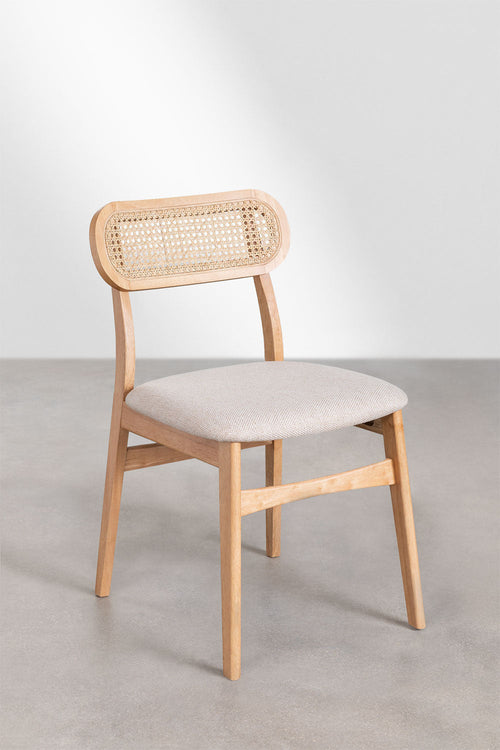
In a Japandi bedroom the bed sets the whole mood, so it should be the most natural thing in the room. A cane bed, with a hand-woven rattan headboard on a solid wood frame, does exactly that. The woven panel adds soft texture without shouting, the low frame keeps the eye line calm, and the natural grain reads warm rather than clinical. Skip glossy laminates, heavy tufting and tall upholstered headboards. They pull the room toward hotel-lobby formal, which is the opposite of what you want here.
Keep the bedding plain. White, oatmeal or a soft clay tone on the sheets lets the cane do the talking. If you want the headboard look without changing your whole frame, a standalone rattan headboard works too. For sizes, prices and how cane holds up in Indian weather, our cane bed buying guide covers the detail.

Rattan Cane Bed King Size - Purab
A low-profile cane bed with a hand-woven rattan headboard on a solid wood frame. The natural anchor your Japandi bedroom is built around.
From Rs 44,999
View & Buy
Rattan Cane Bed King Size - Tiya
A softer, rounded cane headboard for a calmer look. Pairs beautifully with linen bedding and a single woven nightstand.
From Rs 44,999
View & Buy2. Trade the harsh ceiling light for warm, low lighting
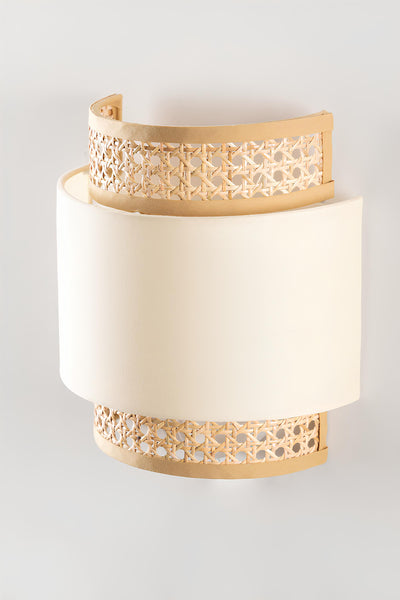
Nothing kills a Japandi bedroom faster than a single bright white tube light. The whole style is about soft, layered light at eye level and below. Aim for warm bulbs around 2700K to 3000K, and split your lighting into three jobs: a gentle ambient glow, a reading light by the bed, and a low accent somewhere in the corner.
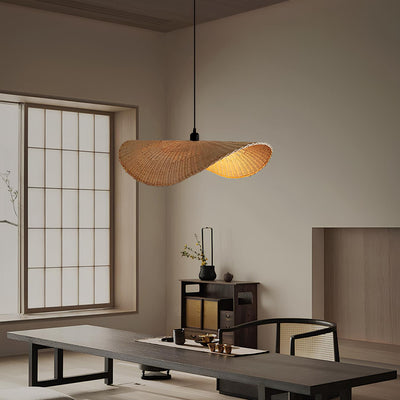
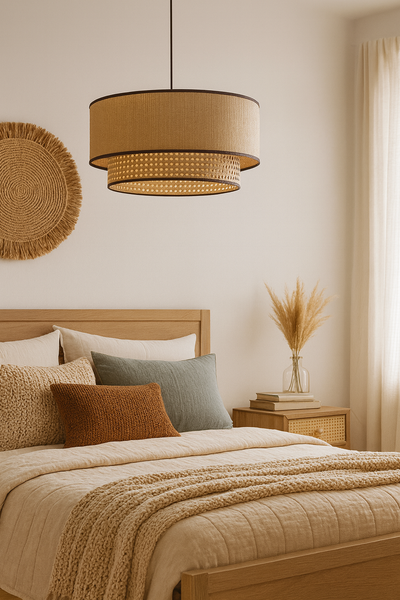
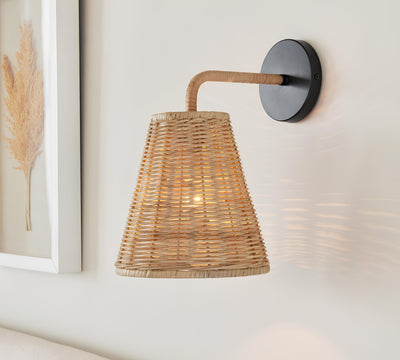
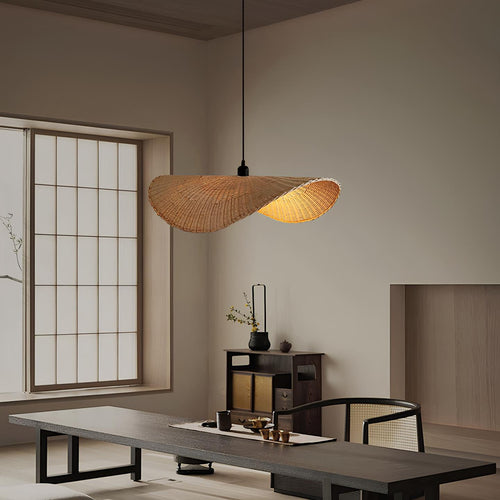
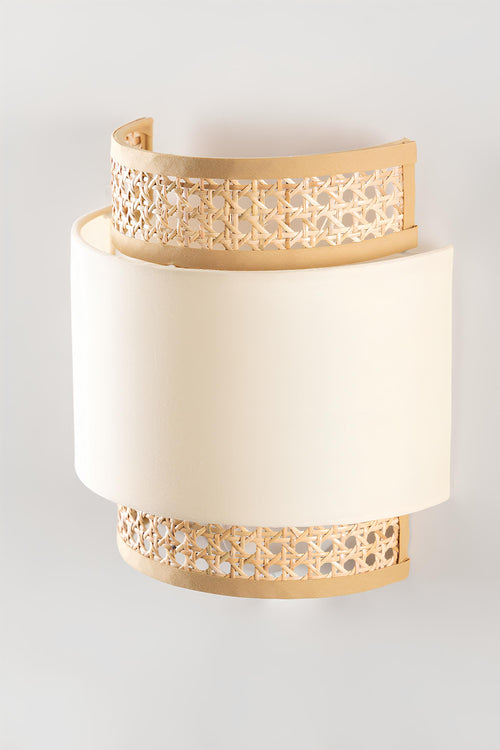
A rattan or bamboo pendant over the bed throws a beautiful woven shadow on the ceiling and softens the whole room. On the nightstand, a small bamboo table lamp gives you warm reading light without lighting up the entire room. Put both on dimmers if you can. The goal is a room you can wind down in, not one lit like a study.

A clean, modern rattan pendant made for the Japandi look. Hang it over the bed for a warm, woven glow instead of harsh overhead light.
From Rs 1,399
View & Buy3. Let one piece of art or a mirror do the work
Japandi is the art of restraint, and nowhere is that clearer than on the walls. Resist the gallery wall. One considered piece above the bed, or a single round rattan mirror on the facing wall, says more than ten frames fighting for attention. The empty wall around it is not wasted space, it is the calm the style depends on.
If you go with a mirror, a natural-edged rattan or cane frame keeps it in the same material family as the bed and lighting. A mirror also bounces what little warm light you have around the room, which makes a small bedroom feel softer and larger. Hang it at eye level, leave plenty of clear wall around it, and stop there.
4. Build in warmth with natural textiles
Minimal does not mean hard. The warmth in a Japandi bedroom comes almost entirely from textiles in natural fibres. Think linen and cotton bedding, a chunky cotton throw folded at the foot of the bed, and a jute or cotton rug grounding the floor. These materials feel good underfoot and against the skin, and they age gracefully instead of looking tired.
Stick to a tight tonal range: cream, oatmeal, clay, soft grey. Mix textures rather than colours, so a smooth linen sheet next to a nubbly cotton throw on top of a coarse jute rug. That texture layering is what stops a neutral room from feeling flat, without ever breaking the calm.
5. Declutter, then hide the rest in baskets
A Japandi bedroom only works if surfaces stay clear. The fastest way there is honest decluttering followed by smart, good-looking storage. Clear the nightstand down to one lamp and one small object. Get chargers, spare linen, books and odds and ends off the floor and into woven baskets that look intentional rather than like overflow.
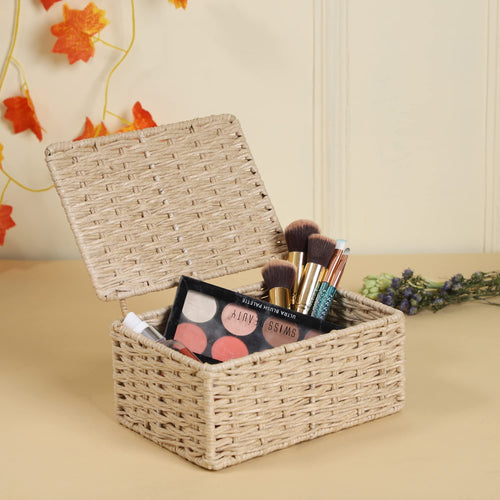
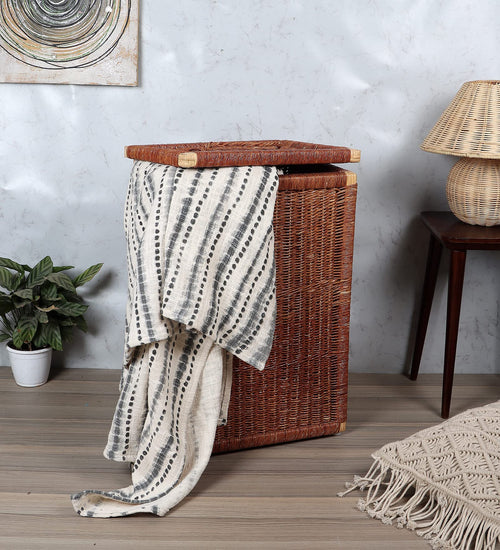
Wicker baskets are perfect here because they hide clutter while adding the exact natural texture the style wants. Use a wardrobe basket for folded clothes and spare bedding, a lidded basket for things you would rather not see, and one larger floor basket for a throw or extra pillows. The room stays minimal on the surface, even when life underneath is not.

A handwoven wicker basket for clothes, spare linen and bedroom odds and ends. Hides clutter and adds natural texture in one move.
From Rs 2,399
View & Buy6. Keep the palette neutral and let materials add interest
The Japandi palette is quiet on purpose. Build the room from warm neutrals, the creams, beiges, soft greys and walnut browns you already see in cane, rattan and natural wood, then add interest through material and texture rather than colour. A single muted accent is fine, a clay terracotta cushion or a sage green throw, but one is the limit.
This is where a small woven or wooden nightstand earns its place. A cane or mango wood bedside table sits in the same neutral family as the bed and keeps both sides of the bed grounded and symmetrical. One lamp, one book, one small plant on top, and you have the whole Japandi bedroom in a single corner.

Rattan & Mango Wood Bedside Table - Amara
A compact cane and mango wood nightstand that keeps surfaces calm. One per side of the bed for a balanced, grounded Japandi look.
From Rs 7,499
View & BuyHow do you build it on a budget?
You can ease into the Japandi look one piece at a time. Here is a sensible order if you are starting from a normal Indian bedroom, working from cheapest first to biggest investment last.
- Under Rs 2,000: swap your bulbs to warm 2700K, declutter the nightstand, and add a wicker basket or two to clear the floor.
- Under Rs 5,000: hang a rattan pendant over the bed and add linen or cotton bedding in a neutral tone.
- Under Rs 10,000: add a cane or mango wood bedside table and a single round rattan mirror on the wall.
- The big piece: a cane bed or a rattan headboard, the anchor everything else is styled around.
Common Japandi bedroom mistakes to avoid
- Keeping the harsh ceiling light: one cool-white tube light undoes the entire mood. Go warm and layered.
- Over-decorating the walls: a gallery wall fights the calm. One piece is enough.
- Too many materials: stick to two or three natural finishes and repeat them.
- Clutter on surfaces: clear nightstands and dressers, then hide the rest in baskets.
- Adding colour to liven it up: the quiet is the point. Add texture, not colour.