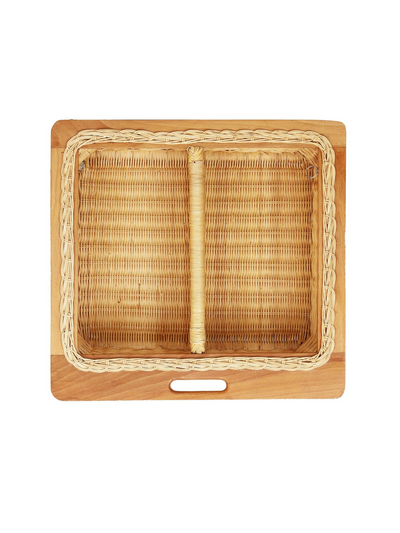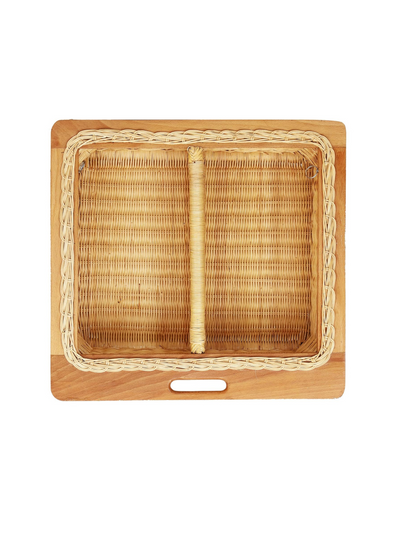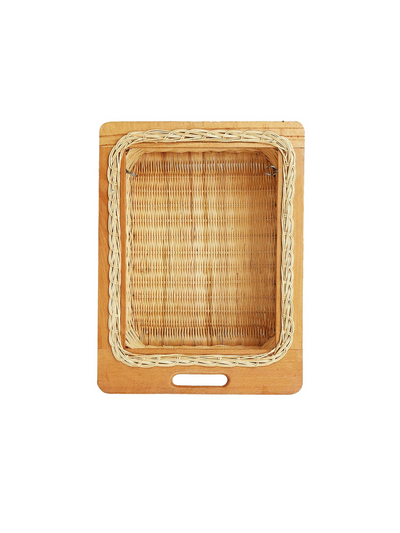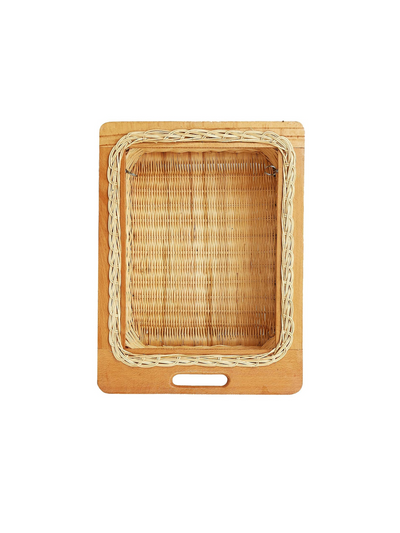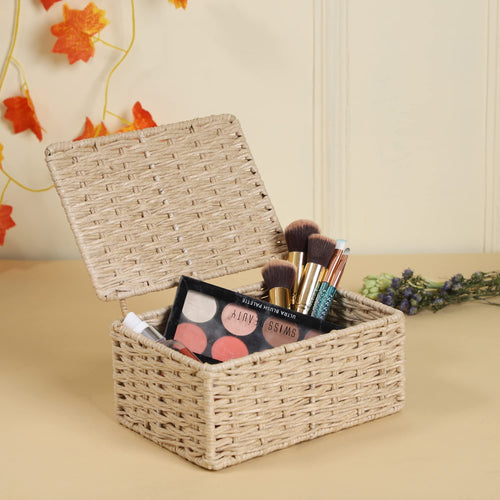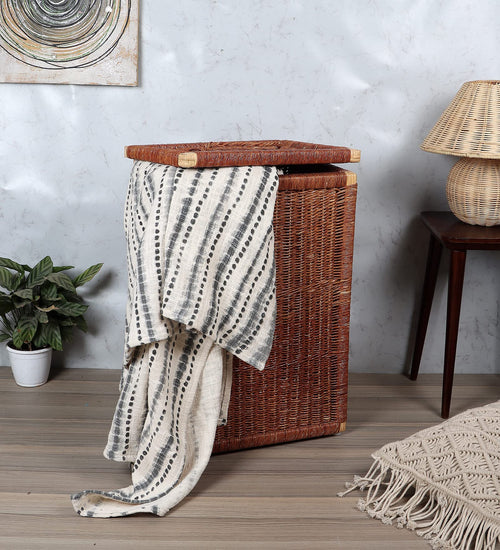

Work zone by zone. A 20 by 20 inch deep wicker basket handles the pantry shelf of pulses, snacks and dry goods, while deep pull-out drawers take baskets sized for containers and packets. Measure the shelf or drawer first: that single step decides whether a basket fits or not.
Every kitchen has that one drawer. You open it for a peeler and find three lids, a roll of foil, two batteries and no peeler. Multiply that across the pantry, the counter and the cabinet under the sink, and you get the daily friction that makes cooking feel like a chore. The good news is that you do not need a full renovation to fix it. You need a plan and the right baskets, zone by zone.
This is a practical kitchen organization guide built around wicker baskets, the breathable, handwoven kind that look as good on an open shelf as they work inside a deep drawer. We will walk your kitchen one zone at a time, the pantry, deep drawers, the countertop, under the sink, open shelves and the corner where your onions and potatoes live, and match each spot to a basket that earns its place. Along the way you will see why natural materials like rattan, cane, bamboo and seagrass beat plastic for an Indian kitchen, and how to size everything so it actually fits.
If you would rather read by size than by zone, our companion modular kitchen wicker basket sizes guide maps every basket to a cabinet width. This piece is about the ideas, the system, and the decluttering routine that keeps it that way.
Quick answer: which basket goes where?
If you only have two minutes, here is the whole game plan in one table. Pick your zone, grab the matching basket size, and you are most of the way to a calmer kitchen.
| Kitchen zone | What it holds | Which basket works |
|---|---|---|
| Pantry shelf | Pulses, snacks, dry goods | 20 x 20 inch deep wicker basket |
| Deep pull-out drawer | Containers, packets, bulk items | 18 x 20 or 22.5 x 20 inch basket |
| Countertop | Fruit, bread, daily essentials | 16 x 16 inch cane basket |
| Under the sink | Cleaning supplies, sponges, bags | 16.5 x 20 inch wicker basket |
| Open shelf | Cookbooks, tea, display jars | 16 x 16 inch seagrass or cane basket |
| Veg corner | Onions, potatoes, garlic | 22.5 x 20 inch partitioned basket |
Before you buy: measure once, buy right
The single biggest reason a basket ends up in the loft instead of the cabinet is a guessed measurement. A 600 mm cabinet does not have 600 mm of usable space inside, because the carcass and channels eat 30 to 40 mm. So measure the opening, not the label, before you shop for any zone.
Zone 1: the pantry shelf
The pantry is where good intentions go to get buried behind a wall of half-empty packets. The fix is to stop storing loose packets on the shelf and start storing categories in baskets. Give each basket a job: one for pulses and grains, one for baking, one for snacks, one for tea and coffee. When everything in a category lives in one basket, you pull the whole basket out like a drawer, take what you need, and slide it back. No more archaeology.
Deep, roomy baskets work best here because pantry items are tall and irregular. A 20 x 20 inch wicker basket swallows a row of airtight containers or a jumble of packets and still looks tidy from the front. The open weave is a quiet bonus: dry goods breathe instead of sweating in sealed plastic, so atta and pulses stay fresher in a humid Indian kitchen. If your pantry is a tall larder unit, stack two basket heights and reserve the top shelf, the one you cannot see into, for things you reach for rarely, like festival cookware or spare jars.
One more habit that keeps a pantry organized for good: label the front of each basket, even with a simple tied tag. The label is not for you, it is for everyone else in the house who would otherwise put the biscuits where the pasta lives.

Wicker Basket 20 x 20 inch - Siya
The pantry all-rounder. Deep enough for a row of containers or a category of packets, and roomy in 500 to 600 mm units.
From Rs 3,500
Shop NowZone 2: deep pull-out drawers
Deep drawers look like a lot of storage and behave like a black hole. Anything below the top layer disappears, so you buy a second jar of something you already own. Baskets turn that single deep cavity into sortable compartments. Drop two or three baskets side by side inside the drawer and suddenly the space has zones: one basket for spare containers, one for foil and cling film, one for packets you are working through.
The trick in a pull-out is matching the basket to the drawer's internal size so it does not slide around when you open and close. A 18 x 20 inch basket suits a standard 500 mm pull-out, while a wider 22.5 x 20 inch basket fills a 600 mm-plus drawer with bulkier items. Because wicker is light, you can lift a whole basket out onto the counter, work from it, and drop it back, which is far easier than digging into a fixed drawer. For very deep drawers, a basket with a divider keeps tall and short items from toppling into each other.

Wicker Basket 18 x 20 inch - Shanvika
Sized for a 500 mm pull-out drawer. Lift it out, work from it on the counter, slide it back. Holds containers and everyday dry goods.
From Rs 3,299
Shop NowZone 3: the countertop
Counters collect clutter because they are the path of least resistance. The fruit, the bread, the day's post and the random charger all land there because there is nowhere else for them to go. A single good-looking basket gives them a home and clears the surface in one move. A 16 x 16 inch cane basket is the right scale for a counter: big enough to corral fruit or bread, small enough that it does not eat your prep space.
This is the zone where looks matter most, because the basket is on show all day. Natural cane and rattan bring warmth that a plastic tray never will, and they suit boho, Japandi and modern Indian kitchens equally. Use a shallow basket for fruit so air circulates and nothing bruises at the bottom, and keep a second small basket near the kettle for tea, sachets and the bits you reach for every morning. The rule for the counter is one basket per purpose, never a catch-all, or it quietly becomes the clutter it was meant to fix.

Wicker Basket 16 x 16 inch - Swadhi
Compact and good-looking on a counter or 450 mm drawer. Right size for fruit, bread, spices or the morning tea station.
From Rs 3,299
Shop NowZone 4: under the sink
Under the sink is the hardest zone in the kitchen. It is dark, it is awkward, there are pipes in the way, and it tends to become a damp graveyard of half-used sprays and stray sponges. Baskets rescue it by grouping like with like and making the back reachable. Put cleaning sprays in one basket, cloths and sponges in another, and bin bags and refills in a third, then pull the relevant basket forward instead of crawling in after a bottle.
A 16.5 x 20 inch basket is a smart fit for the cabinet under the sink because it is deep enough for tall bottles yet narrow enough to sit beside the pipe run. Wicker has a real edge here that plastic does not: the open weave lets air move, so a damp sponge or cloth dries instead of staying wet and starting to smell. Keep anything that can leak in a small tray inside the basket so a spill does not soak the weave, and you have turned the worst cabinet in the house into a tidy, grab-and-go zone.

Wicker Basket 16.5 x 20 inch - Saira
Deep and slim for the under-sink cabinet or a 450 to 500 mm pull-out. Breathable weave dries damp cloths and sponges.
From Rs 3,000
Shop NowZone 5: open shelves
Open shelving is having a moment in Indian kitchens, and it lives or dies on how you style it. Bare shelves with loose clutter read as messy, but the same shelves with a few matched baskets read as designed. Baskets are the styling trick that hides the unphotogenic stuff, the spare cables, the stray packets, the odds and ends, behind a clean natural front while still keeping it within reach.
For shelves, scale down and keep it consistent. A row of matching 16 x 16 inch cane or seagrass baskets along a shelf looks intentional and gives you closed storage without closing the shelf. Mix in a couple of open display jars or a stack of cookbooks between the baskets so the shelf has rhythm rather than a solid wall of weave. Seagrass and cane suit this zone especially well because their texture photographs beautifully and warms up an otherwise hard kitchen of tile and steel. The discipline here is restraint: two or three baskets per shelf, all the same finish, beats six mismatched ones.
Zone 6: the onion and potato corner (airflow matters)
Onions, potatoes and garlic are the one group of kitchen items that genuinely need the right storage, not just tidy storage. Sealed in plastic or stuffed in a closed drawer, they trap moisture, sprout early and rot. They need darkness and, above all, airflow, which is exactly what a handwoven basket is built to give. The open weave keeps air moving on every side, so your veg lasts noticeably longer.
A partitioned basket is the ideal here, because onions and potatoes should not touch. Potatoes give off moisture and onions give off gases that make each other spoil faster, so a basket with a divider lets you keep them in the same spot but separated. Tuck it into a cool, shaded corner away from the stove and out of direct sun. If you want the full breakdown of materials and why wicker outlasts steel and plastic for this job, our onion and potato basket guide compares all three.

Wicker Basket 22.5 x 20 inch (Double Partition) - Eliana
Built for the veg corner. The double partition keeps onions, potatoes and garlic separated, and the open weave keeps air moving so they last longer.
From Rs 3,399
Shop NowWhy does wicker beat plastic in the kitchen?
Once you start organizing by zone, the material of the basket starts to matter. Plastic is cheap and it works at first, but in a kitchen it cracks, yellows and traps moisture. Natural fibre does the opposite, and looks better doing it.
- Breathable: the open weave of wicker, rattan, cane and seagrass lets air circulate, so onions, potatoes, dry goods and damp cloths stay fresher and dry faster than they would in sealed plastic.
- Handmade and eco-friendly: each basket is handwoven by Indian artisan families from natural fibre, fully biodegradable, with no plastic smell to taint food.
- Looks premium: warm, natural texture that suits boho, Japandi and modern Indian kitchens, and earns a place on an open shelf instead of being hidden.
- Lasts longer: with basic care a wicker basket lasts years, while plastic baskets crack and discolour and end up in the bin.
Keeping it organized: the upkeep routine
A basket system is only as good as the habit behind it. A few small routines keep the whole kitchen from sliding back into chaos, and they keep the baskets themselves looking new for years.
- Run a two-minute reset each evening: anything on the counter goes back into its basket before you switch off the light.
- Do a monthly edit of one zone at a time so it never becomes a full-day project.
- Dust baskets with a dry cloth or soft brush, and wipe spills quickly so moisture does not sit in the weave.
- Let a basket air-dry fully if it gets damp, and avoid soaking or prolonged wet exposure.
- A thin coat of clear wax once a year keeps the natural fibre looking fresh and protects the weave.