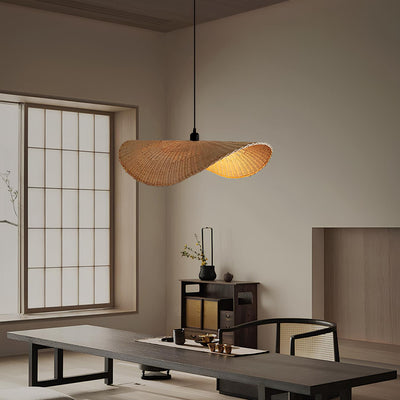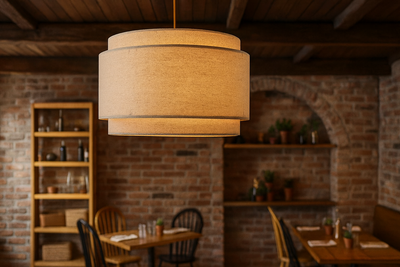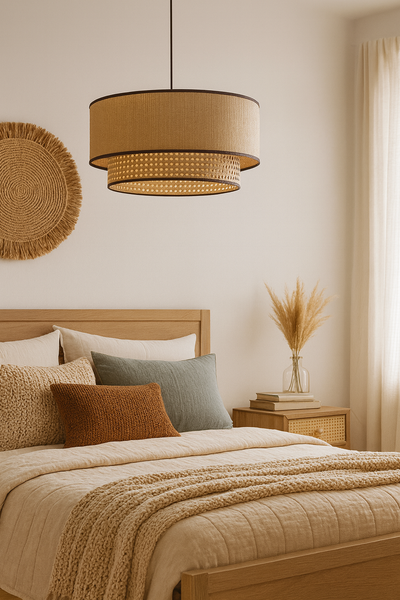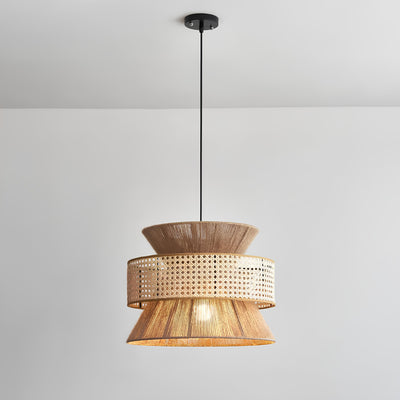

Rattan pendants throw a warm, patterned glow with dappled shadow through the weave. Fabric pendants give a softer, more even, glare-free spread. Pick rattan when you want texture and character in the room, and fabric when you want quiet, uniform light with a clean modern silhouette.
You have narrowed your hanging light down to two looks, and now you are stuck. On one side is a rattan or natural fibre pendant, woven from rattan, bamboo, cane or wicker, all warm texture and patterned shadow. On the other is a fabric pendant, a clean shade in linen or cotton that pours out soft, even light. Both are beautiful, and both suit a living room, dining table or bedroom in a modern Indian home. So which one actually lights a room better?
The honest answer is that neither wins outright. A fabric pendant gives you soft, diffuse, contained light that is easy to live with and easy to place anywhere. A rattan or bamboo pendant gives you warm, patterned light, real texture overhead and a natural material that ages well. They are simply two different moods, and the right pick depends on what you want the light, and the room, to feel like.
This guide compares a rattan pendant versus a fabric pendant fairly, point by point. We will look at the light each one casts, the look, durability, cleaning, price and best room, then break down what each does best, which suits which room and how to care for them. By the end you will know exactly which pendant light belongs over your sofa or dining table, and why.
Quick comparison: rattan pendant vs fabric pendant
Here is the short version before we get into detail. This table sums up how a rattan or natural fibre pendant compares with a fabric pendant on the six things people weigh most when choosing a hanging light for the living room, dining room or bedroom.
| Factor | Rattan / natural fibre pendant | Fabric pendant |
|---|---|---|
| Light | Warm, patterned glow with dappled shadows through the weave | Soft, diffuse and contained, even glare-free spread |
| Look | Natural texture, handwoven, boho and Japandi character | Clean, minimal, smooth modern silhouette |
| Durability | Strong natural rattan, cane and bamboo that ages gracefully | Sturdy frame, though fabric can fade or mark over years |
| Cleaning | Dust with a soft brush or dry cloth, occasional damp wipe | Wipe gently, but fabric holds dust and stains more easily |
| Price | Typically from around Rs 1,899 for handwoven pieces | Often similar, sometimes a touch lower for plain shades |
| Best room | Living room, dining, bedroom where you want texture and warmth | Bedroom, study, any room wanting calm, even light |
You can already see the shape of the choice. A rattan pendant leans warm, textured and full of character, painting the room with patterned shadow. A fabric pendant leans soft, quiet and even, spreading light without drawing attention to itself. Neither is better in the abstract. They set a different mood, and the rest of this guide helps you match each to the room and feeling you are after. This is genuinely not a contest where one beats the other, and many homes happily use both.
What each pendant does best
Both lights do their job well. The difference is in the light they throw and the feeling they bring to a room, so it helps to look at each on its own terms before you choose.
What a fabric pendant does best
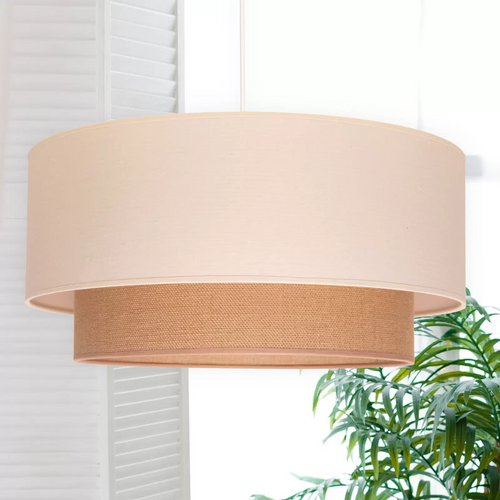
A fabric pendant is the easy, reliable choice. The shade, usually linen or cotton over a metal frame, wraps the bulb and diffuses light evenly in every direction. The result is a soft, contained glow with no harsh hotspots and little glare, the kind of gentle light that suits reading, working or relaxing. Because the shade is solid rather than open, light does not spill in patterns on the walls. It stays calm and focused on the area below.
That makes a fabric pendant wonderfully versatile. It blends into almost any scheme, from minimalist to Scandinavian to contemporary Indian, and never fights with the rest of the room. If you want a hanging light that does its job quietly, lights the space cleanly and lets your furniture take the lead, a fabric shade is hard to beat. It is also forgiving in small rooms, where a soft even wash feels more spacious than bold shadow play.
What a rattan or natural fibre pendant does best
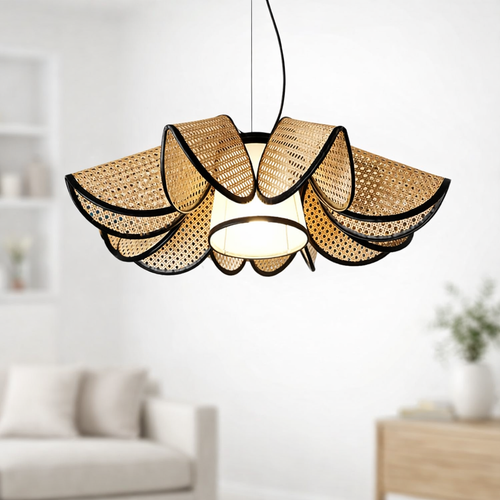
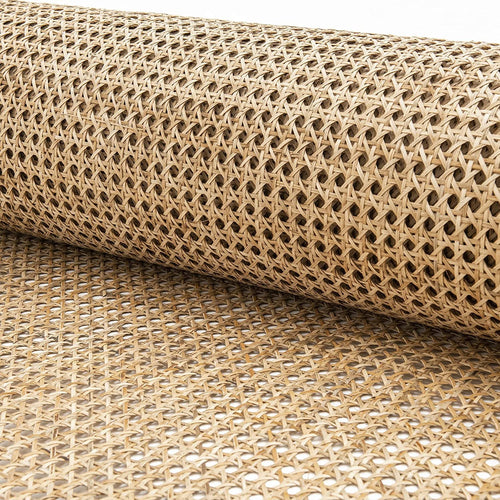
A rattan, bamboo or cane pendant does something a fabric shade cannot. Because the weave is open, light leaks through hundreds of small gaps and lands as a warm, dappled glow, throwing patterned shadows across the walls. The lamp becomes a feature in its own right, lit or unlit, reading as natural texture by day and turning the whole room warm and atmospheric by night.
This is the pick when you want the light to add character, not just brightness. A handwoven rattan or wicker pendant brings boho, coastal and Japandi warmth to a room instantly, and pairs naturally with wood furniture, linen, terracotta and plants. The materials matter too. Natural rattan, cane and bamboo are renewable, biodegradable and age beautifully, deepening in colour rather than looking tired. If you want texture, warmth and a piece with a story, woven wins.
How the light really differs
This is the difference you will live with every evening, so it deserves a closer look. The shade decides what lands on your walls and how the room feels after dark.
Fabric light is soft and contained. The closed shade diffuses the bulb into an even, glare-free pool of light directly below, with a gentle fall-off and no pattern. It is flattering and easy on the eyes, ideal where you want calm, steady illumination, a bedside, a study desk or a quiet corner.
Woven light is warm and patterned. Because a rattan or bamboo weave is open, light escapes through the gaps and paints the room with dappled shadow. It is more atmospheric and more alive, the sort of light that makes a feature of itself over a dining table. The brightness reaching the floor is a little softer, since some light scatters sideways, but you gain mood and texture you cannot get from a solid shade.
Neither is right or wrong. A bedroom or study often wants the contained fabric glow, while a living or dining room can carry the warmer patterned light of a woven pendant. Plenty of homes use both.
Durability, cleaning and price
Beyond the light, the day-to-day differences come down to how each pendant lasts, how easy it is to keep clean and what it costs. Here the two are closer than you might expect.
On durability, both last when made well. A good fabric pendant has a solid metal frame, and natural rattan, cane and bamboo are tough, strong and flexible enough to hold their shape for years. The difference shows over time. Natural fibre ages gracefully, deepening in tone, while a fabric shade can fade in strong light or pick up a mark that is hard to remove. For a busy Indian home, woven natural fibre tends to age more forgivingly.
On cleaning, a fabric shade is simple to wipe but holds dust in the cloth and shows stains more readily. A woven pendant needs an occasional dust with a soft brush to reach the gaps, but hides everyday dust far better and rarely stains. On price, the two are broadly comparable. Handwoven rattan and bamboo pendants start from around Rs 1,899, and a plain fabric shade can sit a touch lower, though you are buying a simpler look rather than a handcrafted, natural piece.
Which pendant for which room
The simplest way to choose is to start with the room and mood you want, then pick the shade that matches.
- Living room: rattan or natural fibre. A handwoven pendant becomes a warm centrepiece and adds the texture a living room thrives on. Choose fabric only if you want the light to stay quiet.
- Dining room: rattan. A woven pendant hung over the table casts beautiful patterned shadows and anchors the space, exactly the warmth a dining zone can carry.
- Bedroom: either. A soft fabric shade gives calm, even light for winding down, while a rattan pendant adds cosy texture. Pick by whether you want quiet or character.
- Study or reading nook: fabric. The contained, glare-free glow of a fabric shade is kinder for focused tasks and screens.
- Hallway and entryway: rattan. A natural fibre pendant makes a confident, textured first impression by the door.
- Kitchen and breakfast counter: either, sized to the space. A woven pendant adds warmth, a fabric one keeps the light clean and even.
Rattan and bamboo pendants worth buying
These are some of our most popular handwoven hanging lights, each made from natural rattan, cane and bamboo by Indian artisans, and each casting that warm, patterned glow. There is a mix of pendants and a ceiling light here, in a range of sizes, so you can match one to your room.

Rattan Hanging Light - Shanaya
A handwoven rattan and bamboo pendant in six sizes that throws a warm, dappled glow. Our most popular living-room light, easy to scale from a cosy corner to a 30 inch statement.
From Rs 1,899
Shop Now
A handwoven rattan and bamboo pendant with a polished natural finish, casting soft shadow patterns through the weave. A warm, Japandi pick for a living room or dining nook.
From Rs 2,099
Shop Now
A larger handwoven rattan pendant made for the dining table, throwing mesmerising shadow patterns on walls and ceiling for warm, atmospheric meals.
From Rs 2,899
Shop Now
A handwoven bamboo and rattan flush-mount for rooms with lower ceilings, an easy natural upgrade over a plain fixture that still casts a cosy cane weave glow.
From Rs 2,899
Shop Now
A handwoven rattan and bamboo pendant with timeless Japandi character, equally at home over a hallway, an entryway or a living-room corner.
From Rs 2,799
Shop NowHow to care for each pendant
Both shades are easy to live with, and a little routine care keeps either one looking good for years.
- Rattan and bamboo: dust regularly with a soft dry cloth or feather duster, reaching into the weave with a soft brush for tight gaps.
- Deeper clean for woven shades: wipe with a slightly damp cloth and dry immediately, and keep natural fibre away from constant damp and direct rain.
- Fabric shades: dust often, since cloth holds dust, and spot-clean marks gently with a barely damp cloth rather than soaking the fabric.
- Both: use a warm-white LED bulb up to 60W, never an overpowered hot bulb, to protect the shade and keep the glow soft.
- Both: keep the fixture out of strong direct sun where possible, which fades fabric and can lighten natural fibre over time.
So which should you choose?
There is no single right answer, only the right fit for your room. If you want light that stays soft, even and quietly in the background, a fabric pendant is the dependable choice, especially in a bedroom, study or small space that benefits from calm illumination. It does its job cleanly and lets the room lead.
But if you want warmth, texture and a hanging light that becomes part of the room's character, a rattan or natural fibre pendant is the one to reach for. It paints the walls with patterned shadow, brings boho and Japandi warmth to a living or dining space, and is made from natural materials that age beautifully. Both are valid, both are lovely, and many homes use each where it suits. Choose by the mood you want after dark, and you will be glad of your pendant every evening.