Cane wardrobe fronts are not purely a style trend. A solid wardrobe door traps air, which is precisely how you get that shut-cupboard smell in your clothes during humid months. A caned panel lets the wardrobe breathe, and it happens to look better than laminate while doing it.
Cane wardrobe shutters are wardrobe doors with a woven rattan panel set into a wooden frame instead of a solid or laminate front. In India most of them are made two ways: a carpenter builds the frame and stretches cane webbing across it, or you buy a ready-made wardrobe that already has rattan door fronts. Material for a standard shutter costs roughly Rs 1,600 to Rs 4,800 depending on size and weave, and the work takes a carpenter a day or two.
Why cane fronts caught on in Indian bedrooms
Walk through any recent interiors project in Delhi, Bangalore or Pune and you will see the same detail: a bedroom wardrobe with cane panels. It is not only fashion. Cane earns its place in Indian homes for practical reasons.
A solid wardrobe door traps air. In humid months that is how you get that shut-cupboard smell in your clothes, and in the worst cases mildew on leather belts and bags. Woven cane breathes. Air moves through the panel all day, which keeps the inside of the wardrobe closer to room conditions.
Cane also hides a lot. A laminate shutter shows every fingerprint and every scuff from a suitcase dragged past it. A woven panel breaks up the surface, so daily marks disappear into the texture. For a wardrobe that gets opened six times a day, that matters more than it sounds.
Then there is weight. Cane webbing is light. Swapping two solid shutters for framed cane panels takes real load off the hinges, which is worth knowing if your existing wardrobe doors have started to sag or catch on the frame.
The two routes: retrofit or ready-made
Almost every cane wardrobe in India comes about one of two ways, and they suit different situations.
| Carpenter-fitted cane shutters | Ready-made rattan wardrobe | |
|---|---|---|
| Best when | You already have a wardrobe, or you are getting one built to fit an alcove | You are furnishing from scratch or renting |
| Material cost | Roughly Rs 1,600 to Rs 4,800 per shutter in cane | Included |
| Labour | Separate, varies by city and carpenter | None |
| Timeline | A day or two per pair of shutters once material arrives | Delivery time only |
| Fit | Exact, floor to ceiling if you want | Standard sizes |
| Moves with you | No, it is built in | Yes |
If your flat has an awkward alcove or a low beam, the carpenter route wins every time. Built-in storage that runs wall to wall makes a small bedroom feel bigger, and you cannot buy that off a shelf. If you move every couple of years, a freestanding wardrobe is the sensible answer.
Square weave or hexagonal: which cane webbing to ask for
This is the decision people get stuck on, and it is simpler than it looks. There are two weaves in common use for furniture.
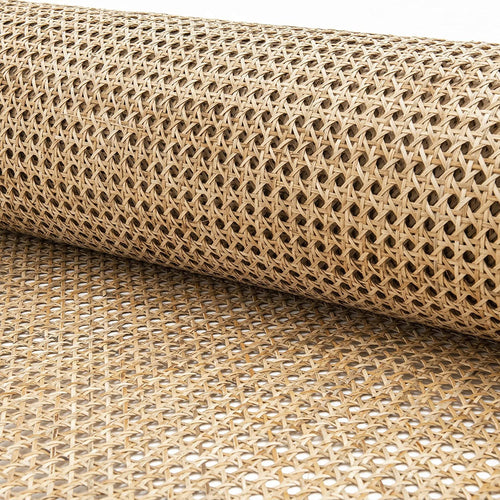
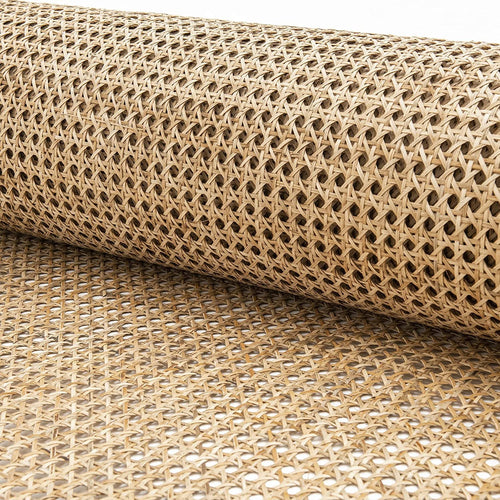
Square weave is the tighter of the two. The pattern is a close grid, the holes are small, and from a few feet away it reads almost like a textured fabric. It suits flat-fronted modern wardrobes, Japandi bedrooms, anything where you want the cane to be a quiet texture rather than a statement.
Hexagonal weave, sometimes called octagonal or the classic chair cane, has a more open six-sided pattern. More light and air pass through it, and it looks more obviously handmade. It is the right choice for a wardrobe with a moulded or beaded frame, or in a room with older wooden furniture you want it to sit alongside.
How much cane webbing do you need?
Cane webbing is sold by the sheet or the roll, in a standard 2 feet width. Length is what you choose. Measure the opening in your shutter frame, not the shutter itself, then add about two inches on every side. That extra is what your carpenter grips, stretches and staples into the groove.
| What you are covering | Typical panel | Sheet to order | Cane cost |
|---|---|---|---|
| Small cabinet door | Up to 2 ft x 2 ft | 2 ft x 2 ft | From Rs 1,599 |
| Half-height shutter | 2 ft x 3 ft | 2 ft x 3 ft | From Rs 1,899 |
| Standard wardrobe shutter | 2 ft x 4 ft | 2 ft x 4 ft | From Rs 2,899 |
| Full-height shutter | 2 ft x 6 ft to 7 ft | 2 ft x 7 ft | From Rs 4,799 |
| Two full shutters | Pair | 2 ft x 10 ft roll | From Rs 6,799 |
Order the roll rather than separate sheets when you are doing more than one shutter. Cane is a natural material and the colour varies slightly between batches, in the same way wood does. Cutting a pair of shutters from one roll keeps them matched.
How a carpenter fits cane into a wardrobe shutter
You do not need to do this yourself, but knowing the steps helps you brief the carpenter and spot work that has been rushed.
First the shutter needs a groove. If the frame is being made new, the carpenter routs a channel about 6 mm wide around the inside edge of the opening. On an existing solid shutter, the centre panel is cut out and a groove is run around what remains.
Next the cane is soaked. Dry cane webbing is brittle and will crack if you force it. Twenty to thirty minutes in warm water makes it flexible and, more importantly, makes it shrink slightly as it dries. That shrinkage is what pulls the panel drum-tight.
Then it is stretched and set. The wet cane goes over the opening, gets pressed into the groove, and a thin reed spline is glued in on top of it to lock it in place. The carpenter works from the middle of each side outwards so the tension stays even.
Finally it dries and gets finished. Overnight is enough. As the cane dries it tightens, and any small sag disappears. Most people leave it natural. If you want it darker, a light wood stain or a matte lacquer works, but keep it thin because heavy varnish clogs the weave and kills the texture you paid for.
Cane wardrobe design ideas that work in Indian homes
A few combinations come up again and again because they hold up in real rooms.
Cane on top, solid below. Cane panels on the upper two-thirds of the shutter, solid wood on the lower third. The solid section takes the knocks from shoes and vacuum cleaners, and you still get the airflow and texture at eye level.
Cane on the outer shutters only. On a three or four door wardrobe, run cane on the two outer doors and keep the middle mirrored. You get the softness of cane and a full-length mirror without adding a separate one to the room.
Cane with a dark frame. Natural honey cane inside a walnut or charcoal frame is the combination that photographs well and, more usefully, hides dust at the edges. Pale frames show every line of settled dust along the beading.
Floor to ceiling, single run. If the ceiling is under ten feet, running the wardrobe the full height and caning the top shutters removes the dust-collecting gap above a standard wardrobe. It is the detail that makes built-in storage look designed rather than added.
Ready-made rattan wardrobes
If you would rather not manage a carpenter, these arrive with the cane work already done. All three are solid mango wood frames with rattan panel fronts, so the structure carries the load and the cane stays decorative.

Mango Wood Wardrobe for Bedroom - Silsila
A full-height triple wardrobe in solid mango wood with rattan-panel doors. Hanging rail plus adjustable shelves, enough for a whole bedroom of clothes and linen.
A compact two-door rattan wardrobe for smaller bedrooms and rented flats. Light enough to move, deep enough for full-length hanging.
Mango Wood Cane Wardrobe for Bedroom - Riyaba
The largest of the three, with a deeper carcass for bulkier winter clothes and bedding. Cane fronts across every shutter.
Browse the full range in rattan wardrobes and storage cabinets, or if you are going the carpenter route, order material from cane webbing and cane roll.
Living with cane wardrobe doors
Cane is low maintenance but it is not no maintenance, and the care that matters in India is mostly about dust and damp.
Dust the weave every couple of weeks with a dry brush, or run the vacuum's brush attachment over it on low suction. Dust that sits in the holes for months turns into a grey film that is genuinely hard to shift later.
Keep it out of direct afternoon sun. Strong UV dries the fibres and fades honey cane to a pale straw colour unevenly, following the shape of the light. If the wardrobe faces a west window, a sheer curtain solves it.
Wipe spills straight away with a barely damp cloth, then dry it. Cane handles humidity fine but standing water is what causes dark staining.
During monsoon, open the wardrobe for an hour on dry days. This is where cane earns its keep, because the airflow through the panels does most of the work for you. Silica gel sachets on the shelves help in coastal cities.
Mistakes to avoid
Ordering exactly the panel size. You need the overlap to stretch and staple. Order the next size up.
Skipping the soak. Dry cane fitted straight from the packet will not tighten as it settles, and it cracks at the fold lines.
Heavy varnish. Two thin coats of matte lacquer at most. Thick polyurethane fills the weave, goes yellow, and cannot be undone.
Cane on a sliding shutter without a backing. Sliding doors flex as they run. An unsupported cane panel on a slider will loosen. Use hinged shutters for cane, or have the carpenter add a slim internal frame.
Buying different batches for a matched pair. Natural cane varies in tone. One roll, cut to size, keeps a pair consistent.
Frequently asked questions
How much does a cane wardrobe shutter cost in India?
Can cane be added to an existing wardrobe?
Is cane webbing strong enough for wardrobe doors?
Square or hexagonal weave for a wardrobe?
Do cane wardrobe doors attract insects?
Can I paint cane wardrobe shutters?
How long do cane wardrobe panels last?
If you are planning the whole bedroom rather than just the wardrobe, our guide to choosing a rattan wardrobe covers sizes and carcass build in more detail, and working with cane webbing walks through the soaking and splining process step by step.