
The keys are finally yours. The paint smell hasn't quite left, half the boxes are still taped shut, and your mother has already called twice to ask about the muhurat. A griha pravesh is one of those days when a house officially becomes a home, and the decoration is what everyone remembers: the marigold at the door, the diya light on new floors, the smell of mango leaves and camphor.
The good news is that griha pravesh decoration ideas at home don't need an event planner or a big budget. The ceremony is rooted in simple, natural things: flowers, leaves, lamps, rangoli, and a clean, welcoming threshold. In this guide we'll go zone by zone, entrance, pooja space, living room, with ideas that range from a quiet family ceremony to a full housewarming party, plus one thing most checklists skip: choosing decor you'll still be using a year later.
How do you decorate the entrance for griha pravesh?
The threshold is the heart of the ceremony, since the actual griha pravesh is the moment of stepping in, right foot first. Everything at the door should say welcome, both to guests and, traditionally, to Goddess Lakshmi.
1. A fresh toran on the door frame
String mango leaves and marigold into a toran across the top of the main door. Fresh is traditional and smells wonderful; if you want something that lasts the whole week of settling in, a fabric or bead toran works too. Add a small swastik or shubh-labh on the door itself with kumkum or ready-made hangings.
2. Rangoli at the doorstep
A rangoli in rice flour, coloured powder, or flower petals marks the house as ready to receive. If you're not confident freehand, stencils give you a clean design in ten minutes. Flower-petal rangoli, marigold and rose laid in circles, is the most forgiving option and photographs beautifully on new flooring.
3. Diyas and a lit pathway
Line the doorstep and entrance passage with small oil diyas or tealights in brass holders. If the muhurat is in the morning, they're symbolic; by evening, they're magic. For flats, a pair of diyas on either side of the door plus a short line along the corridor is plenty, and your neighbours will smile at it.
4. Warm light at the threshold
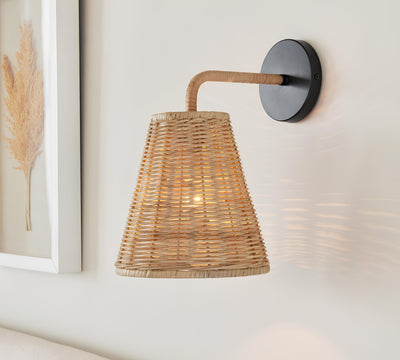
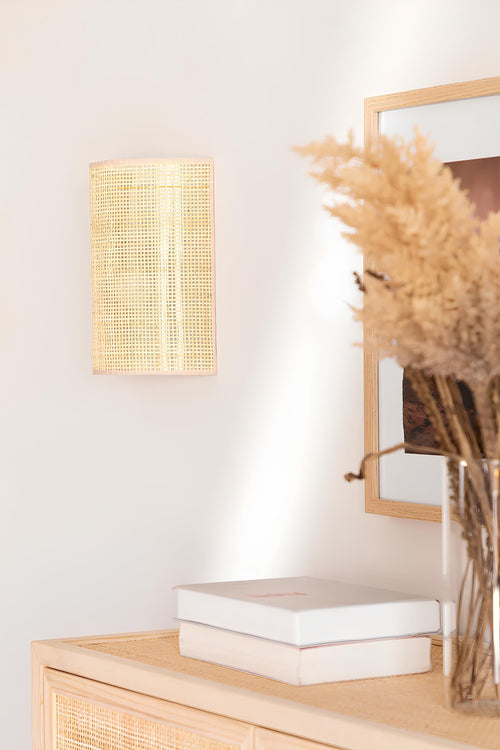
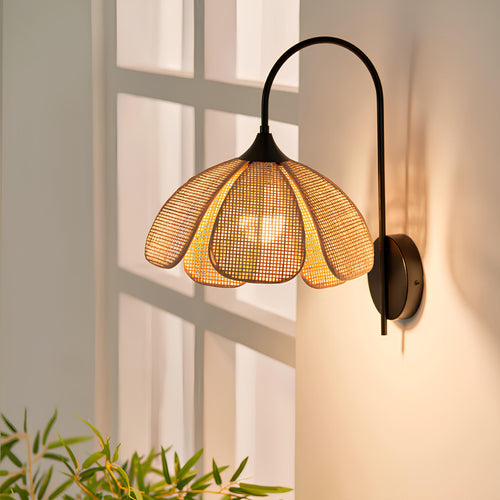
One thing that instantly makes a bare new entrance feel inhabited is a warm wall light. Harsh white builder-bulbs make even decorated spaces feel like a site visit; a woven sconce throws soft, patterned light over the toran and rangoli.

Warm woven light for the entrance wall, glowing over your toran on the day and every evening after.
From Rs 1,699
Shop NowSetting up the pooja area
The havan or pooja is the centre of the ceremony, so this space needs to be clean, uncluttered, and facing the right way. Most families place the pooja setup in the northeast corner of the home, the ishan kona, which vastu holds as the most auspicious zone for prayer.
Keep the setup simple: a low chowki or clean mat, the kalash with mango leaves and coconut, the deity idols or photos, a brass lamp, incense, and flowers. Loose marigold and rose petals scattered around the chowki base look generous without any arranging skill. If the pandit is conducting a havan, leave clear floor space around it and keep anything woven or fabric at a safe distance from the flame.
A string of jasmine or mogra around the deity photos is a small touch with a big effect, and the fragrance mixes beautifully with incense. Fresh banana stems on either side of the pooja space are traditional in many South Indian homes and instantly signal celebration.
The living room: your welcome zone for guests
After the rituals, everyone moves to the living room, and this is where your new home gets judged over tea. You don't need it fully furnished. You need one corner that feels finished and warmly lit, and honestly, guests forgive everything else in a new house.
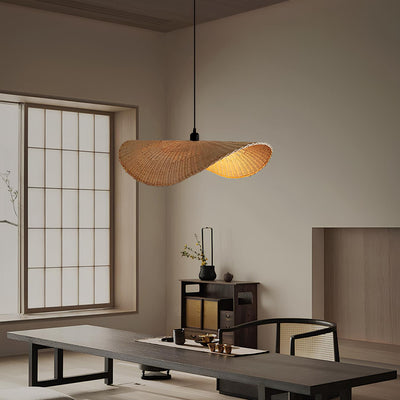
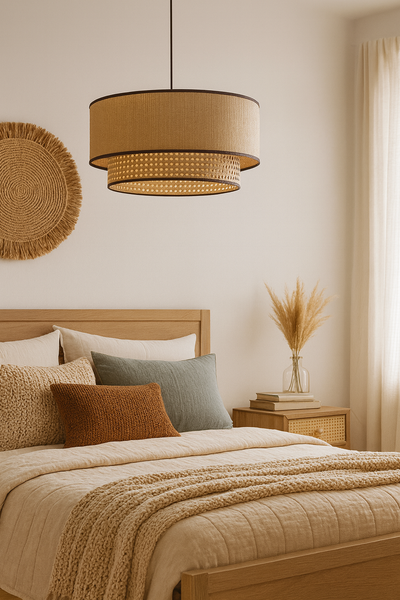
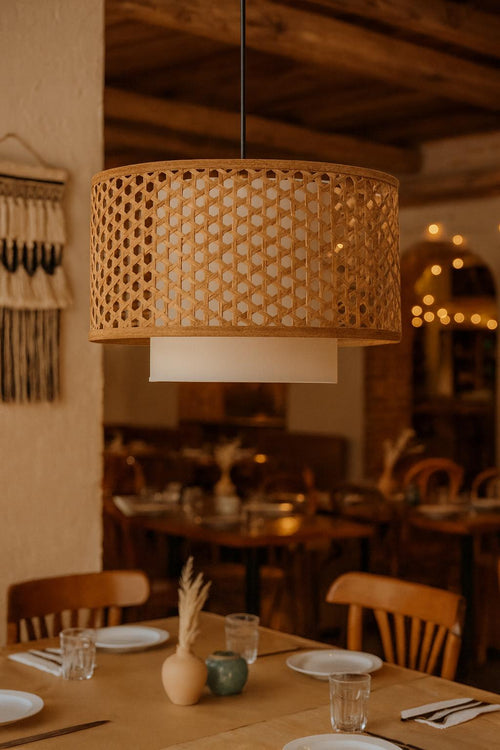
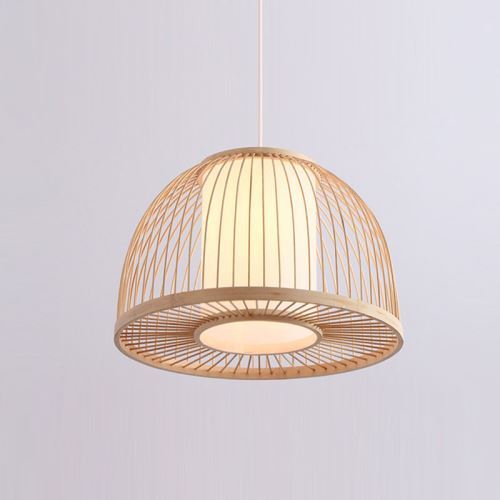
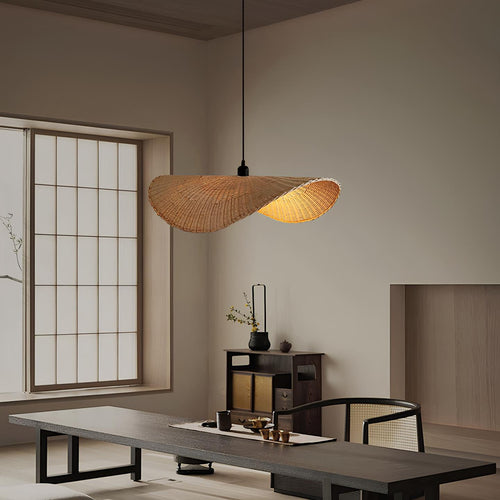
Start overhead. A single warm pendant transforms an empty-ish room faster than any amount of furniture, because light fills space the way sofas can't. A handwoven rattan pendant also casts patterned shadows across bare walls, which makes minimal rooms feel intentional rather than unfinished.

Rattan Hanging Light - Shanaya
One warm handwoven pendant makes a half-unpacked living room feel like a home on day one.
From Rs 1,899
Shop NowThen add life at eye level. A pair of hanging planters with money plant or pothos brings instant green into a room that still smells of paint, and trailing plants soften bare corners better than anything you can buy framed.

Rattan Hanging Planters, Set of 2 - Asmee
Money plant in woven planters: the classic griha pravesh green that keeps growing with your home.
From Rs 2,499
Shop NowFinally, a floor mirror near the entrance or in the living room does double duty. It bounces diya light and daylight around the room, makes a compact flat feel larger for the crowd, and gives guests that last-look moment before photos. Lean it against a wall if you haven't drilled anything yet; nobody will know.

Doubles the diya light on ceremony day, then earns its place in the bedroom or hallway for years.
From Rs 19,890
Shop NowGriha pravesh decoration ideas with flowers and natural materials
If you're choosing one decoration theme, make it natural. Marigold garlands along the balcony rail or stair banister cost little and read as festive from the street. Floating flowers, rose petals and a few tealights in a wide brass urli or bowl of water, make a striking centrepiece near the entrance. Jasmine strings tied to door handles scent every room they touch.
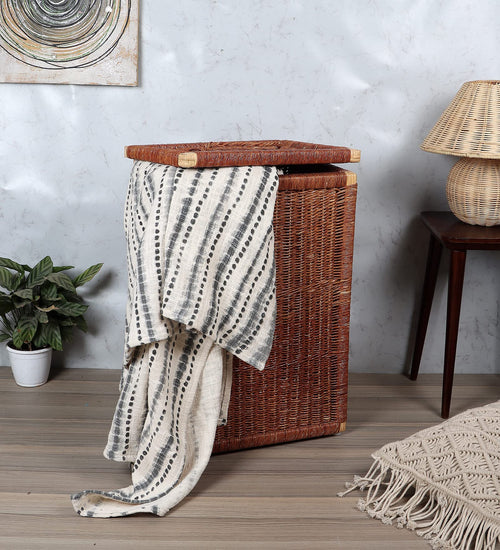
Natural materials have a quiet advantage here: they suit both the ritual and the home after it. Banana leaves, mango leaves, cane baskets holding fruit and prasad, brass lamps, cotton and jute runners, all of it looks right beside a havan and equally right on a shelf next month. A large wicker basket by the door quietly solves a real ceremony-day problem too: somewhere for guests' odds and ends, gift boxes, or the flowers waiting for the pooja.

Holds fruit, prasad, and gift boxes on the day, then becomes your most-used storage piece.
From Rs 3,100
Shop NowZone-by-zone plan at a glance
| Zone | Must-haves | Nice extras |
|---|---|---|
| Main door | Toran, rangoli, pair of diyas, swastik | Warm wall lamp, urli with floating flowers |
| Entrance passage | Line of diyas or tealights | Petal trail, marigold strings on railing |
| Pooja area (northeast) | Chowki, kalash, brass lamp, fresh garlands | Banana stems, jasmine strings, petal border |
| Living room | Warm pendant or lamp, one green corner | Floor mirror, woven planters, cotton runner |
| Dining/serving | Clean table, covered prasad and sweets | Cane trays, banana-leaf touches, small flowers |
| Balcony | Marigold on the rail | Fairy lights, potted tulsi, hanging planters |
Simple vs elaborate: what does griha pravesh decoration cost?
A simple family ceremony can be done beautifully for Rs 1,500 to Rs 3,000: fresh flowers and garlands, diyas and oil, rangoli colours, and mango leaves. Most of that is flowers, so buy from a local mandi rather than an app if you can.
A mid-range setup, around Rs 5,000 to Rs 10,000, adds a couple of permanent pieces, say a wall or pendant lamp and a brass urli, plus more generous flowers and a decorated balcony. This is the sweet spot in our experience, because roughly half the spend stays in the house forever.
Elaborate decoration with hired flower decorators, full floral gates, and lighting setups runs Rs 20,000 upward. Lovely for a big function, but be honest about one thing: the hired decor leaves in a tempo the next morning. Which brings us to the point most guides skip.
Choose decor you'll keep, not decor you'll bin
Here's the quiet test we suggest for every purchase on the list: where will this be in one year? Fresh flowers earn their short life; that's their job. But if you're spending on anything non-perishable, let it be something with a future. A woven pendant becomes your everyday living room light. Planters keep your money plant thriving. The mirror moves to the bedroom. Baskets swallow the clutter that every new home generates.
Decorate that way and you're not spending on one day's photos, you're quietly furnishing the house. Handmade natural pieces age well too; cane and bamboo deepen in colour over the years, so your griha pravesh decor slowly turns into your home's character.
Vastu-friendly notes, kept practical
You don't need to over-engineer this, but a few traditional pointers are easy wins. Keep the main entrance clutter-free and brightly lit, since the threshold is where energy, and everyone's first impression, enters. Place the pooja setup in the northeast if the layout allows. Fresh flowers and water elements like an urli sit well in the north and east. Avoid cactus or thorny plants indoors on the day; choose tulsi, money plant, or palms instead. And light the first lamp in the kitchen, the boiling-milk ritual, before anything else, because that's the true start of a griha pravesh.
Seen in a real home
Styled by @greymurmurs in their own home, tagged @akway.in. View on Instagram