
Solid wood is the most durable and the heaviest. Rattan and cane are lighter, airier and far easier to move, and they hold up well for years when the binding is natural rather than plastic. The combination most Indian homes settle on happily is a solid wood table with cane chairs.
Setting up a dining space usually comes down to one honest question: should you buy heavy solid wood dining furniture, or lighter rattan and cane pieces? Both are good, and both have real strengths. A solid wood dining table and chairs give you the sturdiest, longest-lasting setup in the room, while rattan or cane dining chairs bring a soft, airy, textured look that makes a dining area feel calmer and more open.
This is a fair, factual comparison of rattan and cane dining furniture against solid wood dining furniture for Indian homes. We look at how long each lasts, how heavy they feel, their look, airflow and comfort, price and maintenance, so you can match the right pieces to your room instead of guessing. One important point upfront: rattan and cane dining chairs almost always sit on a wood frame with woven cane, so this is rarely an all-or-nothing choice. In fact, the most popular setup of all is a solid wood dining table paired with rattan or cane chairs.
So instead of treating this as a fight between two materials, it helps to think about it piece by piece. The table and the chairs do very different jobs at the dinner table, and the best material for one is not always the best for the other. Keep that in mind as we go through each factor below, because it changes the answer for a lot of homes.
Quick comparison: rattan/cane vs solid wood dining
| Factor | Solid wood dining | Rattan/cane dining |
|---|---|---|
| Durability | Highest. A solid wood table and chairs are the longest-lasting option and can serve for decades with care | Very good. A wood frame with natural cane weaving holds up well for years, especially when the binding is natural rather than plastic |
| Weight | Heaviest. Very stable, but harder to pull out, stack and rearrange around the table | Lighter. Rattan and cane chairs are easy to lift, move and tuck in, which suits everyday family dining |
| Look | Solid, classic and warm, with the wood grain on show | Soft, airy and textured. Woven cane adds craft and a relaxed, natural feel |
| Airflow / comfort | Solid seats and backs are firm; comfort depends on cushions and shape | Open weave breathes, so the seat stays cooler on long, warm meals and feels gently springy |
| Price | Mid to high, depending on the wood and the size of the set | Often a touch lower per chair, so you can pair a wood table with cane chairs without a big jump in cost |
| Maintenance | Wipe and polish occasionally; sturdy but heavy to shift for cleaning | Dust the weave and keep it dry; light to move, simple to clean around |
Rattan, cane, bamboo and wicker: what the words actually mean
Before you compare, it helps to know what you are comparing, because these words get mixed up constantly in listings. Getting them straight makes it much easier to judge quality and durability.
- Rattan is a solid climbing vine that grows in tropical forests. It is strong and flexible, which is why it is used for the frames and poles of so much natural furniture.
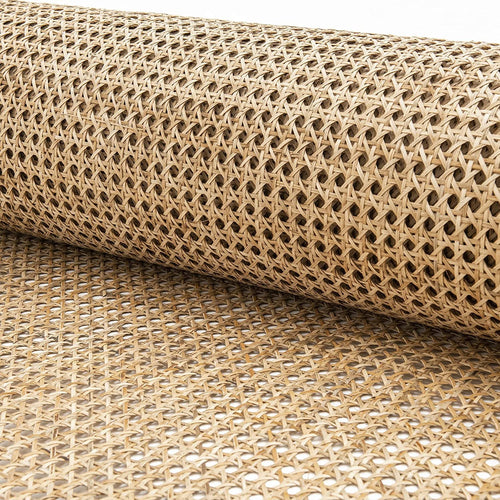
- Cane is the thin outer skin peeled from the rattan vine. It is what gets woven into those open, breathable seat and back panels you see on dining chairs.
- Bamboo is a fast-growing hollow grass, lighter and more rigid than rattan, often used for frames and a more rustic, structured look.
- Wicker is not a material at all. It is the weaving technique, so a chair can be woven in rattan, cane, bamboo or even synthetic strands and still be called wicker.
For dining chairs, the combination that lasts is a wood or rattan frame with a hand-woven natural cane seat. Solid wood, by contrast, means furniture built from real hardwood boards rather than particle board or veneer, which is what gives it that heavy, decades-long strength. Knowing which is which is the first step to buying well, whichever side you lean toward.
The best of both: a wood table with cane chairs
If you have spent any time reading dining furniture threads online, you will have seen the same advice again and again: pair a solid wood dining table with rattan or cane chairs. It is the setup most people land on, and for good reason.
Why the combination works so well
- The wood table takes the heavy daily use, spills, plates and elbows, so you want the strongest, most stable top you can get.
- The chairs are the pieces you move, pull out and tuck in several times a day, so lighter rattan or cane chairs are far easier to live with.
- Woven cane breaks up a heavy wood table visually, keeping the whole setup from looking bulky and dark, especially in smaller Indian dining areas.
- You get warmth and weight from the wood and a soft, airy, textured look from the cane, which is a calmer, more balanced result than going all-wood or all-rattan.
It is also a forgiving way to buy. If a cane chair seat ever wears after many years, you replace or re-cane that one chair rather than the whole set, and the wood table carries on regardless. That mix of a long-life base and easy-to-refresh seating is exactly why so many people quietly settle on it after weighing the options, and it is the setup we hear asked about most often.
How to choose between them
- Decide what matters most: if maximum strength and a heavy, permanent feel come first, lean fully solid wood. If you want a lighter, breathable, more decorative dining area, rattan and cane win, especially for the chairs.
- Check the binding, not just the material: on cane chairs, natural cane binding stays tight for years, while cheap plastic weave tends to loosen and sag. Always ask what the weave is actually made of.
- Match it to how you eat: for big families and daily meals, lighter chairs that move easily make life simpler. For a formal, rarely-rearranged setup, heavier solid wood chairs feel more permanent.
- Think about the table separately from the chairs: you do not have to match materials. A solid wood table with rattan or cane chairs is both practical and good-looking.
- Consider your room size and light: in a small or dim dining area, woven cane chairs keep the space feeling open, while a wall of solid wood can feel heavy.
Which dining setup suits you
Still weighing it up? Match yourself to the buyer below for a quick steer.
- Choose fully solid wood if you want the most durable, heirloom-style set, you like a heavy and permanent feel, you rarely rearrange the room, and you do not mind that the chairs are harder to move.
- Choose rattan or cane chairs if you want lighter chairs that are easy to pull out and tuck in, a softer and more textured look, better airflow on warm days, and a slightly lower price per chair.
- Choose the wood table plus cane chairs combo if you want the best of both: a rock-solid table that takes daily abuse, paired with breathable, easy-to-move chairs that keep the room feeling open. This suits most Indian families and most dining areas.
- Lean toward bamboo accents if you want a more rustic, structured look and the lightest pieces, and you are happy to keep them in a covered, dry spot.
Our handcrafted rattan & cane dining chairs

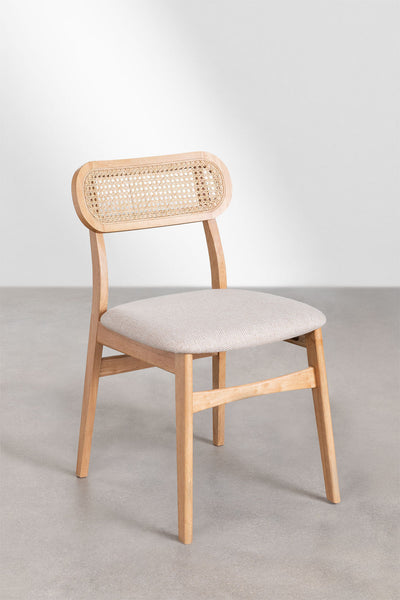
Leivel Rattan & Wood Dining Chair
A hand-woven rattan seat on a sturdy wood frame, light enough to move easily yet built for everyday dining. Pairs beautifully with a solid wood table.

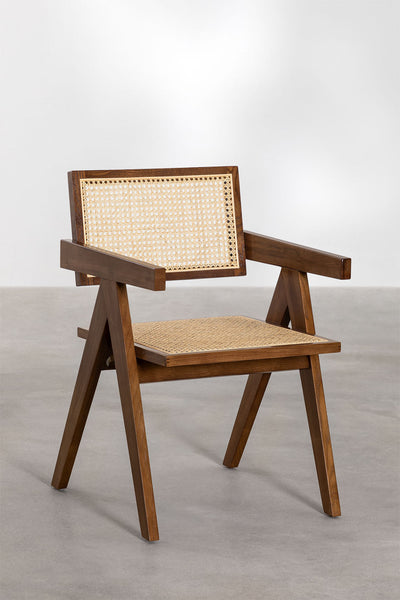
Bhavna Rattan Dining Chair (Teak Finish)
A durable teak-finish wood frame with a woven rattan seat, made for dining rooms, balconies and terraces. The classic wood-and-cane look in one chair.

Avni Rattan & Wood Dining Chair
A woven rattan and wood chair that works as a dining chair, accent chair or balcony seat. Light to move, with a warm, natural texture.

Kimaya Cane Accent & Dining Chair
A premium handwoven cane chair on a natural frame, with an optional cushion. A softer, statement seat for a relaxed dining or lounge corner.
Which should you buy?
If you want the strongest possible dining set and a heavy, permanent feel, and you rarely rearrange furniture, fully solid wood dining furniture is hard to beat. If you want a lighter, more decorative dining area with chairs that are easy to move and a softer, airier look, rattan and cane dining chairs suit you better. For most buyers, the smartest pick is the combination: a solid wood dining table with rattan or cane chairs. You get wood's durability where it matters most, on the table, and cane's light, breathable look and easy-to-move chairs where you need them. Families who eat together daily, or who have smaller dining areas, tend to be happiest with this setup.
Whichever way you go, buy the best quality you can in that style. A well-made solid wood table outlasts a cheap one by years, and a chair with genuine hand-woven natural cane on a proper frame will see out a decade of dinners while a plastic-bound copy sags within months. Spend on the parts that take the most use, and the rest tends to look after itself.
Caring for dining furniture in Indian weather
- Dust the cane weave gently and wipe the wood frame with a soft, dry cloth.
- Keep chairs and the table away from direct rain and strong sunlight to prevent fading and warping.
- Wipe spills off the weave quickly so moisture does not sit in the cane.
- In the monsoon, keep the dining area ventilated so humidity does not build up in the weave.
- Never soak cane or wood; a slightly damp cloth is enough for cleaning.
- Polish the wood occasionally and check chair joints once a year so everything stays stable.