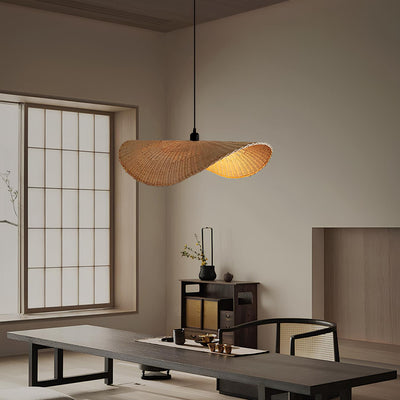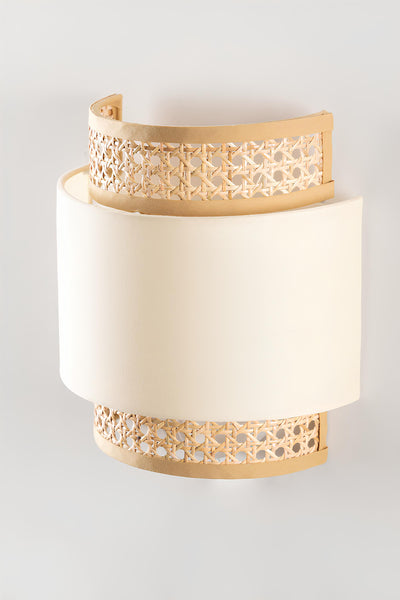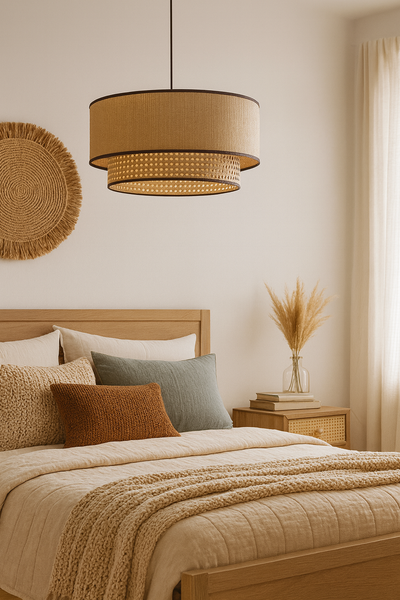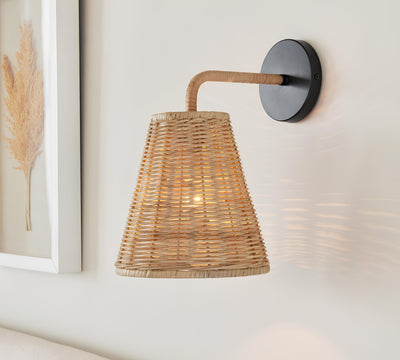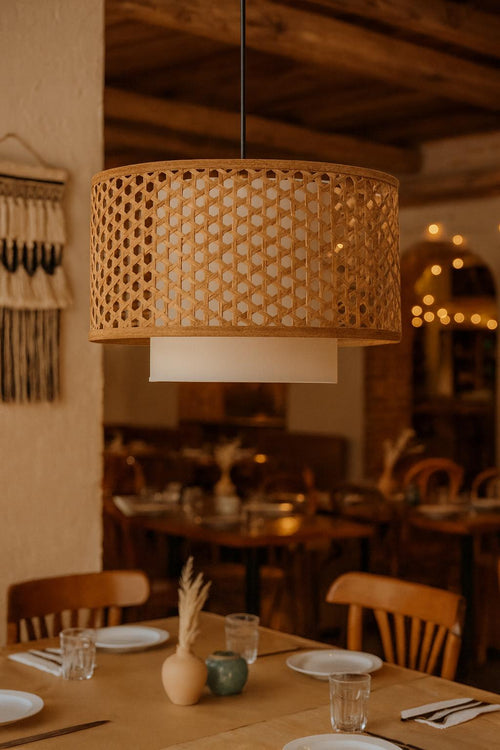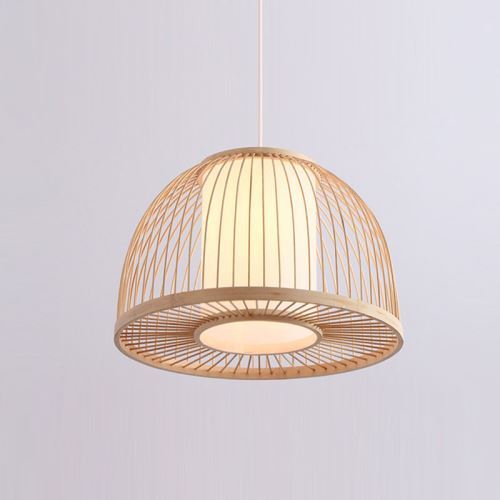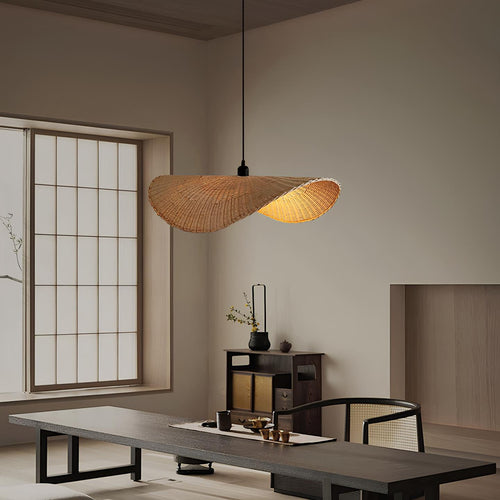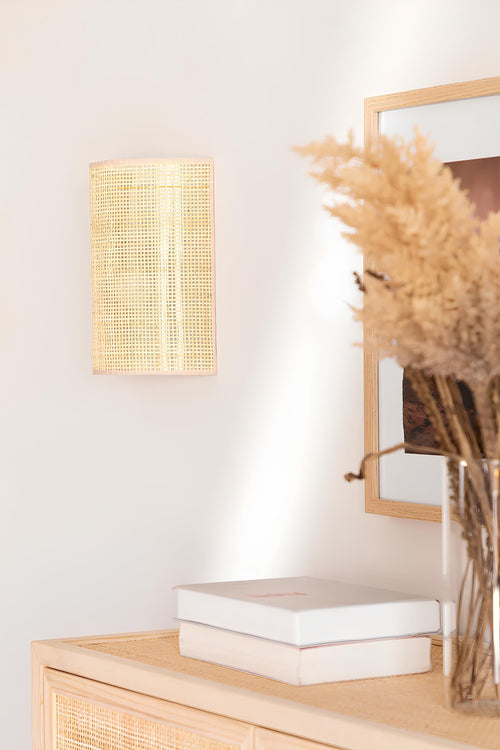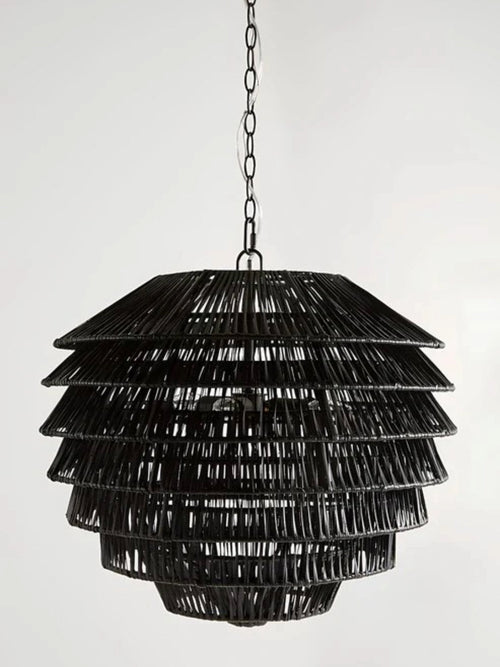

The best pooja room lights are soft and layered: a ceiling or flush-mount light for the whole room, a small wall lamp beside or above the mandir, and warm-white bulbs throughout. Keep every shade well clear of the diya flame, angle light away from brass idols, and give the pooja lights their own switch.
Which light goes where in a pooja room?
A pooja room, or a mandir corner in the living room, asks light to do three different jobs. The ceiling light lets you see to clean, arrange flowers and read a prayer book. A lamp near the mandir draws the eye to the idols and sets that corner apart from the rest of the home. The diya is the ritual light, and the electric fittings should support it rather than compete with it.
| Fitting | Where it goes | What it does | Watch out for |
|---|---|---|---|
| Flush-mount ceiling light | Centre of the pooja room ceiling | Even, general light for cleaning and daily pooja | Best for low or false ceilings, since it sits tight to the ceiling |
| Small hanging light | Over the open floor, not over the mandir shelf | A warm focal glow in rooms with good headroom | Keep it clear of the diya, bells and the aarti thali |
| Wall lamp | Beside the mandir, or above it and to one side | Lights the idols from an angle, without harsh shadows | Fix it where the bulb is not reflected in brass or glass frames |
| Diya or oil lamp | On the mandir platform | The ritual light itself | Never place it under a woven shade |
Ceiling light or hanging light for a mandir?
It comes down to ceiling height and how the room is used. Most pooja rooms in Indian flats are small, often a converted store room or a niche off the living room, and many have a false ceiling. In a room like that a flush-mount light is the safer choice: it sits close to the ceiling, lights the whole space evenly and stays well above your head when you stand for aarti. Our bamboo flush-mount ceiling lamps are made for exactly this kind of compact room.
A hanging light makes sense in a dedicated pooja room with generous headroom, or in an open mandir area of a tall living room. Hang it over the open floor where people stand or sit, not over the mandir shelf itself. That keeps the shade away from the rising heat and smoke of the diya and agarbatti, and out of the way of anyone raising an aarti thali. If you like the look of natural fibre, a small pendant from our jute hanging lights gives a warm, textured glow without taking over the room.
How do you light the idols without glare?
Brass idols, silver frames and glass-fronted photographs all reflect light, and a bare bulb in the wrong place shows up as a hard white spot right on the deity's face. Three habits avoid it.
- Light from the side or from above, not straight ahead. A wall lamp to one side of the mandir, or slightly above it, reaches the idols at an angle, so reflections fall away from your eye line.
- Keep the bulb hidden. A woven shade of rattan, bamboo or jute breaks the light into a soft pattern, so you see the glow rather than the bulb.
- Check from where you sit. Before the electrician fixes a wall point, have someone hold a phone torch at the planned spot while you look from the place where you usually sit or stand for pooja. Move the spot until the reflections disappear.
Our woven wall lights suit this side-lit approach, because the shade sits against the wall and spreads a patterned glow across it instead of pointing a beam at the idols.
Keep the diya and the shade apart
Rattan, bamboo, cane and jute are natural plant fibres, and like paper or cloth they can catch fire if an open flame reaches them. In a pooja room that matters more than anywhere else in the home, because a diya, agarbatti or camphor is lit every day. A few rules keep the two apart.
- Never hang a pendant or fix a wall lamp directly above the diya or the incense stand. Heat and smoke rise straight up.
- Leave clear space between the mandir platform and any woven shade, enough that a flickering flame or a moving aarti thali cannot reach it.
- Do not drape marigold garlands, chunris or cloth torans over a light fitting, even during festivals.
- Put the diya out, or keep it in a closed glass holder, if the room is left unattended.
Daily agarbatti smoke also leaves a fine film on a woven shade over time. A quick pass with a soft dry brush every week, with the light switched off and the bulb cool, keeps the weave light and open.
Lighting a mandir cabinet or wall shelf
Many flats have no separate pooja room, only a wooden mandir unit or a shelf in the living room or kitchen. The ideas in our South Indian pooja room decoration guide cover setting up that kind of small pooja corner; the lighting follows the same logic on a smaller scale.
- One small wall lamp beside the unit is often all a wall mandir needs. It lights the idols from the side and adds a warm glow to that corner of the room in the evening.
- A flush-mount light overhead works when the mandir sits in a passage or alcove with no other ceiling light.
- Lights inside the cabinet, such as strips under the top panel, are a carpentry and wiring job. Plan them with your carpenter and a licensed electrician before the unit is built, so the wires run neatly and stay away from where the diya sits.
During festival weeks the mandir usually gets extra flowers, diyas and string lights. Our Navratri mandir decoration ideas show how to add to the everyday lighting for those nine days without crowding it.
Tradition, Vastu and the practical choices
Many families follow Vastu guidance when they set up a pooja room, for example placing the mandir in the north-east of the home, facing east while praying, or lighting a diya at dusk. Practices vary a great deal between regions and households, so follow what your own family does. The practical points in this guide, soft light, no glare and flames kept away from shades, work whichever direction your mandir faces.
Who should wire a pooja room light?
Any new ceiling point, wall point, switch or dimmer should be fitted by a licensed electrician. Two requests are worth making when they visit. First, a separate switch for the pooja lights, so you can light only the mandir corner in the evening while the rest of the room stays dim. Second, switchboards placed away from the mandir platform, where water from abhishekam and oil from diyas can spill.
Our pooja room lights
Each of these takes a standard E27 bulb, which is not included, so you choose the bulb tone yourself.

Bamboo Wall Light for Pooja Room - Kimaya
Made for the pooja room: a handwoven bamboo and rattan wall light, 30 cm tall, that spreads a soft, patterned glow on the wall beside the mandir.
Rs 3,899
Shop Now
A compact bamboo ceiling light of about 10-12 inches that sits close to a low or false ceiling, a good fit for a small pooja room.
Rs 1,299
Shop Now
Comes in 12, 14 and 16 inch sizes, so you can choose a small pendant for a pooja room with good headroom.
From Rs 1,299
Shop Now
A slim sconce just 12 cm wide that fits beside a wall-mounted mandir unit without crowding it.
Rs 1,499
Shop Now