
Hang the centre of a mirror at eye level, roughly 150 cm from the floor, and place it to reflect light or something worth looking at, never clutter. In Vastu tradition the north and east walls are considered most favourable, and many families avoid mirrors facing the bed or the main door.
A mirror is one of the few pieces of decor that does real work. Hung in the right spot it doubles natural light, makes a small room feel open, and gives you a quick style check before you step out. Hung in the wrong spot it reflects clutter, bounces glare into your eyes, or simply disappears against a busy wall. Knowing where to hang a mirror, and where not to, is what separates a thoughtful room from a cluttered one.
This guide covers mirror placement for Indian homes from two angles at once: interior-design best practice that works in any house, and the popular Vastu beliefs many families like to follow. We will go room by room for the living room, bedroom and entryway, give you simple design rules you can measure, and explain the traditional Vastu guidance around directions, facing the bed and facing the main door, presented respectfully as cultural tradition rather than fact. Wherever a handwoven rattan, cane or bamboo mirror earns its place, we will point it out.
Quick answer: where to hang a mirror
If you only remember a few things, remember these. Hang the centre of the mirror at eye level, roughly 150 cm from the floor. Place it so it reflects light or something beautiful, never clutter. In Vastu tradition, the north and east walls are considered the most favourable for mirrors, while many families avoid hanging a mirror directly facing the bed or directly facing the main door.
| Room | Good placement | Placement to avoid |
|---|---|---|
| Living room | On a side wall reflecting a window, or above a console or sofa | Directly opposite the TV or a cluttered shelf |
| Bedroom | Above a dresser or on a wardrobe side, out of the bed's reflection | Facing the bed, especially the headboard, in Vastu tradition |
| Entryway | On a side wall as you enter, above a console for a last look | Directly facing the main door, in Vastu tradition |
| Hallway | Along a narrow corridor to add width and bounce light | At the end of a hall reflecting a dark or empty corner |
| Dining area | Reflecting the table or a window for a brighter, larger feel | Reflecting the kitchen mess or a back-of-house view |
The design rules that always work
Before any tradition, get the basics right. These rules come from how mirrors and light actually behave, so they hold true in every home.
- Centre the mirror at eye level. The middle of the glass should sit around 150 cm from the floor, so the average person sees their face without stooping or stretching.
- Reflect light or something beautiful. A mirror copies whatever sits across from it. Point it at a window, a plant, artwork or a styled console, never at a pile of clutter or the back of a door.
- Scale it to the wall. A mirror should fill roughly two-thirds to three-quarters of the furniture or wall space below it. Too small and it floats; too large and it overwhelms.
- Above furniture, leave breathing room. Hang the mirror about 15 to 20 cm above a console, dresser or sofa back so the two read as a pair, not a collision.
- Mind the glare. Avoid hanging a mirror where it throws afternoon sun straight into a seat, a screen or your eyes. Test it at the brightest time of day.
- Let the frame do the talking. A handwoven rattan or cane frame adds warmth and texture that a plain glass mirror cannot. Treat the frame as wall art, not just a border.
Living room: where to hang a mirror
The living room is where a mirror has the biggest visual payoff. The goal is to make the space feel larger and brighter while giving you a natural focal point.
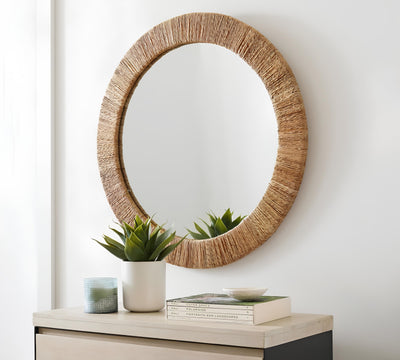
The best spot is usually a side wall that sits across from a window, so the mirror catches daylight and bounces it deeper into the room. The second-best spot is above a console table, the sofa back or a fireplace mantel, where the mirror anchors a vignette of lamps, books and small decor. An oversized round rattan mirror works beautifully here because its organic shape softens the straight lines of a sofa or TV unit.
What to avoid: hanging a mirror directly opposite the television, where it competes with the screen and reflects a dark rectangle, or placing it where it mirrors an overloaded shelf. A mirror is only as attractive as what it reflects.
Bedroom: where to hang a mirror
In the bedroom the priority is calm. A mirror should help you dress and add light without becoming the first thing you see when you open your eyes.
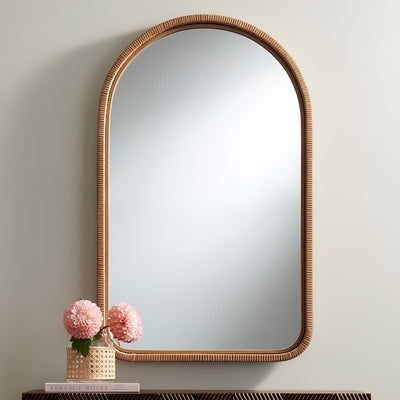
From a design view, the most useful placement is above a dresser or vanity, or on the side wall near the wardrobe, where it serves outfit checks and reflects a window rather than the bed. A medium handwoven mirror over a dressing table doubles as decor and a daily-use mirror.
Many Indian families also follow the Vastu belief of keeping the mirror out of the bed's reflection, which we cover in detail below. The good news is that the design-led placement, to the side and above a dresser, naturally satisfies that preference too.
Entryway and hallway: the first impression
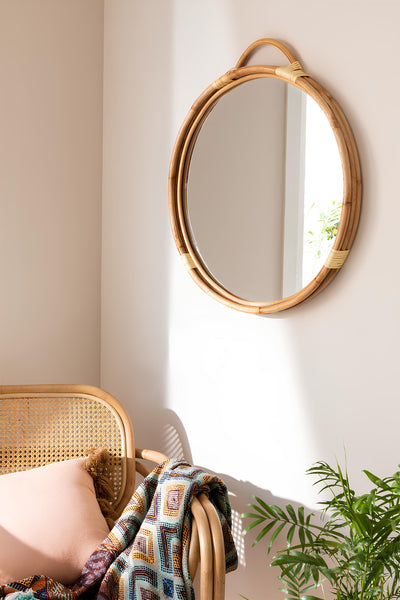
An entryway mirror does two jobs: it gives you a last look before you leave, and it sets the tone for the whole home. Hang it on a side wall as you walk in, ideally above a console where keys and a small plant live. This keeps it useful at standing height and lets it reflect light into what is often a windowless space.
In a narrow hallway, a mirror on the long wall visually widens the corridor and pushes light down its length. Avoid placing a mirror at the dead end of a hall where it only reflects a dark or empty corner. As with the bedroom, there is a common Vastu view about mirrors and the main door, which we explain respectfully in the next section.
Vastu beliefs about mirror placement
Many Indian households like to bring Vastu Shastra into their decor decisions. The points below are shared as traditional cultural guidance that families have followed for generations, not as proven fact. Treat them as one more lens alongside good design, and follow the ones that feel right for your home.
Favourable directions: north and east
In Vastu tradition, the north and east walls are considered the most auspicious places for a mirror. North is associated with prosperity and east with positive morning energy, so a mirror on these walls is believed to reflect and multiply good fortune. South and west walls are traditionally treated with more caution. If you want to honour this belief, a mirror on a north or east wall of the living room or entryway is an easy, low-effort way to do it.
Mirrors and the bedroom
The most widely followed bedroom belief is to avoid placing a mirror directly facing the bed, especially the headboard, so that a sleeping person is not reflected. Many families consider a mirror that reflects the bed to disturb rest and peace. The traditional fix is to position the mirror on a side wall, inside a wardrobe door, or above a dresser angled away from the bed. If a mirror must face the bed, some households cover it at night with a cloth. Happily, this lines up with the design advice above, where a side-and-above placement is also the most practical.
Mirrors and the main door
For the entrance, a common Vastu belief is to avoid hanging a mirror directly facing the main door, as it is thought to reflect incoming positive energy back out of the home. The traditional preference is to place the entryway mirror on a perpendicular side wall instead, where it still welcomes you with a reflection of light without sitting head-on to the door. This is, conveniently, also where an entryway mirror is most useful in everyday life.
Where not to hang a mirror
Some spots cause problems whether you follow Vastu or not. Keep mirrors away from these:
- Directly facing the bed, which many families avoid on Vastu grounds and which can also feel unsettling at night.
- Directly facing the main door, discouraged in Vastu tradition and rarely the most flattering reflection anyway.
- Opposite clutter, an open kitchen mess, a shoe pile or an overloaded shelf, because the mirror simply doubles it.
- In a glare path, where strong sun bounces into a seat, a screen or your eyes during the day.
- Two mirrors facing each other, which creates a dizzying tunnel effect and is also discouraged in Vastu.
- In constantly damp spots, like a wall that takes direct shower spray, which is hard on a natural cane or rattan frame.
Handwoven mirrors to hang in the right spot
A natural rattan, cane or bamboo frame turns a functional mirror into wall art. Each of these is handwoven by Indian artisan families and ready to place using the rules above.

An oversized round rattan frame that softens a TV unit or sofa wall. Perfect on a side wall reflecting a window in the living room.

Available in four sizes, so you can fit the medium above a dresser or go large for a side wall. A flexible pick for any bedroom layout.

Sized for a last look on the way out. Hang it on a side wall above an entry console rather than facing the main door.

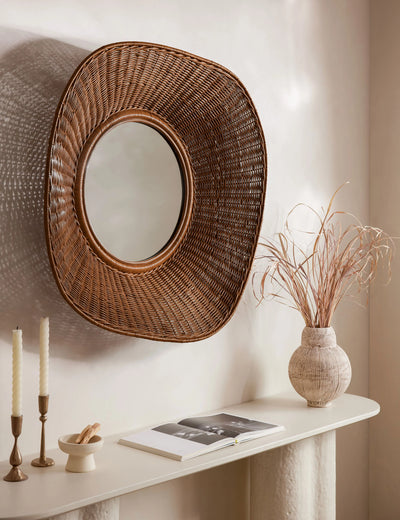
An oversized wicker frame that makes a calm dressing mirror above a vanity, kept to the side of the bed for a restful room.

A statement light-maximiser for above a console or sofa. Place it to catch daylight and bounce it across the living room.
How do you balance design and tradition?
You do not have to choose between good design and Vastu. In almost every room the two point the same way. A side-wall mirror that reflects a window is both the brightest design choice and an easy way to honour north or east placement. A bedroom mirror above a dresser keeps the bed out of the reflection while serving everyday use. An entry mirror on a perpendicular wall is more flattering than a head-on one and respects the main-door belief at the same time. Start with the design rules, then let tradition guide the final wall, and you will rarely have to compromise.