
A Japandi living room is the quiet middle ground between Japanese restraint and Scandinavian warmth. It is the room you walk into after a long day and feel your shoulders drop. Nothing shouts for attention. The light is soft, the seating sits low, and the few things on show are made of wood, cane or natural fibre. In an Indian home, where living rooms work hard and often double as the place we host, eat and rest, this calm-but-cosy balance is exactly what most of us are reaching for.
This guide walks you through how to build a japandi living room from the floor up, with ideas that suit real Indian flats and homes, not just magazine sets. You will see how to choose low natural seating, why one statement rattan light does more than a dozen fittings, how to keep a neutral palette from feeling flat, and how baskets quietly do the decluttering for you. Everything here leans on natural materials like rattan, cane, bamboo, wicker and jute, because that is where Japandi and handmade Indian craft meet so well. If you want the look across the whole house, our Japandi home decor guide takes the same ideas room by room, while this article stays focused on the living room.
Quick answer: what makes a living room Japandi
A Japandi living room blends minimal Japanese form with cosy Scandinavian comfort. Keep these layers in mind and the look falls into place.
| Layer | What it does | Japandi choice |
|---|---|---|
| Seating | Sets the calm, grounded mood | Low sofa or floor seating in muted fabric |
| Lighting | Adds warmth and one quiet focal point | A single rattan or bamboo pendant, warm light |
| Palette | Holds the whole room together | Cream, beige, warm grey, soft sage, walnut |
| Texture | Keeps neutrals from looking flat | Cane, jute, linen, raw wood, handwoven weave |
| Accents | One or two pieces, not many | A round mirror, a plant, a piece of art |
| Storage | Keeps surfaces clear and the room calm | Woven baskets in cane, wicker or seagrass |
1. Start with low, natural seating
Japandi seating sits closer to the floor than the tall, deep sofas most of us grew up with. A low sofa, a floor cushion set, or a simple cane bench instantly calms a room because it opens up the wall above it and lets light travel further. You do not have to buy new furniture to begin. Swapping a glossy three-seater for a lower, linen-covered one, or adding floor cushions around a low wooden table, already shifts the feel.
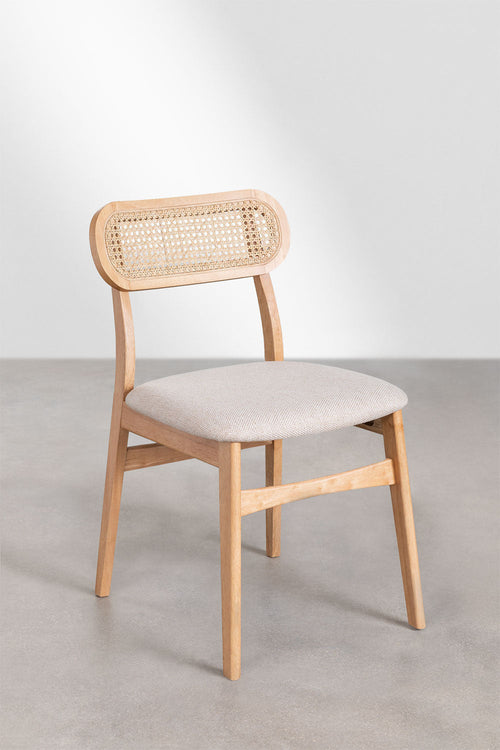
Stick to muted, natural-toned upholstery: oatmeal, warm grey, soft beige. Add a cane accent chair or a wooden stool with visible grain so the seating area reads as handmade rather than showroom. The goal is comfort that looks unfussy, the kind of seat you actually want to fold your legs onto with a cup of chai.
Keep the arrangement open too. Japandi seating likes a little breathing room around it, so pull the sofa a few inches off the wall, leave a clear path through the room, and resist the urge to ring the space with extra chairs. A low cane bench or a pair of floor cushions tucked under the coffee table gives you flexible seating for guests without crowding the everyday layout. In a small Indian flat, this restraint is what makes the room feel larger than its square footage.
2. Let one statement rattan light lead
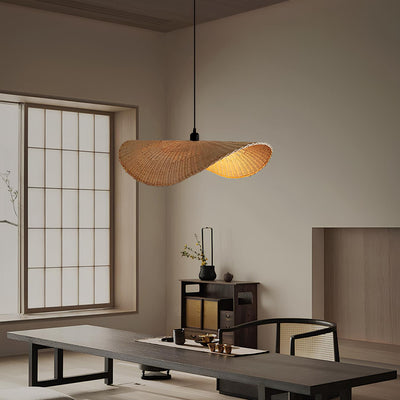
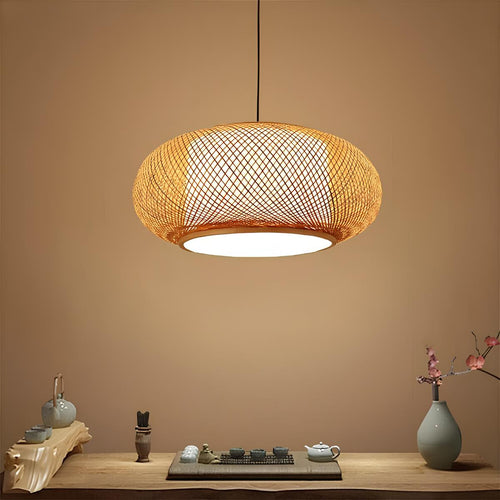
If there is a single move that makes a living room feel Japandi, it is the lighting. Skip the bright, flat ceiling tube and let one warm pendant become the focal point. A rattan or bamboo pendant throws soft, woven shadows across the room and gives you that low, golden glow Japandi is known for. One good light placed well beats six recessed spots.
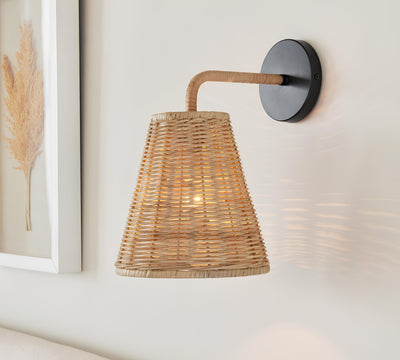
Hang a pendant over the seating or coffee table at roughly 1.6 to 1.8 metres from the floor in a living room with normal ceilings, so it reads as a feature without blocking the view across the room. Pair it with a warm 2700K bulb. For corners and walls, a single bamboo wall sconce adds a second, lower pool of light for the evenings.

Rattan Hanging Light - Shanaya
The one statement light a Japandi living room needs. Woven rattan casts a soft, warm glow over the seating.
From Rs 1,899
Shop Now
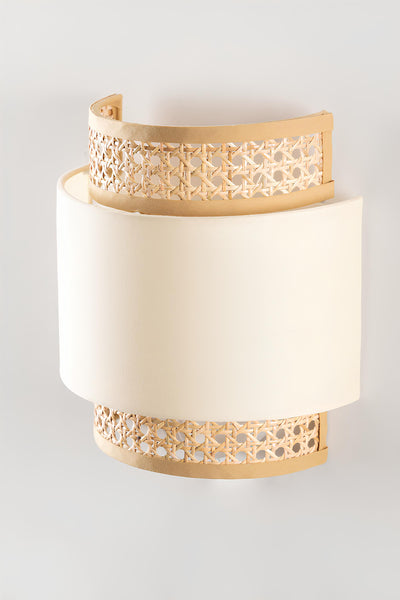
A low wall sconce for soft evening light beside the sofa, without adding any clutter to your surfaces.
From Rs 1,699
Shop Now
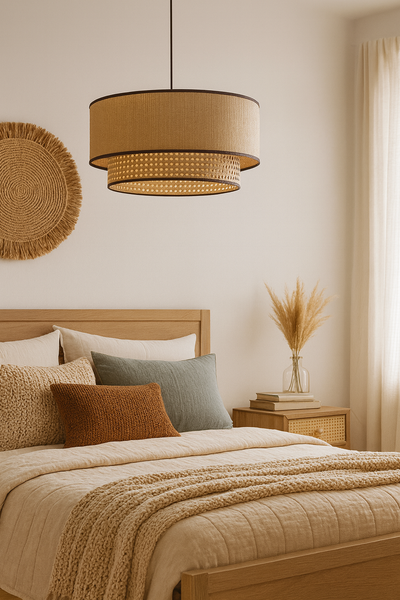
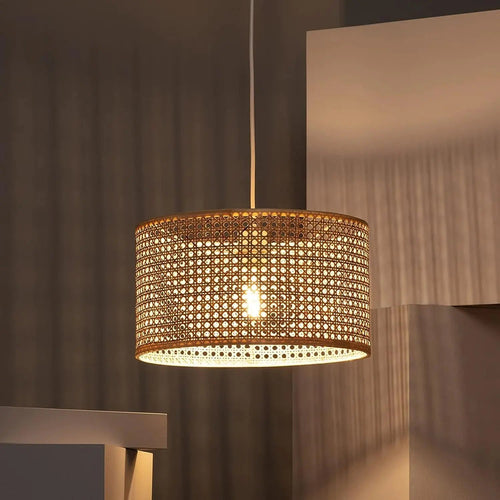
A cane pendant with a clean, rounded shape that suits minimal Japandi ceilings and open-plan rooms.
From Rs 2,099
Shop Now3. Build a neutral palette, then add texture
Japandi lives in a narrow band of colour: cream, beige, warm grey, soft sage, and a grounding walnut brown. Keep your walls and large pieces in these tones and the room reads calm straight away. The risk with neutrals is that they go flat and feel like a hotel lobby. The fix is texture, not colour.
Layer different natural surfaces so the eye has something to travel over: a jute rug underfoot, a linen throw on the sofa, a cane side table, a raw wood shelf, a handwoven cushion cover. Each one is roughly the same colour, but the weave and grain catch light differently, and that quiet variety is what makes a neutral japandi living room feel rich rather than empty.
If you want one small dose of colour, take it from nature rather than a paint chart: the soft green of a plant, the deep brown of walnut, the warm sand of a jute rug. These earthy tones sit inside the Japandi palette instead of breaking it. Save any stronger accent, a single rust cushion or a charcoal vase, for one spot only, so it stays a quiet full stop rather than a headline. The discipline of the palette is doing most of the work here.
4. Choose a single mirror or piece of art
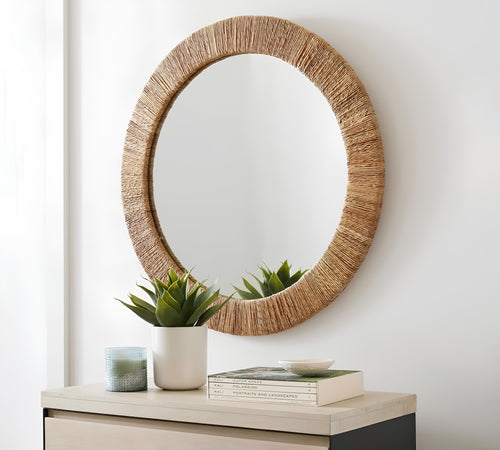
Japandi walls are mostly bare on purpose. Empty wall space is part of the design, giving the eye somewhere to rest. So instead of a gallery wall, choose one piece and let it own its space. A round cane or rattan mirror is the classic Japandi pick. It bounces light around, makes a smaller Indian living room feel larger, and its woven frame adds texture without adding noise.
If you prefer art, go for one calm, low-contrast piece: a muted landscape, a line drawing, a single woven wall hanging. Hang it slightly lower than you think, at eye level when seated, since this is a room you live in sitting down. One well-placed object on an otherwise quiet wall is far more Japandi than a busy arrangement.
Placement matters as much as the piece itself. A round rattan mirror works hardest opposite a window, where it catches daylight and pushes it back into the room, or above a low console where it gives the wall a clear centre. Leave generous empty space around it so the frame can breathe. That margin of bare wall is not wasted space in Japandi, it is the pause that makes the one chosen object feel deliberate.
5. Declutter with woven baskets
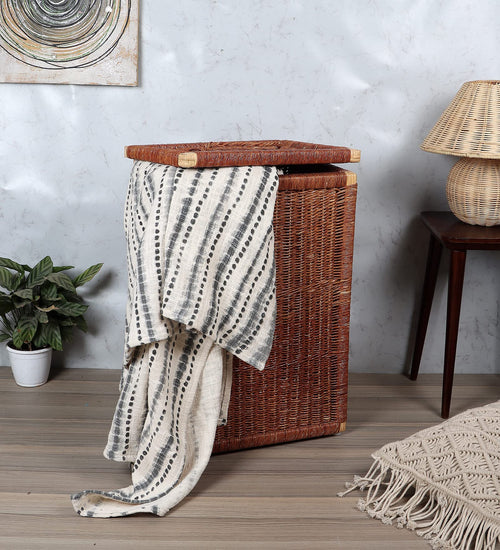
The calm of a Japandi living room is mostly the calm of clear surfaces. Remotes, chargers, magazines, toys and throws all need a home that is not the coffee table. This is where woven baskets do the quiet, daily work. A pair of cane or wicker baskets by the sofa, a larger seagrass basket for throws, and a lidded basket for the bits you would rather not see, and suddenly the room stays tidy with almost no effort.
Because the baskets are natural fibre, they add to the texture story rather than fighting it. They are storage that also happens to be decor. Group them in odd numbers and vary the heights a little so the corner looks composed rather than lined up, and keep the most-used basket within arm's reach of where you sit. For more on picking the right size and weave, our wicker basket guide walks through it room by room.
6. Finish with one or two plants
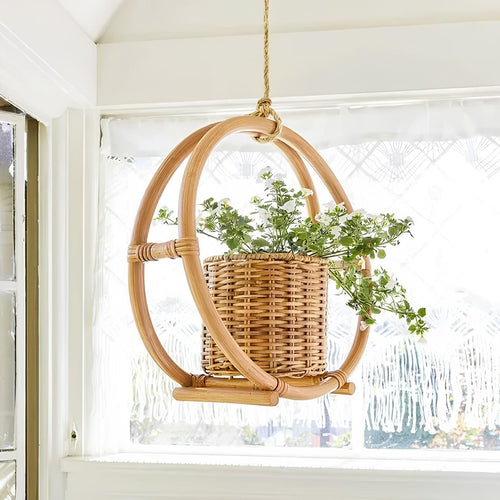
A little green keeps a neutral room from feeling sterile and brings the outside in, which is at the heart of both Japanese and Scandinavian design. You do not need a jungle. One sculptural plant in a corner, or a small branch in a simple vase, is enough. Set it in a woven planter or a plain ceramic pot in an earthy tone, and let the plant be the only living thing competing for attention.
Choose a plant with a clear, simple shape: a fiddle-leaf fig, a snake plant, a single trailing pothos on a shelf. The form should read at a glance, the same way one quiet object on a bare wall does. If real plants are hard to keep alive in your light, one good dried branch or a stem of pampas in a tall vase gives you the same soft, organic line with none of the watering.
Light the room well: layers over a single tube
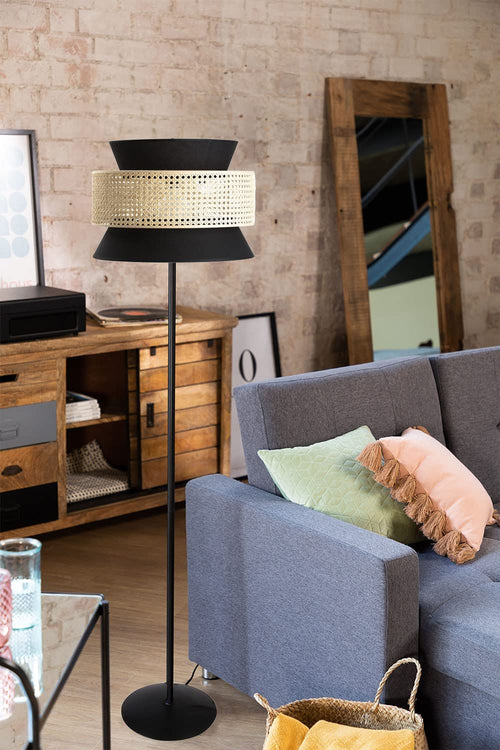
Good Japandi lighting is layered and warm, never one harsh ceiling light. Think in three soft layers: a pendant for the main glow, a wall sconce or floor lamp for the evening, and maybe one small accent light on a shelf. Keep every bulb in the warm 2700K range so the whole room reads golden rather than blue. A flush mount in woven cane is a neat solution for rooms with lower ceilings where a hanging pendant would feel too low. For a deeper walk-through of layering, see our living room lighting guide.

A woven flush mount for lower ceilings. Gives you the Japandi glow without hanging into the room.
From Rs 2,899
Shop Now
For open-plan rooms where the dining table sits in the living space, a larger rattan pendant to anchor it.
From Rs 2,899
Shop NowJapandi living room on a budget
You can shift a room towards Japandi without redoing it. The look is built on editing and a few well-chosen natural pieces, not on spending big, which is why it suits Indian homes on any budget. Start with the cheapest, highest-impact changes and stop when it feels right.
- Under Rs 2,000: swap the ceiling tube for one rattan or bamboo pendant and a warm 2700K bulb. This single change does the most.
- Under Rs 3,000: add a pair of woven baskets to clear the surfaces, plus a jute rug or runner to warm the floor.
- Under Rs 5,000: bring in a round cane mirror and a wall sconce for layered evening light.
- Bigger budget: add a low cane accent chair or a wooden side table with visible grain to anchor the seating area.
Common Japandi mistakes to avoid
- Going cold: all-grey and all-white turns clinical fast. Warm it with wood, jute and cane.
- Too much stuff: Japandi is editing, not adding. If in doubt, take one thing away.
- Harsh lighting: a single bright ceiling light kills the mood. Layer warm lights instead.
- Matching everything: a full matched set looks like a showroom. Mix handmade pieces and let materials repeat.