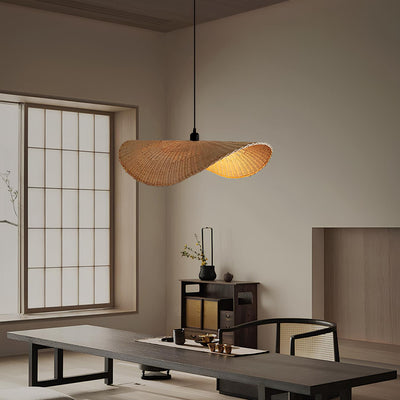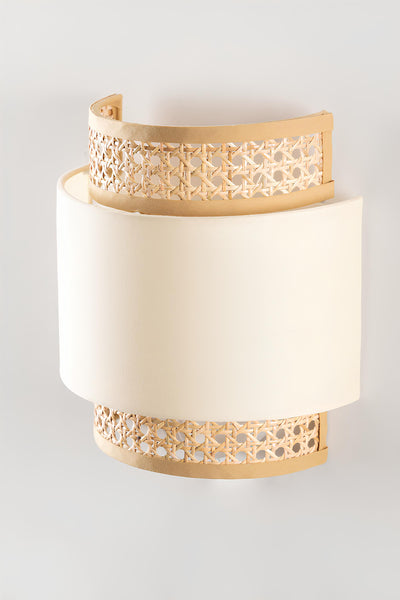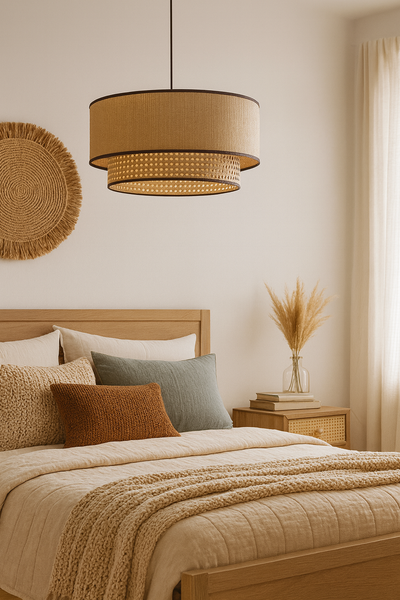

A three-bedroom Goa villa usually needs 18 to 26 fixtures once you count every room, stairwell and verandah. The number surprises people because they plan lights room by room instead of counting the whole property in one pass, then order twice.
If you are furnishing a villa, a homestay or a second home in North Goa, lighting is almost always the last thing planned and the first thing that runs short. The tiling is done, the furniture has arrived, and someone finally counts the ceiling points. This guide works the other way around, starting from the whole property and working inwards, so you order once.
Why do villa lighting orders come in multiples?
Because a villa is not a home being decorated, it is a property being finished. The pattern is visible in Akway's own Goa orders and it looks nothing like a normal household basket.
Twenty-five of one sconce is not a decorating decision. That is a corridor and six bedrooms being fitted out at once, in Anjuna, Assagao, Morjim or Mandrem. If you are buying for a rental villa or a boutique stay, plan in multiples from the start, because a repeated fixture is what makes a property look designed rather than assembled.
Count by ceiling point, not by room
Walk the villa with the electrical drawing and write down every ceiling point and every wall point. That list, not a mood board, is your order. A three-bedroom villa typically breaks down like this.
| Zone | Fixtures | What works |
|---|---|---|
| Living room | 1-2 pendants + 2 wall lights | One large pendant over the seating, sconces to lift the corners |
| Dining | 1 pendant or chandelier | Hung 75-90 cm above the table top |
| Each bedroom | 2 bedside + 1 ceiling | Matching pairs, wall-mounted to free the nightstand |
| Stairwell | 1 tall piece | A long drop reads from both floors |
| Verandah / balcao | 2-6 sconces | Repeat one sconce along the run |
| Entry / corridor | 2-4 sconces | Same fixture as the verandah for continuity |
A 3BHK lands around 18-22. A four-bedroom with a long verandah reaches 26 or more. For the pendant heights and spacing behind these numbers, our guide to pendant lights over a dining table has the measurements.
Repeat one sconce along the verandah
The balcao and verandah are where a Goan house is actually lived in, and where a single repeated fixture does the most work. Buying six of one sconce costs less thought than six different ones and looks considerably better.

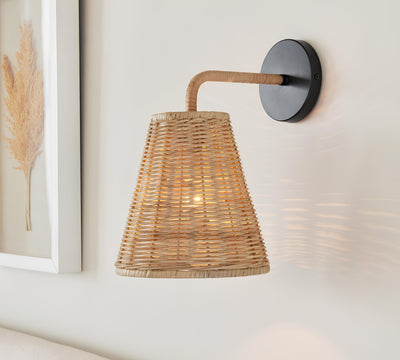
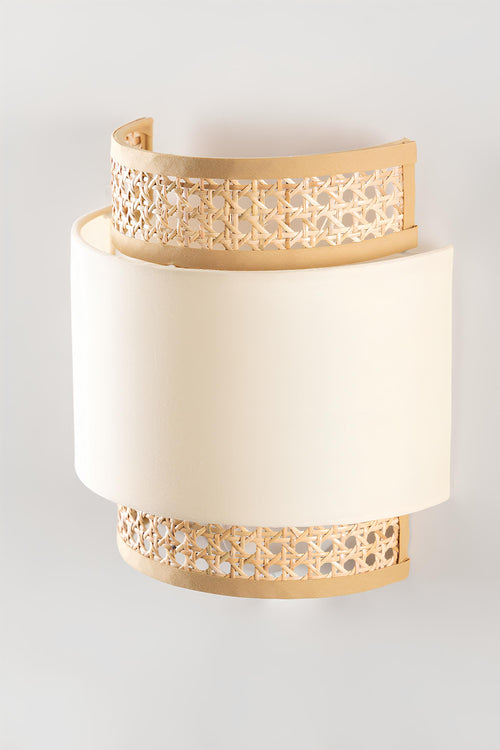
Bamboo Wall Sconce for Entryway - Kashvi
The sconce that turned up 25 times in a single Goa villa order. Jute and bamboo, warm and low-glare, made to be repeated down a corridor or verandah.
From Rs 1,899
Shop Now
Bamboo Wall Lamp for Living Room - Taara
A woven sconce that throws light up and down the wall. Works in a run of four or six along a passage.
From Rs 1,699
Shop NowBrowse the full range of wall lamps and sconces when you are ready to count your run.
Give the stairwell one tall piece
Most Goan villas are two-storey, and the stairwell is the one place a single large fixture earns its price. A long drop is visible from the landing and from the hall below, so it does the work of two lights.

Wicker Chandelier for Staircase - Loral
A tall woven chandelier built for a double-height stairwell, where the drop is seen from both floors.
From Rs 19,999
Shop NowShorter stairwells are better served by a mid-size piece from the rattan and bamboo chandeliers range.
Which bulbs suit a coastal villa?
Warm white throughout. Warm white sits around 2700K while cool white runs 5000K to 6500K, and the cooler end reads clinical against lime-plastered walls and terracotta (US Department of Energy, retrieved 31 August 2026). Buy every bulb for the property in one colour temperature. Mixed temperatures across a villa are the single most common lighting mistake, and it shows most in photographs, which matters if the property is listed for rentals.
What about salt air and monsoon humidity?
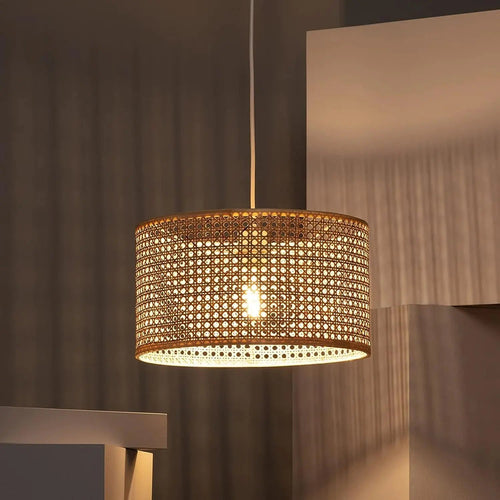
Natural fibre shades handle Goa's climate well in covered positions and badly in exposed ones. The rule is simple: anything woven needs a roof over it. Rattan and cane are solid rather than hollow, which is what gives them their strength and flexibility (FAO, Dransfield, Taxonomy, Biology and Ecology of Rattan, retrieved 31 August 2026), but no natural fibre enjoys standing damp.
Trapped moisture is the actual enemy, not humidity itself, and controlling it is what prevents mould taking hold (US EPA, Mold Course Chapter 2, retrieved 31 August 2026). In practice: keep woven fixtures under the verandah roof rather than past the drip line, and let air move. Our guide to cane and rattan in humid coastal homes covers the maintenance side, and monsoon care for cane furniture deals with the June to September stretch.
Order once, and order spares
Buy two more of your most-repeated sconce than the count says. Fixtures get damaged in transit and in installation, shades discolour at different rates in coastal air, and a matched replacement two years later is rarely still in stock. On a 20-fixture order the spares cost little and save the whole scheme.