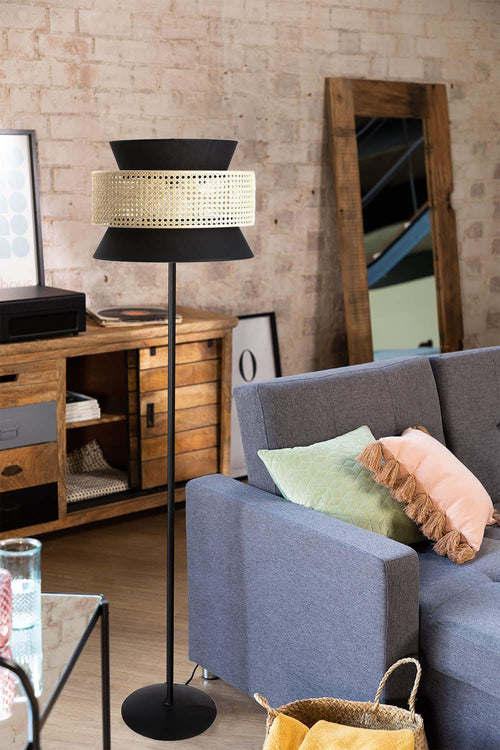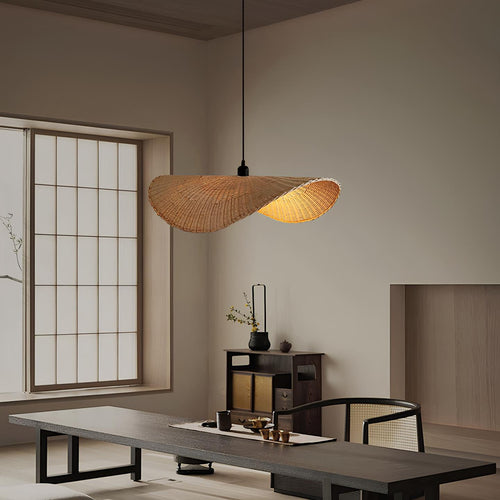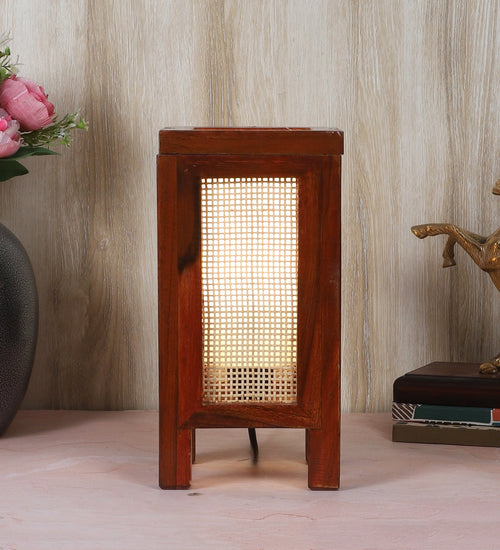

Three shapes cover most rooms. A rattan tripod floor lamp fills a living room corner beside the sofa with ambient evening glow, a slim bamboo lamp works beside a bed, and a reading lamp belongs next to a chair. Choose by where you need the light to fall.
There is a particular kind of dark corner that every Indian living room seems to have. The spot beyond the reach of the ceiling light, the one next to the sofa where you read, the gap behind the armchair that the tube light never quite touches. A rattan or bamboo floor lamp is the easiest, warmest way to fill that corner without rewiring a single thing. You plug it in, you switch it on, and the room suddenly has a second mood for the evening.
This guide covers everything you need to choose the right floor lamp for your home: the difference between a tripod lamp, an arc lamp and a reading lamp, what height and placement actually work beside a sofa or a bed, which bulb gives that warm glow, and how to care for natural rattan, bamboo and cane so it lasts for years. Every lamp shown here is hand-woven by Indian artisan families, so you get the texture of real cane webbing, not a printed plastic copy.
Quick answer: which floor lamp for which room
Most people end up choosing between a tripod standing lamp for a living room corner, a slim bamboo lamp beside a bed, or a reading lamp next to a chair. Here is how the popular styles map to where they work best.
| Lamp type | Best placement | Best for |
|---|---|---|
| Rattan tripod floor lamp | Living room corner, beside a sofa | Ambient evening glow, statement piece |
| Slim bamboo standing lamp | Beside a bed, narrow bedroom corner | Soft bedside light, small spaces |
| Cane webbing shade lamp | Reading nook, beside an armchair | Diffused, dappled warm light |
| Arc floor lamp | Over a sofa or coffee table | Overhead task light without ceiling work |
| Reading floor lamp | Beside a study chair or desk | Focused light for reading, study room |
How do you choose the right floor lamp?
A floor lamp does two jobs at once: it lights a corner and it stands there as a piece of decor all day, even when it is switched off. Get both right and you will use it every evening. Here is the order to think in.
- Decide the job first. Ambient mood light for the whole corner, or focused light to read by. A tripod or shaded lamp does mood; a reading lamp does task light.
- Measure the spot. A living room corner can take a wide tripod; a bedside gap usually needs a slim standing lamp under 40 cm wide.
- Match the height to the use. For reading beside a chair, the shade bottom should sit near eye level when you are seated, roughly 100 to 120 cm tall. For ambient corner light, taller is fine.
- Pick the material and weave. Rattan and cane webbing throw a soft, dappled light through the shade. Solid bamboo poles read as clean and Japandi. Choose the texture that suits your room.
- Plan the plug. Floor lamps need a socket within cord reach. Note where your nearest point is before you decide the corner.
Types of rattan and bamboo floor lamps
Natural floor lamps come in a few clear styles. Knowing them makes it far easier to pick the right one for your living room or bedroom.
Rattan tripod floor lamp
The classic. Three angled legs in wood or rattan hold up a woven shade, giving the lamp a confident, mid-century stance. A tripod floor lamp is the natural choice for a living room corner because the wide base reads as a statement piece while the shade softens the light. It suits boho, coastal and modern Indian rooms equally well.
Slim bamboo standing lamp
When the corner is narrow or the lamp has to slot beside a bed, a slim bamboo standing lamp is the answer. The straight pole keeps the footprint small, and the natural bamboo finish sits beautifully in Japandi and minimalist bedrooms. It gives soft bedside light without crowding the floor.
Cane webbing shade lamp
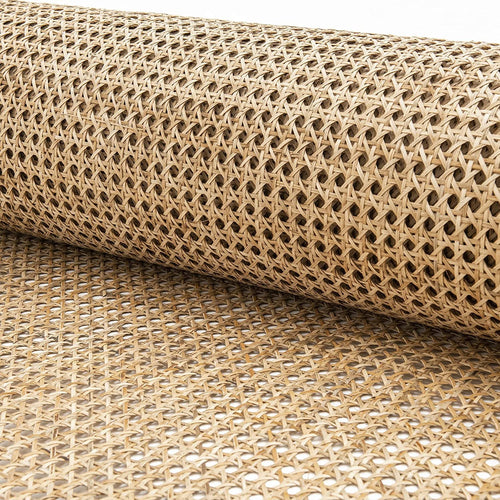
Here the shade itself is woven from cane webbing, so the bulb light filters through the open weave and scatters across the wall in a gentle, dappled pattern. This is the most atmospheric option, perfect for a reading nook or beside an armchair where you want diffused warmth rather than a bright pool.
Arc and reading floor lamps
An arc floor lamp curves the light source out over a sofa or coffee table, so you get overhead light exactly where you sit without drilling into the ceiling. A reading floor lamp keeps the light focused and lower, ideal beside a study chair where you need to actually read print clearly. Both pair well with a natural woven base for warmth.
Our floor lamps, hand-woven and ready to ship
These are our most-loved rattan and bamboo floor lamps, each woven by Indian artisans and built to fill a corner with warm light.

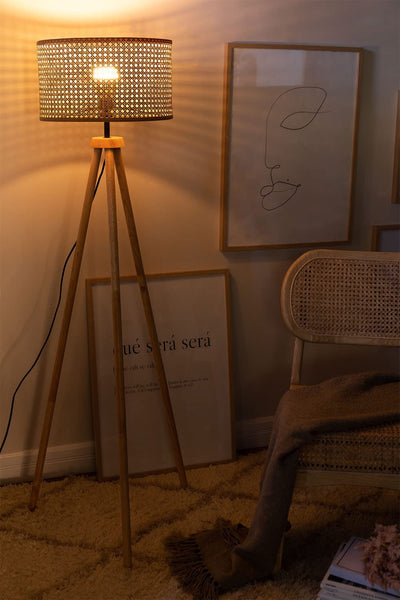
Rattan Tripod Floor Lamp - Harry Lewis
A wooden tripod base with a cane webbing shade, built for a living room corner. The angled legs give it a mid-century stance and the woven shade throws a soft, dappled glow.
From Rs 4,999
Shop Now
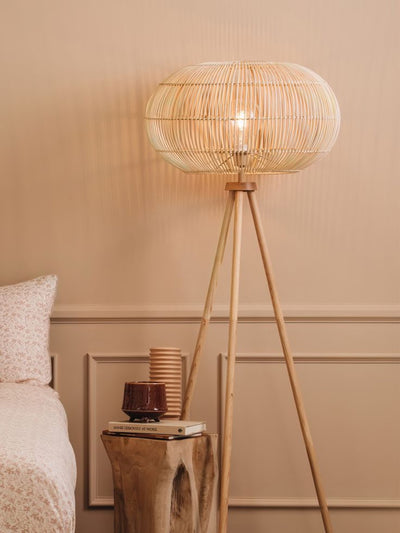
A boho standing lamp with a fully woven rattan shade, ideal beside a bed. Switch it on and the light filters through the weave for a warm, restful bedroom glow.
From Rs 5,999
Shop Now
A slim Japandi standing lamp in natural bamboo with a clean, minimal pole. Its small footprint slots into a narrow bedroom corner or beside a bed without crowding the floor.
From Rs 5,999
Shop Now
Rattan Cane Floor Lamp - Aericka
A coastal standing lamp with a cane webbing shade, made for a reading nook or study chair. The open weave scatters a gentle pattern across the wall behind it.
From Rs 4,999
Shop Now
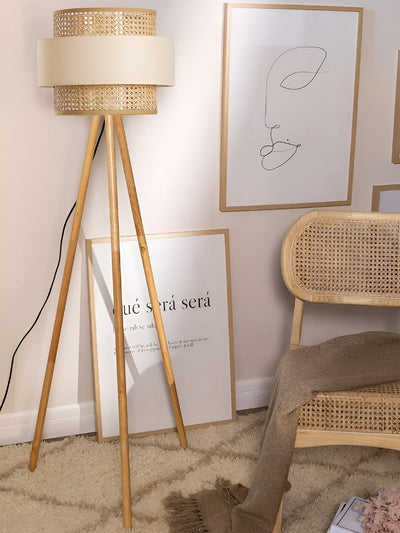
Rattan Cane Floor Lamp - Anelisa
A boho standing lamp on a wooden base with a cane webbing shade. It works as a living room statement piece by day and a warm corner light by evening.
From Rs 4,999
Shop NowChoosing the right bulb
The lamp sets the mood, but the bulb decides whether that mood is warm or cold. With natural rattan and cane shades, the bulb matters more than usual because the light passes through the weave.
- Colour temperature: go for warm white, around 2700K to 3000K. This makes rattan glow amber and a room feel cosy. Skip cool daylight white, which turns the weave grey and clinical.
- Brightness: for ambient corner light, 400 to 600 lumens is plenty. For a reading lamp, step up to 700 to 800 lumens so print stays clear.
- LED, not halogen: LED bulbs run cool, which is safer near a woven shade, and they sip power. A 7 to 9W LED gives the warmth of an old 60W bulb.
- Dimmable if you can: a dimmable bulb with a plug dimmer lets one lamp do bright reading light and low evening mood light from the same corner.
- Shape: a frosted or globe bulb diffuses light more evenly through the weave than a clear filament one, though clear filament looks lovely if the weave is open.
Caring for rattan, bamboo and cane lamps
Natural floor lamps are low-maintenance, but a little care keeps the weave tight and the colour even for years.
- Dust the shade and base weekly with a dry, soft brush or a microfibre cloth so grime does not settle into the weave.
- Wipe any marks with a barely damp cloth, then let the lamp air-dry fully before switching it on.
- Keep the lamp out of long, direct sunlight, which can dry out and lighten natural cane over time.
- Avoid damp corners. In humid weather, run a fan now and then so the weave does not hold moisture.
- Use only LED bulbs within the rated wattage so the shade never sits close to a hot bulb.
- Once a year, a thin coat of clear furniture wax on a wooden base keeps it looking new.
Styling a floor lamp in your room
A floor lamp earns its place when it sits in a layered lighting scheme rather than alone. Use it as the warm, low layer beneath your brighter ceiling light. In a living room, anchor it in the corner beside the sofa, next to a side table holding a book and a plant, so the whole corner reads as a deliberate reading spot. In a bedroom, a slim standing lamp beside the bed replaces a harsh ceiling light for winding down at night. The trick is layering: a floor lamp, a table lamp and the odd candle together give a room far more warmth than one bright bulb overhead ever can.
Texture helps too. If your room already has a lot of hard surfaces, glass, marble, polished tile, a woven rattan or jute lamp softens the whole space and stops it feeling cold. Set the lamp against a plain wall so the dappled shadow from the cane weave becomes part of the decor in the evening. A trailing plant, a stack of books and a small rug nearby turn one lamp into a finished corner you will actually want to sit in.
Rattan, bamboo or cane: which to pick
People often use rattan, bamboo, cane and wicker as if they mean the same thing, and for a floor lamp the practical difference comes down to look and light. Rattan and cane webbing shades are woven, so light filters through them for a soft, dappled glow, which is what you want for ambient mood lighting in a living room or bedroom. Solid bamboo poles read cleaner and more structured, giving a Japandi or minimalist feel where the lamp is more sculpture than glow. Wicker simply means the weaving technique, often used on the shade itself. If you want atmosphere, choose a woven rattan or cane shade. If you want a slim, modern silhouette, choose bamboo. All of ours are handmade from natural Indian fibre, so whichever you pick, you get real texture and warmth that a moulded plastic lamp can never copy.
Seen in a real home
Styled by @aevum.art.architecture in their own home, tagged @akway.in. View on Instagram