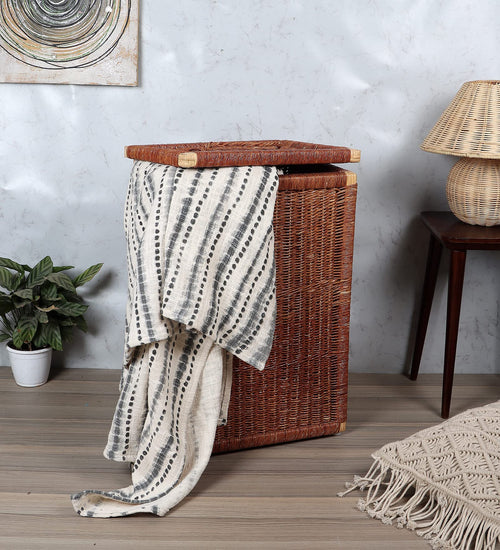

A good wicker basket should outlast a dozen plastic bins. Yet most people shorten its life without realising it, by soaking it under a tap, scrubbing it hard, or leaving it in a damp bathroom corner. Natural materials like wicker, rattan, cane, bamboo and seagrass are tough, but they hate one thing above all: trapped moisture. Get the cleaning right and the same basket will look good for years.
This guide walks you through exactly how to clean wicker baskets the safe way, from quick weekly dusting to deep cleaning, mould removal, reshaping a loose weave, and the simple care habits that keep a handwoven basket looking new. Everything here applies to rattan, cane, bamboo and seagrass baskets too, since they all behave the same way around water and air.
Quick answer: how to clean a wicker basket
Dust it weekly, wipe it with a barely-damp cloth when needed, never soak it, and always let it air-dry completely before you put anything back inside. That single rule, dry it fully, prevents almost every problem people have with natural baskets.
| Do | Don't |
|---|---|
| Dust with a dry brush or soft cloth weekly | Soak the basket in water or leave it to sit wet |
| Wipe with a barely-damp, well-wrung cloth | Scrub hard with a stiff metal brush |
| Air-dry fully in a ventilated spot before use | Dry it in harsh direct sunlight for hours |
| Spot clean stains gently and immediately | Use bleach or strong chemical cleaners |
| Store in a dry, airy place | Keep it in a humid, closed bathroom corner |
Why does wicker need gentle cleaning?
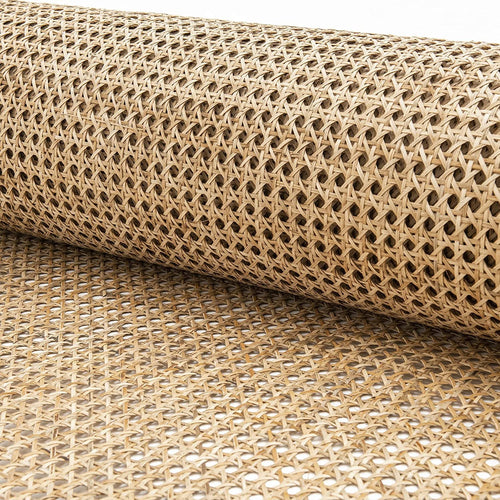
Wicker is not really a material, it is a weaving style. The actual fibres are usually rattan, cane, bamboo, seagrass or water hyacinth, all natural plant materials. These fibres are strong when dry but absorbent when wet. Soak them and they swell, lose their shape, weaken at the joints, and become a breeding ground for mould. That is why every care label on an Akway basket says the same thing: wipe, do not soak, and dry fully.
The good news is that gentle cleaning is also faster. You almost never need water at all for routine upkeep. A soft brush and two minutes a week does most of the work, and the occasional damp-wipe handles the rest. Knowing your basket's main fibre also helps. Bamboo and cane have a harder, smoother surface that wipes clean easily, while seagrass, water hyacinth and kauna grass are softer and even more sensitive to soaking, so keep water to a minimum on those.
Step-by-step: cleaning a wicker basket
Here is the safe routine for a basket that has picked up everyday dust and the odd mark. Follow it in order and your basket dries out properly every time.
- Empty the basket and take off the lid if it has one. Give it a gentle shake outdoors to dislodge loose dust and crumbs.
- Dry-brush the weave. Use a soft brush, an old toothbrush or a dry paintbrush to work dust out of the grooves. Brush along the weave, not against it, and reach into the corners where dust settles.
- Vacuum if needed. For deep dust, run a vacuum with a soft brush attachment on low suction over the basket. This pulls grit out of the tight weave without wetting it.
- Wipe with a barely-damp cloth. Dip a soft cloth in plain water or mild soapy water, then wring it out hard so it is just slightly damp. Wipe the surface and inside. The cloth should never be dripping.
- Spot clean stubborn marks. For a sticky spot, dab gently with the damp cloth and a drop of mild soap. Do not flood the area or scrub aggressively.
- Dry it completely. Stand the basket and its lid in a ventilated spot with good airflow and let them air-dry fully, ideally overnight, before you put anything back inside.
Deep cleaning and mould removal
Sometimes a basket needs more than a wipe, like a thrift find, a basket that has sat in storage, or one that picked up mould in a damp room. Work through these without ever soaking the weave.
Deep cleaning a grimy or second-hand basket
Mix a little mild soap into lukewarm water. Dip a soft brush, shake off the excess so it is damp not dripping, and work over the weave section by section. Wipe each cleaned section with a clean barely-damp cloth to lift the loosened dirt, then move on. The aim is steady, gentle cleaning, never a soak. When you are done, dry the basket fully in an airy spot before using it.
How do you remove mould from a wicker basket?
Mould shows up as black, green or white fuzzy patches and usually means the basket stayed damp too long. Here is how to deal with it safely:
- Take the basket outdoors so you are not spreading spores indoors.
- Brush off the surface mould with a dry brush.
- Mix equal parts white vinegar and water. Vinegar is a natural mould killer and is far gentler on natural fibres than bleach.
- Dampen a cloth or soft brush in the solution, wring it well, and wipe the affected areas. Do not drench the weave.
- Wipe again with a clean barely-damp cloth, then let the basket dry completely in a breezy, shaded spot.
Once it is bone dry, keep that basket somewhere with better airflow so the mould does not return. Avoid bleach, which can weaken and discolour natural fibres. If a basket has deep, widespread mould that has eaten into the fibres, it may be kinder to retire it, but most surface mould lifts away with vinegar and a good dry-out.
Getting rid of a musty smell
A musty or damp smell is moisture's calling card. First make sure the basket is fully dry. Then sprinkle a little baking soda inside, leave it for a few hours or overnight to absorb odours, and brush or shake it out. Airing the basket in a breezy spot, or in gentle morning sun for a short while, helps clear lingering smells too.
Reshaping a basket and fixing a loose weave
Natural baskets can sag or loosen over time, especially after carrying heavy loads or coming out of a packed shipping box. Most of this is easy to fix at home.
- Gentle reshaping: press the sides back into shape with your hands. If the weave feels stiff, lightly mist the outside with water (a mist, not a soak), reshape it, and let it dry. Natural fibres relax slightly when very lightly damp and hold the new shape once dry.
- Loose or popped strands: if a strand of cane or rattan works loose, tuck it back into the weave following its original path. A dab of clear craft glue holds a stubborn end in place.
- Squeaky or stiff handles: a light rub with a little natural oil softens dry handles and quietens squeaks.
Durable baskets built to last
Cleaning is easier when the basket is well made to begin with. These handwoven Akway baskets are tightly woven by Indian artisan families from natural wicker, rattan, cane and seagrass, so they hold their shape and take regular care well.

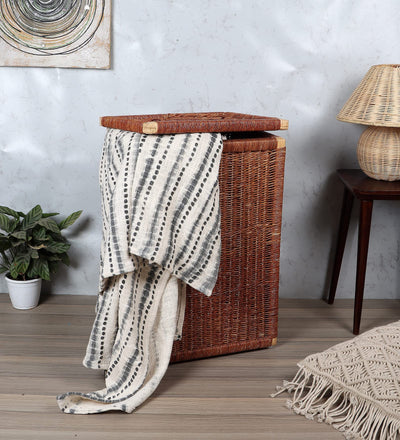
A tightly woven wardrobe basket with a sturdy frame that holds its shape through daily use. Easy to dust and damp-wipe.
View & Buy
Shop Now
Wicker Laundry Basket with Lid - Yamini
A large breathable laundry hamper in water hyacinth and wicker. The open weave keeps clothes airy and odour-free.
View & Buy
Shop Now
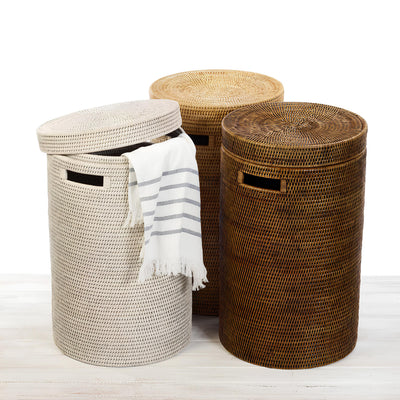
Rattan Laundry Basket with Lid - Alex
A large handwoven rattan and cane basket with a matching lid. Spot clean and air-dry to keep the weave looking new.
View & Buy
Shop Now
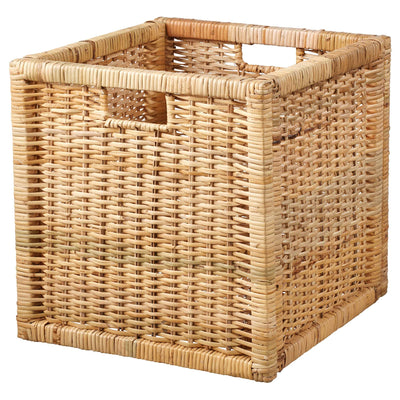
Rattan & Bamboo Basket - Idhant
A polished rattan and bamboo basket with a smooth protective finish that wipes clean easily and resists everyday grime.
View & Buy
Shop Now
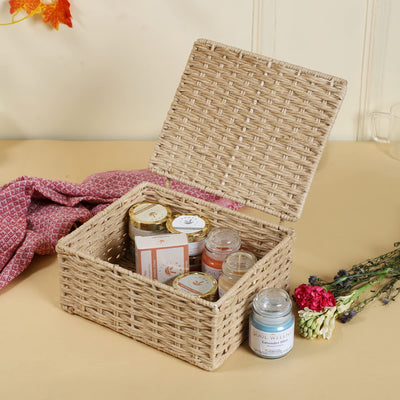
Seagrass Storage Basket with Lid - Ishani
A neat seagrass and kauna grass organiser with a fitted lid that keeps contents dust-free, so cleaning stays simple.
View & Buy
Shop NowCleaning lidded baskets and natural finishes
Lidded storage and laundry baskets need a little extra attention because air moves less freely inside them. Always lift the lid and let the inside breathe after the basket has held damp towels or clothes, and never trap moisture under a closed lid, which is exactly where smell and mould start. Wipe the lid and the rim where it sits, since dust collects along that edge.
One last point on appearance. Natural baskets often have small colour variations and a few stray fibres, and that is a sign of genuine handwork, not a fault. Cleaning will not make a beige basket look bleached-white, and it should not. The goal of good care is simply to keep the weave dry, strong and free of grime, so the basket ages gracefully and keeps its warm, natural character for years.
Care habits that make baskets last for years
Beyond cleaning, a few small habits do most of the work in keeping a natural basket strong and good-looking. Build these into your routine and you rarely have to deep clean at all.
- Keep it dry: store baskets in airy spots, not sealed, humid corners. Damp is the enemy of every natural fibre.
- Dust little and often: a quick weekly brush stops grime building up in the weave and means you almost never need water.
- Wipe spills straight away: blot any spill at once with a barely-damp cloth, then let that spot dry fully.
- Mind the sun: a little airing is fine, but hours of harsh direct sunlight can fade and dry out the fibres over time.
- Oil or wax once or twice a year: a thin coat of natural linseed oil or clear furniture wax feeds the fibres, restores lustre and helps the weave resist moisture. Apply sparingly and buff off the excess.
- Do not overload: respect the basket's size so the weave and handles are not strained out of shape.
- Rotate heavy-use baskets: giving a hard-working laundry or storage basket an occasional rest helps it keep its shape longer.