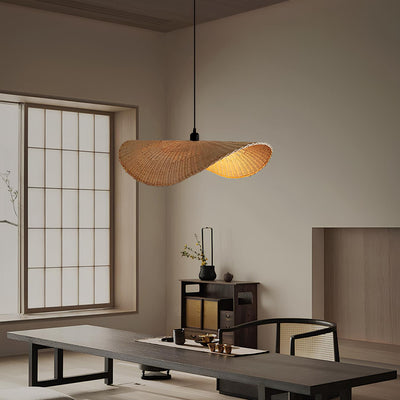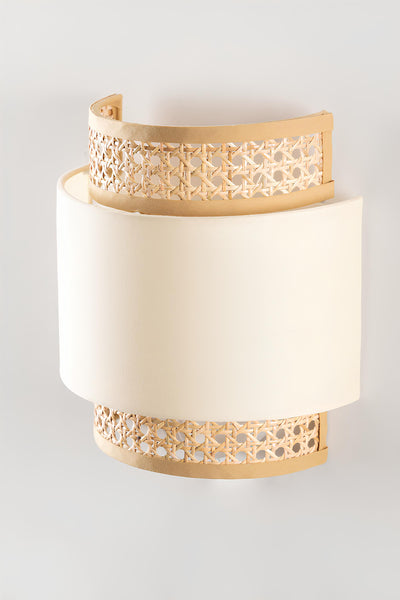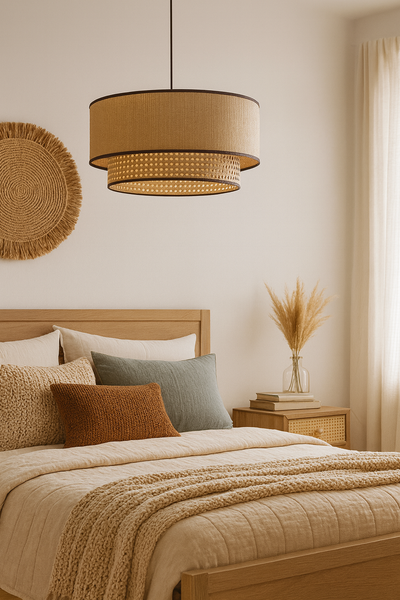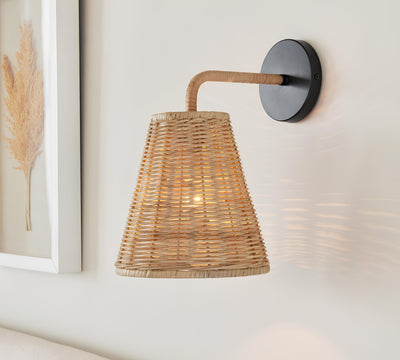

To clean a rattan lamp shade, switch off and let the bulb cool, then brush dust out of the weave with a soft brush or a vacuum brush attachment on low. Wipe marks with a barely damp cloth, keep water away from the bulb holder, and let the shade dry fully before switching on.
What do you need before you start?
- A soft paintbrush, two or three inches wide, or a clean make-up brush
- An old soft toothbrush for tight weaves and corners
- A vacuum cleaner with a brush attachment
- Two microfibre cloths, one for damp work and one kept dry
- A small bowl of lukewarm water with a few drops of mild liquid soap
- A steady step stool or ladder, and a second person for anything on the ceiling
Switch the light off at the wall, not only from a remote or an app, and give the bulb time to cool before you touch the shade. If the shade lifts off its holder easily, take it down and clean it at a table. If it is fixed to the fitting or the ceiling plate, clean it where it hangs rather than unscrewing anything. Removing or refitting a wired light is a job for a licensed electrician.
Dusting the weave, step by step
- Start at the top. Dust settles most on the upper surface of a pendant and on the top rim of a table-lamp shade, so work from there downwards.
- Brush along the strands, not across them. Following the direction of the weave lifts dust out of the gaps without catching loose ends.
- Do the inside too. Lint, cobwebs and small insects collect inside the shade around the holder. Brush them out gently.
- Vacuum on low. Hold the brush attachment just above the surface and pull out the dust you loosened. Full suction on an open weave can tug strands out of place.
- Finish with a dry cloth on the frame, the rim and any metal parts.
Done every week or two, this five-minute routine is usually all a living room or bedroom shade needs.
Does the method change for rattan, bamboo, jute and wicker?
Only a little. None of these natural fibres likes being soaked, but the surface decides which tool works best. If you are not sure what your shade is made of, our comparison of rattan, wicker and bamboo explains how to tell them apart.
| Material | What the surface is like | Best tool | Take care with |
|---|---|---|---|
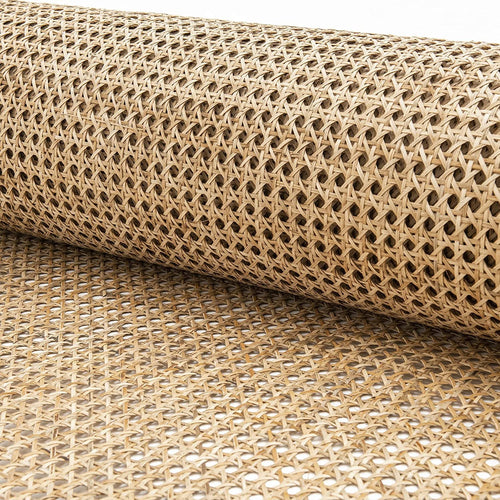
| Rattan and cane | Smooth strands, often closely woven | Soft brush, then a barely damp cloth for marks | Dust packs into the crossings; use a soft toothbrush there |
| Wicker | Woven strands with many small gaps | Soft brush and vacuum brush on low | Do not pull at loose ends; tuck them back into the weave |
| Bamboo | Split slats or strips, often with open gaps | Dry cloth along each slat, soft brush between | Wipe along the length of the slat and do not bend it |
| Jute | Twisted, slightly fuzzy rope or braid | Soft dry brush | Water can leave a tide mark; spot-clean only, with very little moisture |
| Raffia and seagrass | Flat, papery leaf fibre | Soft brush | Hard scrubbing can fray the fibre |
How do you remove marks and a sticky film?
Dust brushes out; a sticky film does not. Kitchen pendants pick up a thin layer of cooking grease, and shades near a mandir collect agarbatti soot. For these:
- Add a few drops of mild liquid soap to a bowl of lukewarm water.
- Dip a microfibre cloth and wring it out until it is barely damp, with no drips at all.
- Test on a hidden spot first, such as the inside of the rim, and let it dry before you carry on.
- Wipe along the strands, a small section at a time, and follow straight away with the dry cloth.
- Keep the cloth well away from the bulb holder and the cable.
- Let the shade dry completely in a well-ventilated spot, out of harsh direct sun, before you switch the light back on.
On jute, skip the soapy water and use a cloth that is only just damp, on the mark alone. If a woven shade has stayed damp through a long monsoon spell and shows white or grey spots, it may be mould, which grows where moisture stays trapped. The steps in our monsoon care guide for cane and rattan apply to lamp shades as well as furniture.
How do you clean a jhoomar at home?
A woven jhoomar, or chandelier, is the same material as a pendant, only bigger and higher up. The cleaning method stays the same; the set-up changes.
- Switch it off at the wall and let every bulb cool.
- Use a stable ladder and have someone hold it. Never stand on a chair, stool or table.
- Brush one section at a time, top to bottom, and dust the ceiling canopy and the cable as you go.
- Do not pull on the cable, twist the fitting or rest your weight on any part of it.
- If the jhoomar needs to come down for a deeper clean, have a licensed electrician disconnect it and hang it back.
Between full cleans, a soft duster on a long handle keeps dust from building up on the parts you cannot reach easily. If you are still choosing one, think about cleaning when you decide the size and drop; our guide to large rattan chandeliers covers sizing for living and dining rooms.
What should you never do to a woven lamp shade?
- Soak it, dip it in a bucket or hold it under a running tap or shower.
- Use bleach, strong household sprays or abrasive scrubbers.
- Switch the light on while the shade is still damp.
- Dry it with a hairdryer on hot, near a heater or on a hot roof.
- Pull loose strands; tuck them back into the weave instead.
- Treat it as waterproof. Woven natural-fibre shades are made for dry indoor spaces, so keep them away from showers, open windows in the rain and outdoor spots.
How often should you clean each shade?
- Living room and bedroom lights: a quick dust every week or two, and a damp spot-clean only when you notice a mark.
- Kitchen pendants: dust every week, and wipe away the sticky film every month or so.
- Pooja room lights: a weekly dust if agarbatti or a diya is lit there every day.
- Jhoomars and high fittings: a proper clean every few months, and before Diwali or a big family function.
- During the monsoon: check shades for damp spots, and keep the room aired when you can.
Woven lights that are easy to look after
Every shade below is handwoven and takes the same dry-brush routine. For more shapes, browse our bamboo and rattan lamp shades or the jute hanging lights.

An open bamboo weave about 10-12 inches across, small enough to dust in one pass from a step stool.
Rs 1,299
Shop Now
A 16 x 10 inch rattan pendant whose open weave lets a soft brush reach through to the inside.
Rs 2,899
Shop Now
A jute pendant in four sizes from 12 to 20 inches; a soft dry brush is all its rope weave needs day to day.
From Rs 1,299
Shop Now
A 52 cm bamboo chandelier on a 100 cm cable; brush it section by section from a steady ladder.
Rs 8,899
Shop Now