
To clean cane furniture at home, brush or vacuum the dust out of the weave every week, wipe it with a barely damp cloth and a drop of mild soap when it looks grimy, then let it dry fully in airy shade. Never soak it, never use bleach, and never sit on it wet.
This guide covers the everyday cleaning of chairs, sofas and tables: the weekly routine, a stained seat, a sticky armrest, the cushions and the wood frame. Keeping furniture safe through the rains is a separate job, covered in our monsoon care guide for cane and rattan, and baskets have their own wicker basket cleaning guide.
How do you clean cane furniture at home?
The same five steps work for a cane chair, a rattan sofa frame or a woven side table. Most weeks you will only need the first three.
- Clear it and turn it. Take off cushions and throws. If the piece is light, tip it onto a towel so you can reach the underside and the feet, where floor dust and mopping splashes collect.
- Dry-brush along the weave. Use a soft paintbrush or an old soft toothbrush. Follow the direction of the strands and work into the corners where the weave meets the frame and around bound joints.
- Vacuum with the brush attachment. Keep the suction low and hold the nozzle just off the surface so it cannot snag a strand.
- Damp-wipe only if it needs it. Add a few drops of mild liquid soap to a bowl of lukewarm water. Dip a soft cotton cloth and wring it until it barely feels damp, then wipe one section at a time. Follow with a second cloth in plain water to lift the soap, then a dry cloth.
- Dry it completely. Move the piece to an airy, shaded spot and run a fan. Do not sit on it or put cushions back until the gaps between the strands feel dry, not just the surface.
How often?
Dust weekly. Damp-wipe once a month, or sooner for dining chairs and anything near the kitchen, where cooking grease settles on the weave and holds dust.
How do you clean a cane seat or back panel without loosening it?
Woven seats and cane webbing panels flex every time someone sits or leans. Cane softens a little when it is damp and firms up again as it dries, so the risk is loading a panel while it is still wet. Wipe both the front and the back of the panel, never press down on a damp seat to scrub it, and keep weight off until it is fully dry.
Backrests collect hair oil and body oil, a common mark in Indian homes. Wipe with the mild soap cloth along the strands, and repeat over a few days rather than scrubbing hard once. If a strand has already broken, clean around it gently and leave it alone: a broken strand needs repair, and scrubbing near it only lifts more.
How do you remove stains from cane furniture?
Two rules cover almost every stain: act early, and dab rather than scrub. Rubbing pushes the stain between the strands and can scuff the smooth outer surface of the cane.
| Stain | First step | Then |
|---|---|---|
| Tea, coffee or juice | Blot straight away with a dry cloth | Dab with a barely damp soapy cloth, then a plain-water cloth, then dry |
| Oil, ghee or food grease | Blot, then dust a little cornflour or talc over a fresh spot to draw the oil out; brush it off after 15 minutes | Dab with the mild soap cloth and dry |
| Sticky sweets, jaggery or chutney | Lift off what you can with a blunt butter knife or an old card | Dab with a lukewarm soapy cloth until the stickiness goes, then dry |
| Candle wax | Harden it with an ice cube in a sealed plastic bag | Lift the wax gently with a card and brush out the flakes |
| Ink or marker | Dab with the soap cloth on a hidden spot first | Stop if the colour of the cane starts to lift; a faint mark is better than a pale, scrubbed patch |
What should you do about mildew spots?
Grey, green or black speckles on the weave are mildew, and they mean the piece stayed damp for too long. Mould grows where moisture stays trapped, so the cleaning only lasts if the piece then dries properly. For surface spots:
- Take the piece outdoors or open the windows, and brush the spots off with a dry soft brush.
- Mix a mild solution of about one part white vinegar to four parts water.
- Patch-test it on a hidden spot, such as under the seat, and let it dry before you judge the colour.
- Wipe the spots with a cloth dipped in the mix and wrung out well. Do not drench the weave.
- Wipe again with a plain-water cloth, then dry in shade with a fan.
Spots that keep coming back, or that have eaten into the fibre, need more than cleaning. The prevention side, from airflow to sealing, is in the monsoon guide linked above.
Cushions, covers and wood frames
Cushions and cushion covers
Unzip removable covers and wash them as the care label says, then let them dry completely. Air foam inserts in shade rather than soaking them. Never put a damp cushion back on the weave: moisture trapped between a cushion and a cane seat is where mildew spots most often start. For fixed cushions, spot-clean with a soapy cloth and dry them standing on edge.
Wood frames and finishes
Many cane chairs pair the weave with a wood frame in a natural, teak or dark brown finish. Wipe the frame with the same barely damp cloth and dry it at once, so water does not sit on the finish and leave a ring. Skip spirit-based cleaners, which can dull a finish. If you polish the wood, keep the polish off the cane; on the weave it leaves a film that holds dust.
What should you never use on cane and rattan?
- Bleach or chlorine cleaners. They can discolour and weaken natural fibre.
- Soaking, a hose or a pressure washer. Water forced into the weave swells the strands and loosens the joints.
- Steam cleaners. Heat and moisture together are the worst combination for a woven panel.
- Steel wool, scouring pads or stiff brushes. They scratch the cane's smooth surface and fray the strands.
- Ammonia, glass cleaners, solvents or undiluted vinegar. Too strong for a natural finish.
- Forced heat to speed up drying. A hot hair dryer or hours in harsh sun dries the outside faster than the inside. Shade and a fan are slower but safer.
Akway cane and rattan pieces, and how to clean each
Every piece is handwoven by artisan families in our Noida workshop. Here is what to pay attention to on four of them.

Bent rattan poles with bound joints: brush along the bindings where dust collects, and damp-wipe only the flat strips of the seat and back.
Rs 12,999
Shop Now
Open woven sides around a seat cushion: lift the cushion out each week and vacuum the weave underneath, the spot most people forget.
From Rs 16,999
Shop Now
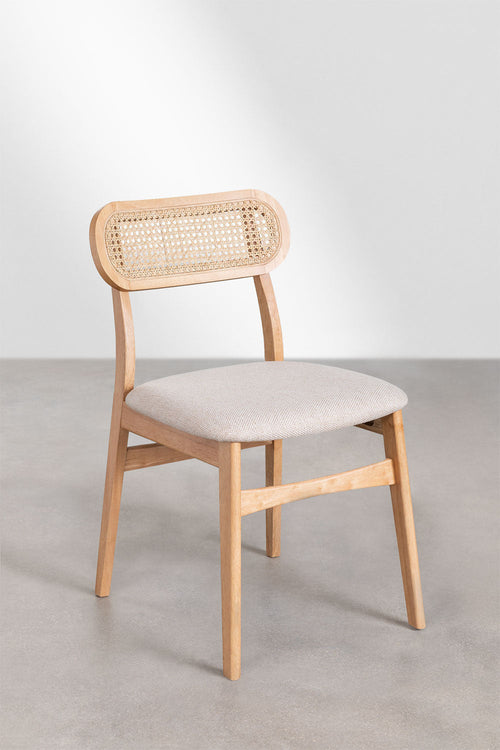
A cane webbing backrest on a wood frame in natural, teak or dark brown finish: wipe the webbing on both sides and treat the frame as wood.
Rs 8,999
Shop Now
Slatted rattan arms and loose seat and back cushions: dry-brush between the slats weekly and air the cushions in shade after any spill.
From Rs 28,999
Shop NowYou will find more designs in our cane and rattan chairs range and the cane sofa collection, and the same routine suits every one of them.